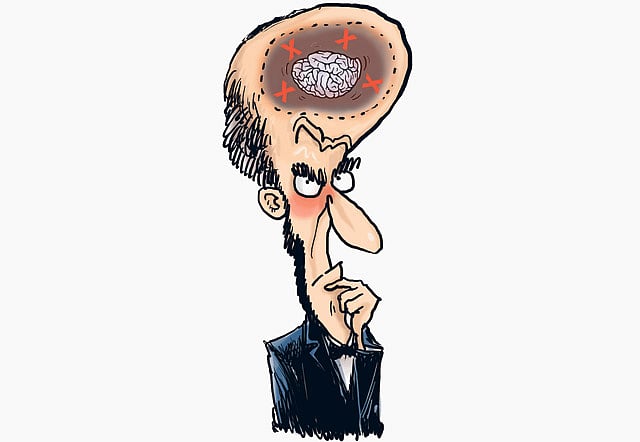
Over the past decade, Islam and its relation to violence, modernity and rationalism has become a matter of tense debate throughout the West. Some scholars have tried to fuse the Arab mind with religious beliefs in order to explain the failure of Muslim societies to catch up with the West. Here the argument provided is that the very nature of Islam makes it intrinsically anti-modernisation and less progressive, and this explains the form development takes in Muslim societies.
Francis Fukuyama, for example, who felt particularly vulnerable to criticism over his renowned theory on "the end of history", made a "concession" to his critics when he "admitted" that Muslim societies are "particularly resistant to modernity". While other nations might have reservations about western democracy, Fukuyama argued, "Islam, by contrast, is the only cultural system that seems regularly to produce people like Osama Bin Laden or the Taliban who reject modernity lock, stock and barrel".
Other scholars seized on the events of 9/11 to demonstrate the flawed argument that Islam remains in a state of shock as a result of its 19th century encounter with modern Europe. Bernard Lewis, for example, referred to the classical assertion that most of the problems in Muslim societies today emanate from the disturbing effects of a sudden introduction of modernisation to traditional societies. The Arab mind, which was not prepared to deal with this development, was caught between two extremes: tradition and modernity.
In one way or another the arguments of those renowned scholars were a reflection, if not a repetition, of two big themes that flourished in western Europe in the early 20th century and attempted to depict Islam as the latent factor behind the slow process of modernisation in the Islamic world. The first theme was established by the Scottish historian Hamilton Gibb; the other was by the German sociologist Max Weber.
Theocracy versus rationalism
Gibb argued the Arab mind has failed to produce a European-like version of modernity because of Muslims' religious beliefs. Islam, in its endeavour to produce a similar version of modernity, has so far passed through the same stages that Christian Europe had experienced in the 18th century and "if like causes produce like results, we should expect to see similar developments in religious thought among Muslims". But Islam failed where Europe succeeded. The reason, Gibb believed, was simply because the non-religious Muslim elite was not interested in religious questions whereas the religious one was unaffected by the spirit of secular education and modern western thought. Subsequently, theocracy defeated rationalism in the Islamic world.
The impact of Islam in shaping the social, economic and political conditions in the Islamic world was a matter of interest for the second theme advocated by Max Weber. Weber believed that an explanation of why capitalism emerged and prevailed in one society and not in another is found in the nature of religion. In Islam, a rationalised legal system was almost non-existent and a secular law, which could have provided freedom to engage in economic activities that involve future risks, failed to emerge. Islam rejected both individualism and utilitarianism; the two fundamental pillars of rationalism, which laid the foundations for capitalism. For Weber this hindered the emergence of a capitalist mode of production in Muslim societies. Furthermore, Islamic law, unlike Christian law, was not the result of a gradual historical experience in the life of a people. It was a collection of rules and regulations that defined once and for all what is good and what is bad for its followers, leaving little room for innovation and creativity.
Clearly, the aim of these arguments was to blame Islam, while ignoring the negative impact of the West on Muslim societies. They do not admit, for example, that until the 19th century the gap between the Islamic world and Europe was almost non-existent. The modernisation processes in the two worlds were advancing head-to-head. What interrupted the process in the Muslim world was a combination of indigenous and exogenous factors. First and foremost, the quest of western colonialism for raw materials, markets, bases and spheres of influence. The quest for material interests required transforming the Muslim world into a source of raw materials and a marketplace for manufactured goods.
In addition, the colonial powers, which controlled much of the Arab world, showed little interest in educating the locals and developing national industries that would eventually come to compete with their own. When certain sectors of the economy, such as agriculture and banks, were modernised, they were put in the hands of Europeans or controlled by local minorities who viewed the colonial powers in a more friendly manner.
Islam, religion and culture, has in fact nothing to do with the bad condition of the Arab and Islamic world.
Dr Marwan Al Kabalan is a lecturer in media and international relations at Damascus University's Faculty of Political Science and Media in Syria.
Sign up for the Daily Briefing
Get the latest news and updates straight to your inbox
Network Links
GN StoreDownload our app
© Al Nisr Publishing LLC 2026. All rights reserved.