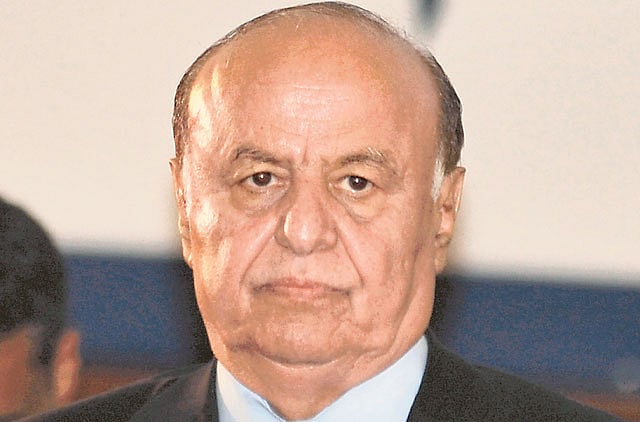
The ballots in the Yemeni presidential election offered only one choice. Next to a picture of the preordained victor, they also bore his campaign slogan, "Together we build the future".
How could it be that after 12 gruelling and often bloody months of protests demanding freedom and democracy, citizens could cheerfully condone such an electoral farce?
Voters' enthusiasm on February 21 had little to do with the personal appeal of the sole candidate, Abd Rabbo Mansour Hadi, a 66-year-old former general and quietly long-serving vice-president. Rather it was an expression of relief.
By endorsing Hadi, they were stamping a satisfying final seal on the exit of his former boss, Ali Abdullah Saleh, a wily dictator whose 33-year rule had culminated in corruption, nepotism and violence.
The vote seems set to suspend a perilous standoff between well-armed and bitterly opposed factions that has ruinously persisted since last February, leaving at least 200 dead, decimating the fragile economy and pushing Yemen to the brink of civil war.
The election marks the first phase of a transition, sponsored by the Gulf states and backed by western donors, that Saleh finally agreed to in November after more than six months of stalling.
It calls for Hadi, who served as the president's deputy for 18 years, to serve as head of state for two years, presiding over a cabinet equally divided between Saleh's party and a coalition of opposition groups. Most Yemenis seem to approve of the plan; voter turnout has been estimated at close to 60 per cent.
Immunity resented
Yet substantial opposition remains. In the central highlands where most of Yemen's 23 million people live, many of those who joined the protests feel the transition betrays hopes for sweeping democratic reform. They see Hadi as a loyal servant of Saleh and fear he has neither the will nor the clout to purge the numerous relatives of the former president who retain positions in the security forces.
Not only do they resent provisions that grant judicial immunity to Saleh and his family, despite his men's frequent and well-documented use of lethal force against unarmed opponents, but they also mistrust the opposition parties that are now set to share power. In the past many of their leaders co-operated with Saleh.
Opposition to the deal is also strong in other regions. Southern Yemen, a separate country before unification with the more populous north in 1991, has been increasingly racked by separatist unrest.
Despite being a southerner himself, Hadi is disliked for his commanding role in a 1994 war that saw the north violently crush a bid for renewed southern independence.
Not surprisingly, voter turnout across the south was poor — albeit this was partly due to armed assaults on polling stations, such as one in the port city of Aden that killed several soldiers and sent foreign election observers scampering for cover. The election was also widely ignored in the far north, where a rebel group known as Al Houthis has taken advantage of the year's unrest to strengthen its grip.
Still, many of Saleh's most strident critics believe that however flawed, the transition offers a much-needed respite — not least since Yemen suffers a host of other woes, from poverty to water shortages to terror attacks by extremists with informal links to militants in Somalia.
As international forces increase their pressure on Somali militants, some are likely to decamp to Yemen. Experts warn that the two countries are developing a troublesome dynamic a bit like the one between Pakistan and Afghanistan.
Sign up for the Daily Briefing
Get the latest news and updates straight to your inbox
Network Links
GN StoreDownload our app
© Al Nisr Publishing LLC 2026. All rights reserved.