When President George W. Bush clambered up on a pile of rubble after 9/11, seized a bullhorn, put his arm around a firefighter, and rallied the nation, it was a crowning moment of his presidency.
When he ill-advisedly flew over the Katrina disaster of 2005 and appeared disconnected with the agony of New Orleans, it was, in the view of many historians, the beginning of his presidency's decline.
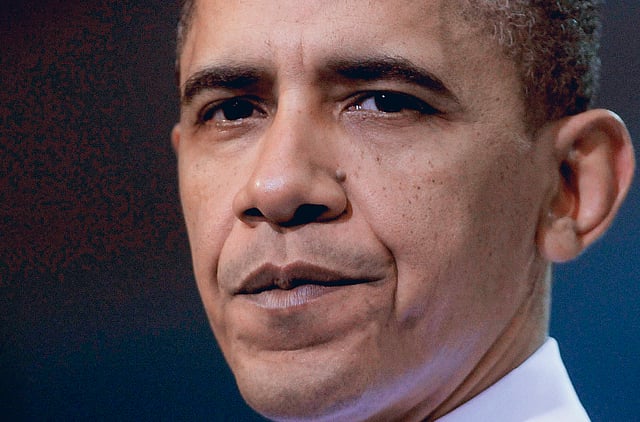
President Barack Obama's handling of the Gulf oil disaster could be a similar turning point. Despite his uneasy press conference and statements proclaiming he is in charge, despite visits to the scene to talk with officials rather than distraught commercial fishermen, his demeanour has come across as clinical rather than inspirational.
Even such well-wishers as Louisiana Democratic guru James Carville and former presidential adviser David Gergen have wrung their hands over his seeming disconnectedness. Carville wanted the president to fire officials and indict BP. (A criminal probe has now begun.) Gergen complained that if the United States had handled the Second World War like the Gulf oil spill, "We'd all be speaking German".
An inexplicable moment in a presidential press conference came when the president seemed unaware whether Elizabeth Birnbaum, the top official in his oil-industy-monitoring agency, had resigned or been fired.
Obama's standing is not helped by the fact that the Gulf oil disaster coincides with a kind of perfect political storm of problems for him at home and abroad.
At home there is the tawdry revelation that White House Chief of Staff Rahm Emanuel, a take-no-prisoners political operative, had co-opted former president Bill Clinton to offer favours to Congressman Joe Sestak in a failed bid to secure his withdrawal from Pennsylvania's Senate primary race. The aim was to clear the way for incumbent Arlen Specter.
Old guard Democrats, and even some jaded journalistic pundits, proclaim that this attempted bribery is normal business practice in Washington.
Different expectations
But that is exactly the president's problem. He was the knight on the white horse who won the election on a pledge to change Washington's sleazier ways. If he sanctioned the Emanuel initiative, it was a betrayal of that promise. If Emanuel acted without the president's knowledge, then Emanuel should have lost the president's trust, and possibly his job.
Meanwhile the Obama presidency is beset by:
- 10 per cent unemployment;
- a reputation for loading up future generations with debt;
- a failure, not entirely his fault, to achieve the bipartisan concord with Republicans he promised during his election campaign;
- a messy quarrel with Arizona over immigration because the US Congress has consistently declined to enact comprehensive immigration legislation. Nor is Congress displaying the mettle to do so soon.
Nor is there a whisper of enthusiasm for tackling another major looming challenge, the bankruptcy of Social Security. Bush courageously took a crack at this, despite all the political negatives. His effort foundered in congressional timidity.
Abroad there is the distinct probability that Iran will acquire the wherewithal to develop a nuclear weapon. And North Korea may kiss off all attempts to disarm its nuclear weapons. This does not augur well for the Korean Peninsula.
China is revelling in its new economic, financial, political, and naval power, and treats with case-by-case whimsy the Obama administration's requests to be helpful.
Israeli Prime Minister Benjamin Netanyahu is a thorn in the Obama administration's Middle East policy, and only proximity talks seem possible.
If Obama is to fulfil the bright promise that many Americans saw in his soaring campaign oratory, he needs a presidential retreat of the kind Jimmy Carter ordained at a low point in his presidency. Failed policies should be revised. Heads should roll. "Change" should become a reality and not a campaign slogan.
John Hughes, a former editor of the Christian Science Monitor, writes a biweekly column.
Sign up for the Daily Briefing
Get the latest news and updates straight to your inbox
Network Links
GN StoreDownload our app
© Al Nisr Publishing LLC 2026. All rights reserved.