More than 50 years ago (1957), the Soviets launched the world's first orbiting satellite, beating the US into space. For Americans, the so-called "Sputnik moment" was a wake-up call that pushed the United States to increase investment in technology and science education. Months later, the US launched the Explorer 1 satellite and the race was on. Children were encouraged to study math and science, and American know-how helped the US meet the challenge.
But things have slowed down dramatically since then, and the National Aeronautics and Space Administration (Nasa) has been trying since early November to get its latest shuttle ready for launch. In December, US President Barack Obama talked of the need for a new "Sputnik moment" to revitalise America's once-leading role in technology.
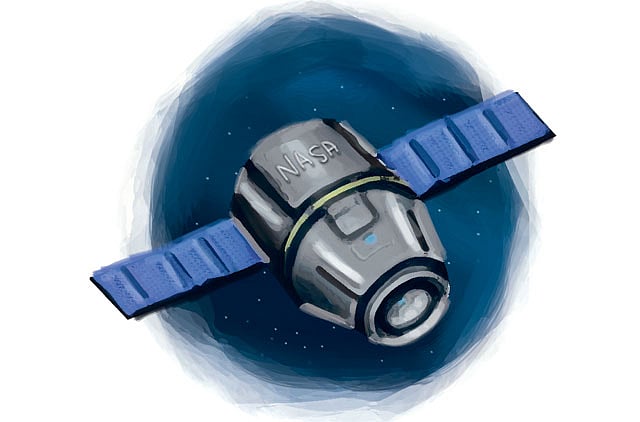
Ironically, that moment happened two days later, but with lamentably little media coverage. However, this Sputnik moment — actually a "Dragon moment" — delivers a somewhat different message. The launch of the Dragon spacecraft was in fact a US achievement, in a traditionally American spirit. On December 8, a US company, SpaceX, founded by an immigrant and financed mostly by private US investors, successfully launched a spacecraft into orbit and then recovered it from a splashdown in the Pacific Ocean.
Efficiency
The message is not just that STEM (science, technology, engineering, and math) education is necessary, but also that this achievement by a private company cost just a fraction of Nasa's budget in money and time. Governments are great at funding and carrying out research, but competitive private companies motivated by profit and glory tend to be more efficient and speedier in applying the results.
One notable example: right before the launch, SpaceX engineers found a few cracks in the second-stage engine nozzle extension. Rather than haul the spacecraft back to the shop for repairs, they simply analysed the flaw, trimmed off the affected section, and proceeded with the launch. (To be sure, they might have acted differently had the Dragon been carrying humans.)
The message of the Dragon moment is not that Nasa is clueless, but that government research agencies are not the right type of organisation to run routine operations that could be better handled by businesses. (Nasa in particular has been constrained by years of political infighting and patronage in the US Congress.)
Right now Nasa is spending $475 million (Dh1.74 billion) on a programme that has already been cancelled instead of on the space centre. The reason: a congressman managed to introduce a legal provision that prohibits Nasa from stopping the spending until a new budget has been approved. Because Nasa is still operating under an old budget, the cancelled programme continues to be funded.
But back to the Dragon, which succeeded for a number of reasons. First and foremost, SpaceX is a private company. Someone's own money is at stake, so it is not wasted. Its founder, Elon Musk, an immigrant from South Africa (who in his spare time also runs Tesla, the electric-car company), funded it with his own money (which he earned at PayPal, another start-up) and that of other private investors. (Yes, SpaceX does have contracts with Nasa, but for a fixed price per launch.)
The emphasis at SpaceX is on getting the job done, rather than just doing the job. Whereas governments and government contractors generally enjoy job security, private companies know that the money may run out. Also, private companies compete. Behind SpaceX is a crowd of other private companies developing spacecraft, including Masten Space Systems, XCOR Aerospace, Armadillo Aerospace, and Blue Origin.
Different approaches
These companies aren't all competing to build precisely the same kind of vehicle; in fact, each considers its own approach superior. This is efficient in the long run, as each player experiments and all of them learn from everyone's failures and successes. In the meantime, each is competing not for a single grand prize but for a share of a growing market.
It is this free market economy, which rewards useful innovation and purposeful risk-taking, that we should honour and recognise. The US government (or European governments, for that matter) can't get us out of our current economic mess any better than they can get us to the moon at this point. In most areas of endeavour, the government should be a demanding customer rather than a provider (or subsidiser).
In the US, government fostered the airline business — largely by buying cargo services from private airlines. It also built what became the internet — and then sensibly left most of the development and day-to-day operations to the private sector.
Now, under Obama's new and sensible space policy, the US government is planning to focus on flying to Mars and so-called "near-Earth objects," purchasing routine transportation to the International Space Station from companies such as SpaceX (instead of from the Russian space programme at $60 million or so per astronaut for every round-trip).
What the Dragon moment makes clear is that the ability to commercialise innovation, not just to create it, is what has made the US economy so robust over the long run.
Esther Dyson is a member of the Nasa Advisory Council and an investor in two private space-travel startups, XCOR Aerospace and Space Adventures.
Sign up for the Daily Briefing
Get the latest news and updates straight to your inbox
Network Links
GN StoreDownload our app
© Al Nisr Publishing LLC 2026. All rights reserved.