When it comes to national security, Michael V. Hayden is no shrinking violet. As CIA director, he ran the George W. Bush administration's programme of warrantless wiretaps against suspected terrorists.
But the retired air force general admits to being a little squeamish about the Obama administration's expanding use of pilotless drones to kill suspected terrorists around the world — including, occasionally, US citizens.
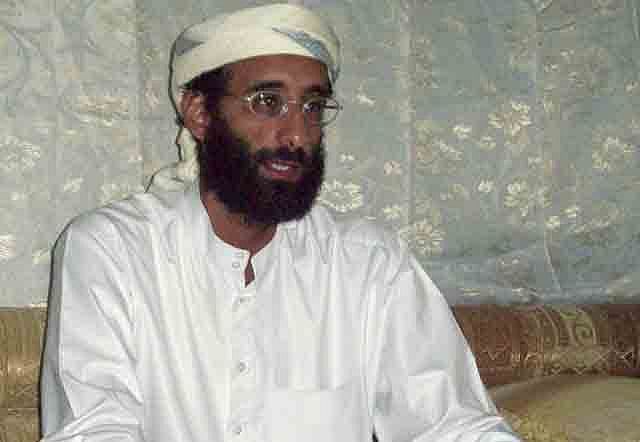
"Right now, there isn't a government on the planet that agrees with our legal rationale for these operations, except for Afghanistan and maybe Israel," Hayden told me recently. As an example of the problem, he cites the example of Anwar Al Awlaqi, the New Mexico-born member of Al Qaida who was killed by a US drone in Yemen last September.
"We needed a court order to eavesdrop on him," Hayden notes, "but we didn't need a court order to kill him. Isn't that something?" Hayden isn't the only one who has qualms about the ‘targeted killing' programme. The chairman of the Senate Intelligence Committee, Senator Dianne Feinstein (Democrat-California), has been pressing the administration to explain its rules for months.
In a written statement, Feinstein said she thinks Al Awlaqi was ‘a lawful target' but added that she still thinks the administration should explain its reasoning more openly "to maintain public support of secret operations."
As Hayden puts it: "This programme rests on the personal legitimacy of the president, and that's dangerous." There has been remarkably little public debate about the drone strikes, which have killed at least 1,300 people in Pakistan alone since US President Barack Obama came to office.
Little debate inside the US, that is. But overseas, the operations have prompted increasing opposition and could turn into a foreign policy headache. It's odd that the Obama administration, which came into office promising to be more open and more attentive to civil liberties than the previous one, has been so reluctant to explain its policies in this area.
Legal thinking
Obama and his aides have refused to answer questions about drone strikes because they are part of a covert programme, yet they have repeatedly taken credit for their victories in public.
After months of negotiations, Attorney General Eric H. Holder Jr won approval from the White House to spell out some of the administration's legal thinking in the Al Awlaqi case. But his statement, originally promised for last month, has been delayed by continued internal wrangling.
The administration has said that strikes against suspected terrorists are justified for two reasons: First, that Al Qaida is at war with the US, which makes any participant in Al Qaida operations an enemy combatant; and second, that anyone directly involved in terrorist plots against Americans poses an ‘imminent danger' to US security.
But civil libertarians argue that in a murky war against terrorism, an American such as Al Awlaqi deserves some kind of due process before his name goes on the CIA's ‘kill list.' In fact, officials say, Al Awlaqi did get more due process than most Al Qaida suspects on the list. They say the administration made a point of naming Al Awlaqi publicly as an Al Qaida leader — putting him on notice, in effect — before he was killed.
And they say the Justice Department held that Al Awlaqi could be killed only if it was not feasible to capture him. The administration has refused to release that legal opinion, in part because it's not sure it wants those standards to turn into a binding precedent for later cases.
But there are questions that go beyond the legal underpinning for targeted killing. Who puts names on the ‘kill list,' and who reviews them? And is the process rigorous enough to withstand outside scrutiny? In the case of a US citizen such as Al Awlaqi, Obama makes the final call.
The biggest problem with this newly invented form of clandestine warfare is that its rules have been made on the fly. The Obama administration, like the Bush administration, has made crucial decisions with little outside review and virtually no public scrutiny.
The administration says it has the authority to kill US citizens who are active in Al Qaida, but it's never explained how that squares with the Constitution's guarantee of due process. It's past time that it did so.
Sign up for the Daily Briefing
Get the latest news and updates straight to your inbox
Network Links
GN StoreDownload our app
© Al Nisr Publishing LLC 2026. All rights reserved.