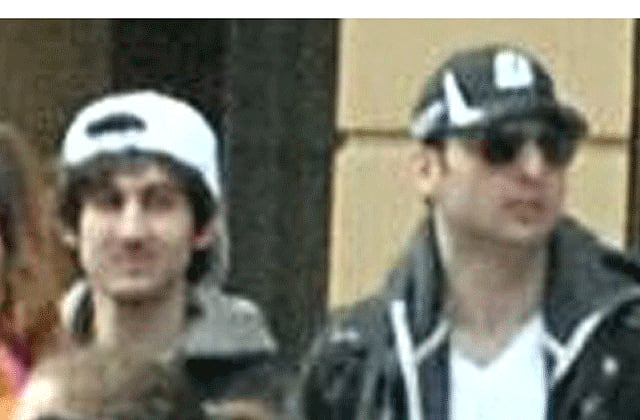
Why is it, you ask, that the Federal Bureau of Investigation (FBI), to which the US government allocates an annual budget of $3 billion (Dh11 billion) for the sole purpose of ferreting out homegrown terrorists, failed to track down the Tsarnaev brothers, Tamerlan and Dzhokhar, before they allegedly detonated their bombs at the Boston Marathon?
After all, according to published data, between September 11, 2001, and August 2011, the Bureau was so competent at doing what it was tasked to do that it arrested — and the Justice Department later prosecuted — 508 defendants accused of planning terrorist attacks on US soil. So why did the Tsarnaevs, along with others, say, like Nidal Hassan, who had openly corresponded with the Yemen-based terrorist Anwar Al Awlaki before he killed 13 people and wounded 29 others, in the Fort Hood shootings in 2009, slip through the cracks? And who, pray tell, were those 508 defendants indicted, prosecuted, convicted and incarcerated by the authorities?
Early in his book, The Terror Factory: Inside the FBI’s Manufactured War on Terrorism (2013), Trevor Aaronson — who had done more than any other investigative journalist of his generation to document the less-than rational aspects of the FBI’s hunt for domestic terrorists — makes it clear that most of these would-be-terrorists were vulnerable fools or loud-mouthed braggarts duped by the FBI’s thousands of informants and snitches paid to entrap gullible suspects into seemingly agreeing to engage in acts of terror.
“The FBI’s thousands of informants and billions of dollars have not resulted in the capture of dozens of killers ready and able to bomb a crowded building or gun down people in a suburban shopping mall”, writes Aaronson. “Instead, the FBI’s trawling in Muslim communities has resulted largely in sting operations that targeted easily susceptible men on the margins of society ... All of these men were involved in FBI terrorism stings in which an informant came up with the idea and provided the necessary means and opportunity for the terrorist plot. While we have captured a few terrorists since 9/11, we have manufactured many more”.
Consider one such case, that of the hapless 52-year-old Bangladeshi immigrant Mohammad Hussain who, by his standards, had accomplished a lot in his adopted homeland. Less than two decades after he had arrived in the US, in 1985, with his family and elderly parents, Hussain was operating a pizzeria in Albany, New York, and on the side buying run-down properties at municipal auctions, fixing them up and renting them out. He had accumulated real estate valued at nearly a million dollars — chump change to an American entrepreneur, but a fortune to an impoverished immigrant from Bangladesh. Still, because of his overreach, Hussain had a cash flow problem.
Enter Malek (whose real name is Shahid Hussain), a seemingly affluent immigrant businessman from Pakistan who, after weeks of befriending the unsuspecting Bangladeshi, offered to lend him $50,000 to take care of his unpaid bills. Malek confided in Hussain that the money came from Jaish-e-Mohammad, to which he belonged as a “mojahed”. Malek, a convicted criminal and now an FBI agent provocateur, took Hussain to his warehouse where he showed him what was purported to be weapons and ammunition, including a shoulder-held missile, that he claimed to have imported from China.
Now we will cut this long, but sad, story short. Hussain was arrested in August 2004 and charged with conspiring to aid a terrorist group and money laundering. At his trial, he was sentenced to 15 years in jail. “I never had any intention of harming this country”, Hussain abjectly told the judge. “I’m just a pizza man, I make good pizza”.
The case of Mohammad Hussain is typical of FBI sting operations over the last decade or so where the agency, desperate to thwart a terrorist plot, would resort to creating one, such as, say, the plot in 2009 involving a shady informant who induced four undereducated African Americans, who had converted to Islam while in prison, to agree to shoot down military planes out of an Air National Guard base in Newburgh, New York, and to blow up two synagogues in the Bronx, or the plot attributed to the so-called Fort Dix Five to stage an attack against military personnel stationed at Fort Dix, New Jersey.
So why then, you still ask, has the FBI failed to spot the Tsarnaev brothers before they struck, though the Bureau had reportedly questioned Tamerlan in 2011, at the request of the Russian government, giving the terrorist a clear bill and letting him out of their sights?
Search me. Or was it perhaps because they were too busy concocting plots against people like a naive pizza man?
But whichever way you look at it, that clearly was not the FBI’s finest hour. Nor is it this government agency’s finest hour when you consider that it spends $3 billion annually to hunt down an enemy that is largely of its own creation.
As Aaronson concluded: “Evidence in dozens of terrorism cases — involving plots to blow up synagogues, skyscrapers, military recruiting stations and nightclubs — suggest that today’s terrorists in the United States are nothing more than FBI creations, impressionable men living on the edges of society who become bomb-triggering killers only because of the actions of FBI informants. The FBI and the Justice Department then cite these sting cases as proof that the government is stopping terrorists before they strike.”
Except when they strike.
Fawaz Turki is a journalist, lecturer and author based in Washington. He is the author of The Disinherited: Journal of a Palestinian Exile.
Sign up for the Daily Briefing
Get the latest news and updates straight to your inbox
Network Links
GN StoreDownload our app
© Al Nisr Publishing LLC 2026. All rights reserved.