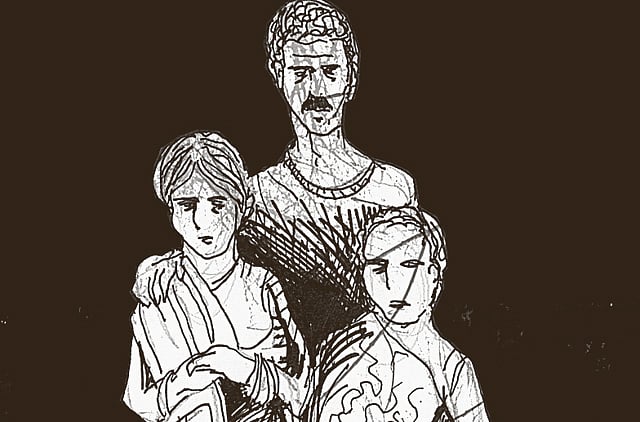
Tamar is a small adivasi (tribal) village in the deep jungles of Chhattisgarh. Two farmers from the village are fighting a losing battle against a young Congress member of parliament. He has forcibly built a factory on their fields, spread over 10 acres. He belongs to an industrialist scion from Haryana.
One farmer, possessing one-and-a-half acres, is a policeman who has resigned from his job to devote all his time to get back the land. He and the other farmer, having seven and-a-half acres of land, often travel 400 kilometres to Raipur, the state capital, to knock at the door of top officials because the farmers have got no justice at the district headquarters, Raigarh.
Both the farmers have been dubbed Maoists who are known for their extreme left views. Prime Minister Manmohan Singh has characterised the force as the "single biggest internal security challenge" to India. The two farmers have nothing to do with the Maoists or Naxalites, a group of radicals who initiated their armed struggle in 1967 from a village called Naxalbari in West Bengal. But since the Maoists have evoked revulsion in the last few months after slaughtering 24 policemen in West Bengal, and 12 villagers in Bihar, including the two who were beheaded, the government finds it convenient to call the two farmers Maoists to divert attention from the forcible occupation of the land. But the two farmers are not an exception.
Some of the uprooted tribals, numbering 200,000, have crossed over from Chattisgarh to the jungles in Maharashtra, Orissa and Andhra Pradesh. Many wait to be rehabilitated (40,000 are still in camps). Tribals could have used their poisoned arrows to defend themselves as they have done in the past. But they say that they trust the government which has promised to shift them to other lands where they will have facilities to send their children to schools and reach the sick easily to health centres. Tribals have no reason to disbelieve the government which gives them one kilo rice for two rupees (16 fils).
The National Human Rights Commission gave a critical report against the treatment meted out to tribals. On the basis of the report, the Supreme Court has instructed the Chhattisgarh government to rehabilitate the dispossessed adivasis. Every collector has been asked to rehabilitate the ousted. But there is no action yet, no land in sight.
Lack of development
An overwhelming number of tribals, roughly 84 million, an 8.2 per cent of India's population, are not with the Maoists in their rebellion against the State. Tribals are primarily victims of lack of development and corruption. In fact, they find themselves caught between the government's neglect and the Maoists' gun.
The Maoists have only made things more difficult for the tribals because their war cry and their violence have driven the state to adopt more fascist tactics. Unthinkingly, New Delhi has given its operation the nomenclature of Green Hunt. If at all it is a hunt, it is of the Red and it endangers whatever green is left. The ravages of operation through the jungles can be devastating. The innocent will bear the brunt.
I also met Dr Vinayak Sen, reportedly a Maoist at Raipur. He is president of the Chattisgarh's PUCL (People's Union for Civil Liberties). He is a doctor who has spent two years in jail. I did not see anything violent either in his deeds or words. Why the government took umbrage against his fight for civil rights of the suppressed tribals is not understandable. Such people should be given recognition for the good work they are doing to retrieve tribals from the Maoists' clutches.
How can the culture of violence be superior to the culture of peace? Bullet cannot replace ballot. The Naxalites' advantage is not the fear they evoke, but the hope they generate through the promise of an egalitarian society.
The crisis of Indian politics, as I see, is a crisis of change. It reflects the widening gap between the base of polity and its structures. Both political and economic processes have brought sections of the peripheral and deprived social strata in the open without the rulers doing anything about it. There is a growing demand for purposive and principled politics and mounting anger over the neglect of public interest by political parties and leaders.
Poverty, the key factor
Union Home Minister P. Chidambaram may be able to suppress the Maoists by employing the huge apparatus the government has built in the name of law and order. But he should realise that some other Maoists will come up if 70 per cent of people remain poor. Chidambaram's advice to the Maoists to give up violence would go down better if he were to announce the economic package as well. He must have seen how the movement confined to a few villages in West Bengal some 50 years ago has spread to Orissa, Bihar, Jharkhand, Chhattisgarh and Andhra Pradesh.
Political parties should tear a leaf from the book of the Maoists. Today, they have come to represent a socio-economic change in the country. They alone talk about such an agenda. What they do not realise is that they will be a big force to reckon with if they take to electoral politics.
Kuldip Nayar is a former Indian High Commissioner to the United Kingdom and a former Rajya Sabha member.
Sign up for the Daily Briefing
Get the latest news and updates straight to your inbox
Network Links
GN StoreDownload our app
© Al Nisr Publishing LLC 2026. All rights reserved.