If few post-1979 revolutionaries doubted that Iran could export its insurrection to the rest of the Muslim world without encumbrance, even fewer questioned the zeal with which the vilayet-e faqih (guardianship of the jurist) principle would be applied among Sunnis, especially in Arab countries with significant Shiite populations. The Iranian phoenix, which was backed by the wily Ayatollah Ruhollah Khomeini, who fully understood his country’s geo-strategic advantages, soared high. A little more than four decades later, however, Iran confronted existential challenges. Will it continue to literally shake the vast realm surrounding it or, more likely, strive to secure yet another regeneration to save itself?
Several contests preoccupied Iran even if the most acute challenge remained the negotiations over its disputed nuclear programme with the six world powers that imposed and maintained strict sanctions that strangulated its economy. For nearly a decade, various initiatives failed to lead to an accord that, presumably, ensured Iran’s nuclear ambitions to be limited to civilian production.
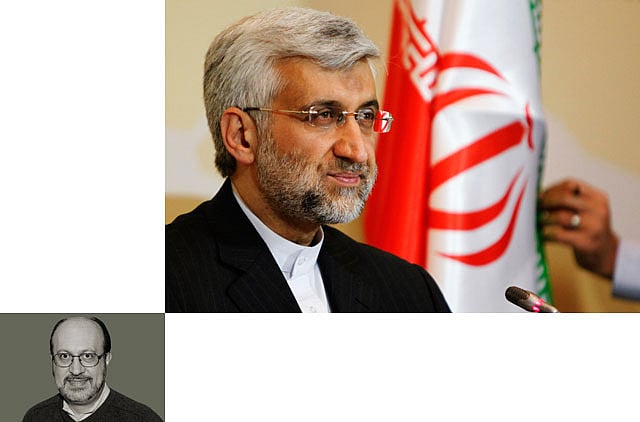
During the most recent negotiations in Almaty, Kazakhstan, the so-called P5+1 (five permanent members of the UN Security Council — Britain, China, France, Russia and the US — plus Germany), led by the European Union representative, Catherine Ashton, were unsuccessful. No Iranian engagement to voluntarily curb its nuclear programme was forthcoming, while Saeed Jalili, the top Iranian negotiator, emphasised his country’s right to enrich uranium for peaceful purposes. Tehran claimed this entitlement as a signer of the Nuclear Nonproliferation Treaty, as it aimed to produce atomic energy and to expedite medical research, even if western powers feared that Iran was trying to develop nuclear weapons.
In fact, alarm bells over unending negotiations were raised by Israel, which repeatedly threatened to launch military strikes against Iranian nuclear sites, while the Barack Obama administration — wary of yet another war — stressed diplomacy. Still, in the absence of a felicitous outcome, belligerent voices added to the overall pressure that, undoubtedly, left an impact. Additional sanctions against Iran were likely to come soon, after the US Secretary of State, John Kerry, had warned that talks on the Iranian nuclear programme would not last forever.
Tehran was also mired in the gigantic sectarian bloodletting in Syria that, despite optimistic predictions that it see President Bashar Al Assad prevail, was bound to end in a total collapse of the Baath regime. Tehran tied itself with Damascus and assumed the kind of burdens — civil war, Sunni-Shiite schisms, unprecedented financial and military commitments, fresh diplomatic isolation and, above all, a sharp division between Arabs and Persians — that few countries ever endured.
By throwing the gauntlet and making the Syrian national tragedy its own, Iran contributed to the growing Arab perception that it wished to export its still unfolding revolution, which guaranteed a total rejection. Moreover, by taking unprecedented risks in Bahrain and Lebanon, Iran has ensured that the vast majority of Arabs identify it as nothing more than a regional threat.
Indeed, few Arabs comprehended how a presumably religious nation could participate in the unlimited violence that Damascus inflicted upon its own predominantly Muslim population. Even fewer accepted that non-Arab Iranians ought to determine the fate of an Arab state, which rekindled dormant fratricide between Sunnis and Shiites. Of course, many also watched how the Syrian conflict spilled over into Lebanon, where sectarian tensions were more or less permanent. In the event, many Arabs were suspicious of Iranian intentions, as they wished to distance themselves from the kind of calamities that targeted them. All rejected Iranian regional hegemony even if they simultaneously wished to forge correct ties with their powerful northern neighbour.
Against a plethora of Iranian activities, starting in Bahrain and ending in Lebanon, Arabs struggled to find mutually convenient initiatives that were non-threatening and that did not set the region on fire.
Bahrain dismissed reports that new mediations with Iran were under way, stressing that Manama would rely on itself and its GCC allies to address grave domestic concerns. It refused Iranian interferences and saw the solution to its post-2011 crises through a national dialogue initiative that was launched on February 10 this year. Ironically, Manama and its fellow GCC allies rapped a suggestion by Tehran to discuss Bahrain at the P5+1 nuclear talks, which they claimed was “further evidence of Iranian interference in the domestic affairs of Arab countries and its attempts to undermine their security”.
This was not the only example of Iranian isolation. The looming loss of the Al Assad patronage transformed Hezbollah in Lebanon as well. Although still allied to Syria and beholden to Iran, Hezbollah accepted the recent fall of the Najeeb Mikati government, even if the counter-coup d’état meant a considerable loss of control. Hezbollah reluctantly accepted the change because Iran was now far more realistic vis-a-vis the Al Assad regime and party leaders drew correct conclusions. They remembered that Lebanese security officials uncovered an alleged Syrian plot to bomb sectarian targets in Lebanon when Beirut arrested Michel Samaha, a former cabinet minister and close adviser to Bashar Al Assad. It was no coincidence that Hezbollah officials finally accepted the authority of the state to defend Lebanon. Even if the security official who unravelled the operation, Wissam Al Hassan, was assassinated, Hezbollah conceded that it could no longer accept Syrian offers to reignite the dormant civil war.
For its part, Iran was not ready to sacrifice Hezbollah to save Syria either as it hoarded the party and its powerful arsenal as a spearhead in the Levant against potential P5+1 negotiations.
Given significant regional challenges and with a looming power struggle associated with its presidential elections just 10 weeks away, Tehran was thus akin to a giant albatross with clipped wings. Its flights significantly hampered by rapidly changing circumstances that literally threatened whatever gains were accumulated since 1979.
Dr Joseph A. Kechichian is the author of Legal and Political Reforms in Saudi Arabia (Routledge, 2012).
Sign up for the Daily Briefing
Get the latest news and updates straight to your inbox
Network Links
GN StoreDownload our app
© Al Nisr Publishing LLC 2026. All rights reserved.