Take the pressure off: keep hypertension in check
Change your lifestyle and dietary habits to keep hypertension in check
Among the many maladies of modern life, hypertension is a matter of serious concern because of the potential risk factors associated with it. If it remains undiagnosed and is not monitored regularly, it can lead to heart disease and renal failure.
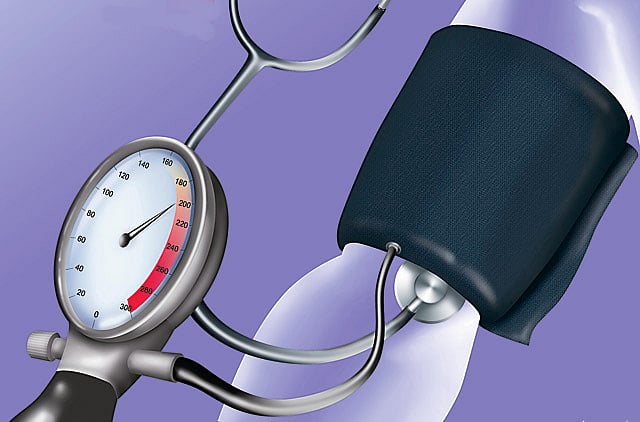
High blood pressure (HBP) or hypertension is a condition where the blood pressure in the arteries increases. "HBP is not just numbers recorded in a doctor's office, but an indication of an underlying problem," says Dr Fatma Almarashi, consultant in endocrinology, diabetes and metabolism. "It is diagnosed after finding that the patient's BP is more than 140/90 mmHg (millimetre of mercury) using two standardised sphygmomanometer measurements taken at least after two successive visits to the doctor during a two-month period. If the patient's initial BP reading is severely elevated, the doctor can confirm the diagnosis in a shorter period."
Home and ambulatory blood pressure measurement devices are also available to monitor levels outside a hospital. It helps to eliminate effects of ‘white coat hypertension', where the patient's BP shoots up just by seeing a physician or being in a clinical environment.
HBP should be addressed immediately because it is a risk factor for metabolic syndromes, diabetes, myocardial infarction, stroke and other vascular diseases, heart failure, kidney disease and dementia.
Controlling HBP
Lifestyle modifications can help patients control the condition. "Weight reduction, for instance, helps a patient substantially control HBP. For each 10kg loss in weight, a patient experiences about 5-10 mmHg reduction in SBP (systolic BP) and brisk walking at least for 30 minutes a day for most days of the week leads to about 4-9 mmHg reduction in SBP," says Dr Almarashi.
Naturopath Dr Parviz Rashvand agrees. "Stress and a sedentary lifestyle are major causes of HBP, since they lead to hardening of blood vessels and fatty deposits in the walls of the arteries," says Dr Rashvand of Synergy Integrated Medical Centre.
Natural approaches to health and longevity, including lifestyle modifications, can always improve the quality of life. HBP can be controlled by addressing the possible causes that include atherosclerosis (hardening and narrowing of the arteries due to fatty deposits), nutritional deficiency or excesses, stress, anger and anxiety and obesity, he explains.
Doctors believe that poor eating habits — typically diets rich in saturated fats, meat and refined products, and lack of consumption of fresh vegetables, fruit and fibre from whole grains — are to be blamed for hypertension.
"The cholesterol-free commercial vegetable oils, shortening agents and margarine are also not good for health, as they contain trans-fatty acids," says Dr Rashvand. "One should avoid salt, coffee, cigarettes, artificial sweeteners (especially aspartame) and preservatives such as monosodium glutamate as much as possible."
Instead, Dr Rashvand recommends fresh, green and leafy vegetables and fruits, beans, raw nuts and potatoes. Both calcium and magnesium, foods that contain high amount of essential fatty acids, natural vitamin C, a high quality of zinc or copper supplement, evening primrose oil and coenzyme Q10 (abbreviated as CoQ10) are good for people suffering from hypertension, says Dr Rashvand.
The Dash diet
Dr Almarashi recommends the Dash (Dietary Approaches to Stop Hypertension) diet. "It is easy to follow, both at home and in restaurants, and is effective for men and women of all ages and races. It is not restrictive and doesn't include special foods or instructions in the plan. Following the Dash diet a patient can reduce SBP by 8-14 mmHg."
Safeek Ali, Dietician at Welcare Hospital, adds that the Dash diet — promoted by the National Heart Lung and Blood Institute, USA — helps control hypertension. This diet plan limits the intake of salt and promotes consumption of fruits, vegetables, low-fat dairy products, nuts, whole grains, fish and poultry.
"The goal of a patient suffering from hypertension should be to follow a healthy eating pattern, maintain a healthy body weight, desirable blood lipid levels and blood pressure levels," Ali says.
Though HBP is normally associated with adults, it can be found among children and adolescents as well. "Kidney and heart diseases and hormonal disorders often cause hypertension in children. In rare cases meningitis, encephalitis or brain tumours can also trigger it," says Dr Almarashi.
However, it has also been noted that many children with no health issues develop hypertension because of an unhealthy lifestyle — obesity, unbalanced diet and lack of physical exercises — and family history. Hypertension should be monitored and treated accordingly to stave off other life-threatening diseases.
Hypertension during pregnancy
Although HBP during pregnancy is common it should be addressed immediately to avoid any side effects. Some women develop HBP only towards the end of their pregnancies and don't experience any associated symptoms. However, sometimes it can lead to pre-term labour, other complications and maternal and foetal morbidity. The various types of hypertension during pregnancy are:
• Chronic hypertension: Sometimes women have hypertension before conception or develop it before 20 weeks of gestation.
• Gestational hypertension: Patients develop hypertension after 20 weeks of pregnancy and return to normalcy after delivery.
• Pre-eclampsia: Sometimes chronic and gestational hypertension lead to pre-eclampsia. It is associated with protein in the urine. If undiagnosed it can lead to serious consequences for both the mother and the baby.
Sign up for the Daily Briefing
Get the latest news and updates straight to your inbox
Network Links
GN StoreDownload our app
© Al Nisr Publishing LLC 2026. All rights reserved.