A state of good health
Kerala combines its strengths in traditional and modern medicine with entrepreneurial wisdom
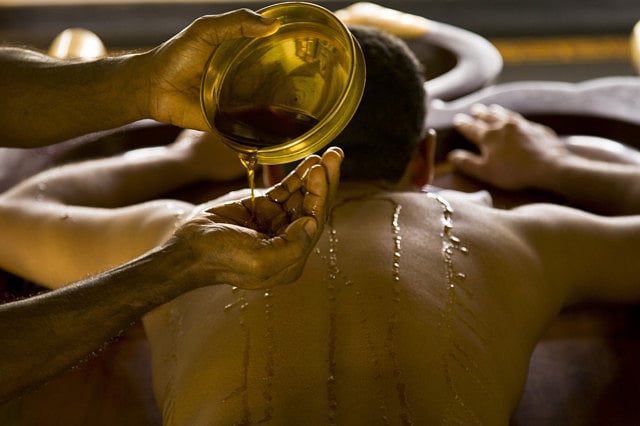
A new cluster of hospitals, a medical college and an investment of Rs21.5 billion (about Dh1.5 billion) announced by the Dubai headquartered DM Healthcare may have been enough to put Kerala on the map as a destination for medical tourism. But the picturesque Indian state is also increasingly becoming known for its transparent, professional programmes in traditional medicine, even tapping into Kalaripayattu, a centuries-old martial arts.
Medical plans
Dr Moopen’s plans include the Aster Medcity, set over 40 acres of land. The first phase is being developed at a project outlay of Rs5 billion, and includes a 550-bed hospital with nine speciality centres in disciplines such as cardiology and oncology. The campus will have a 500-seat convention centre and a four- or five-star hotel. In addition, DM Healthcare plans to expand the existing facilities at the Malabar Institute of Medical Sciences (MIMS) multi-speciality hospitals in Kozhikode and Kottakkal. It plans to invest Rs3 billion in MIMS over the next three years. As part of its expansion, MIMS is also building a 250-bed hospital in Kannur and a 200-bed hospital in Palakkad. Yet another project is a medical college with a 700-bed hospital in Wayanad.
International clientele
“The Medcity is not for the local population alone. It will cater to patients from other parts of India and abroad. We have a presence in four countries in the Middle East. The difference in cost, our specialised facilities and the ease of travel to Kerala from this region should lead to a large flow of patients,” says Dr Moopen, speaking to GN Focus.
Dr Moopen says that while the facilities will include rehabilitative Ayurveda treatments, his focus remains on modern medicine — with insurance coverage.
“If you have a good reputation and accredited facilities, insurance companies may want to send people for treatment to Kerala because the costs are better suited. And we enjoy an advantage because we already have 160 medical centres in the Middle East,” he says.
Traditional treatments
Dubai resident Krishnapriya Feroze has become a regular visitor to the state. Traditional physiotherapy and the massage-based treatment offered in a residential facility there have resulted in a noticeable improvement in the health of her six-year-old son, Akkin who suffers from spastic diplegia, a type of cerebral palsy. The condition primarily affects the legs, which means that the child has difficulty reaching milestones such as crawling, sitting or walking.
“We tried physiotherapy for six years, as prescribed. But it’s only now, with traditional therapy in Kerala, that the change has been noticeable. He can now crawl, from one room to another, and can stand with his feet flat on the ground, whereas earlier he would just stand on his toes,” says Feroze, speaking to GN Focus.
While the three brothers act as preservers of centuries-old knowledge, they also possess an entrepreneurial spirit. The traditional institution thrives on stage shows, choreography, action choreography for films, Kalaripayattu workshops, Ayurvedic treatments and holiday packages.
Home away from home
Patients mostly seeking treatments for nerve disorders, fractures, dislocation, spinal or knee problems, ligament injuries and stroke-induced side paralysis, are offered accommodation and food within the premises. Their companions can also stay at the centre.
“Akkin’s treatment is in stages of 21 days. And we have spent a total of Rs70,000 on the treatment, stay and food,” says Feroze, who will return home to Dubai before the second stage of treatment for her son ends.
What sets the institution apart is not just the treatment but the transparency and professionalism with which it approaches medical issues. “They never claimed that our son would miraculously start walking without support. They said there is definitely room for improvement and they worked hard to make it happen, with a daily one-hour massage. Now they have prescribed a home care regime which includes a massage that I can do for my son,” she says.
Kumar says that the skills are passed on from generation to generation. “It is 15 years of training. Our children are already learning. In addition, students from nearby Ayurveda colleges come in for internships. We teach them some of our skills but not all.” n
Sign up for the Daily Briefing
Get the latest news and updates straight to your inbox
Network Links
GN StoreDownload our app
© Al Nisr Publishing LLC 2026. All rights reserved.