Always wanted a large family? Looking to give something back to society? Whether it's celebrity adoption mania you're inspired by or whether you're driven by more altruistic motives, adoption is a wonderful way to become a parent.
The process of adoption, however, is challenging and can be an emotional roller-coaster ride for prospective parents. But despite the challenges, the anxieties, the long wait and the stress, adoptive parents say the reward is second to none. The experience of bringing a child home after months of emotionally exhaustive formalities is no less exciting and ecstatic than holding your biological child in your arms for the first time.
"Your children are not your children/They are the sons and daughters of Life's longing for itself/They come through you but not from you/And though they are with you yet they belong not to you."
Lebanese legend Khalil Gibran wrote those words a long time ago, but they ring true even today. Dr Andrea Tosatto, a Dubai-based clinical psychologist who regularly counsels prospective adoptive parents and prepares home studies, a mandatory requirement for international adoptions, would agree.
"How does it matter if you listen to your favourite song on an iPod or another MP3 player?" asks Dr Tosatto when GN Focus met him at the Synergy Integrated Medical Centre in Jumeirah. "This is what I always ask prospective parents whenever they wonder whether they would be able to love their adopted children in the same way they would have loved their biological child. There cannot be any difference in the way a parent loves or feels about his/her children, biological or adopted. For her they are still her children," he says.
Though adoption is not widely common in the UAE, expats can legally adopt children and raise them up here. However, this is a complicated process as it involves plenty of paperwork and often an excruciating period of uncertain wait.
Is it legal?
Dr Tosatto says that any couple wishing to adopt internationally must first seek permission from their embassy in the UAE and understand thoroughly their country's international adoption criteria, as rules differ from country to country. "For instance, if a British couple decides to adopt a child from Ethiopia, they have to find out from the UK embassy whether legal adoption from Ethiopia is allowed in Britain. Accordingly, the embassy will issue a no-objection letter to the couple following which they can continue with the adoption process."
Once prospective parents decide to go ahead, they need to contact a licensed social worker or a clinical psychologist who can prepare a home study report. "Following regulations set by the Hague Convention agreement, home study is needed for all international adoption where a social worker tries to ascertain the suitability of a couple as adoptive parents and also if they have all the necessary resources to bring up a child in a healthy environment," says Dr Tosatto.
"Couples need to spend at least ten hours with us, which gives us some insight into their personalities and their motives for adoption. We are not here to judge personalities. We just want to ensure that people fully understand the kind of commitment they need to make when they agree to adopt a child."
While preparing home studies, psychologists or social workers also educate couples about what to expect during the process. "If a couple say, for instance, that they want to initiate the adoption process yet also try another cycle of in vitro fertilisation (IVF) to check if they can have a biological child, I often advise them to suspend adoption formalities until they see the results of the fertility treatment. Adoption and IVF treatment are both gruelling experiences and should not be pursued together," says Dr Tosatto.
Omana Menon is the only person accredited in the GCC states by the Central Adoption Resource Agency to help expats adopt Indian children. "I always advise couples to gather as much information as they can about adoption and what they can expect in the process before opening a home study file with me," she says. I never encourage couples to adopt children when one spouse is hesitant or nurtures different views on adoption or parenting. During the home study interview we talk about their reasons for adoption, family backgrounds and also make them aware of the emotional and financial issues that they may have to undergo during and after the adoption."
She says a social worker primarily assesses the emotional wellness and financial stability of prospective parents during the home study. The couple must have a steady source of income to support a child, says Menon, who has helped more than 1,500 Indian children find homes and new lives in the GCC over the past 25 years.
Couples who aren't financially comfortable will not have a psychologically stable relationship and will be unable to provide a balanced environment for a child's development, Dr Tosatto points out.
Varied time frames
Once the initial assessment is done, the home study report and a portfolio containing all the details of the prospective parents are sent to the couple's chosen orphanages for their consideration. The time it takes for a child to be placed in a home varies from country to country. Adoption formalities can take between three months and couple of years. "In some countries the process can be completed really fast while in others it can stretch on for months," says Dr Tosatto.
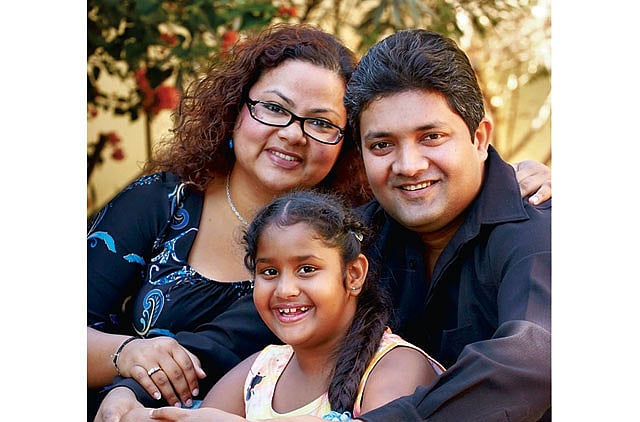
Shiladitya Nandy, a Dubai resident from India, says it took him and his wife, Indrani Bose, two years to bring their daughter Nayantika, now nine, to Dubai after they began the process in 2004. "We adopted Nayantika from an orphanage in Delhi when she was three years old. In India priority for adoption is always given to resident Indians. After submitting our dossier to several homes in India, we had to wait nearly a year before we were offered a child," Nandy says.
The whole experience was tough on the couple, both airline professionals, as the whole process involved large amounts of paperwork and several visits to India — there were periods when they flew to Delhi every weekend so as to work through the Indian red tape and speed things up. Yet, Nandy says it was well worth it. The couple is now happily settled with Nayantika and is planning to bring a sister for her from India.
Things don't end there, however: even after a child is comfortably settled in your home, psychologists must prepare post-placement reports for the adopted child to send them on to the orphanage he/she was adopted from.
*********
Documents needed to start the process in the UAE
Medical evaluation reports of both parents
Blood tests for HIV and Hepatitis B
Photocopies of passports and marriage certificate
Details of referees
Police clearance certificate
Sterility report (for some countries)
Residence proof
Salary/income certificate
Bank statements and complete financial details
A photograph of the couple
A childcare arrangement letter in case the parents die while the child is still a minor
For more information, contact Dr Andrea Tosatto of Synergy Integrated Medical Centre at 04 348 5452, and Omana Menon at 04 344 1455 for the adoption of Indian children.
Sign up for the Daily Briefing
Get the latest news and updates straight to your inbox
Network Links
GN StoreDownload our app
© Al Nisr Publishing LLC 2026. All rights reserved.