Taking the healthy option
The sourcing, distribution and storage of food is in the spotlight as we all become more enivronmentally and socially aware
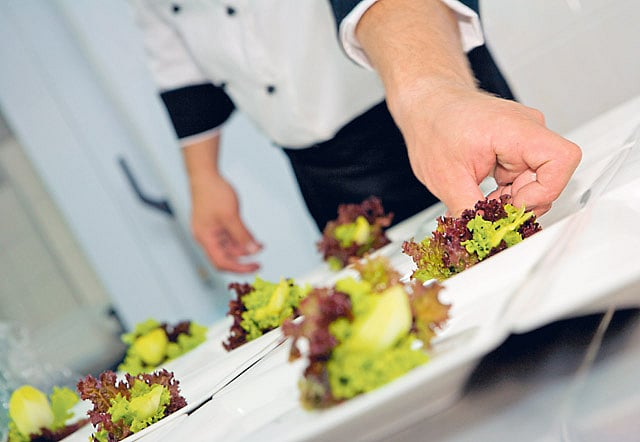
Sourcing foods in the Gulf has long been a balance of importation and production and the tendency has been to rely heavily on air shipment of fresh produce. In some instances, the spinach on your plate might may have come from as far away as California's fertile central valley.
Nils El Accad, Chief Executive Officer of Organic Foods and Café, has a vision for healthy eating in Dubai, and this means the source and production of food is taken very seriously. El Accad says, "We take carbon footprint into account with any product that we offer, and we work very hard to supply food that consumes a minimum amount of fossil fuel from production through delivery to the customer."
He adds, "Ninety-nine per cent of consumers probably don't completely understand what the term organic really means, so while we call ourselves Organic Foods and Café, organic is actually our minimum standard, and we offer ‘biodynamic' food as much as possible."
Traditional wisdom
Biodynamic farming, which is based on principles developed by Dr. Rudolf Steiner in the 1920s, is a practice of agriculture that focuses on the application of organic manure and compost at the optimal state of fermentation, utilising techniques such as crop rotation and mixed cropping so that plants can grow symbiotically.
According to Biodynamics.com; "This approach treats farm manure and compost as the most valuable fertilisers. (These materials) contain organic matter on which the soil bacteria and earthworms can feed and then revitalise the soil. They contain colloids, which absorb moisture and mineral solutions in the ground, form a crumbly structure, and eliminate the danger of erosion. The careful storage of manure in heaps covered with earth, as taught by the biodynamic method, avoids nitrogen loss to a great degree," culminating in a process that is part science, and part traditional wisdom. Biodynamic farming also excludes genetically modified organism, hormones, and antibiotics.
What that means to the consumer, is that biodynamic farming produces the most nutrient-rich food possible, while keeping potentially toxic chemical levels to their theoretical minimums, well below those limits described by, for instance, the United States Department of Agriculture's Certified Organic standards. For that reason, Organic Foods Café doesn't offer any off-season, greenhouse grown produce, which, according to Nils, "grows too fast to absorb any nutrients and as a result can actually have the effect of stripping nutrients out of your body".
Reuse and recycle
Another issue, about which Nils is demonstratively passionate, is that of the inordinate number of plastic bags generated by shopping. While the appearance of reusable bags, of which Organic Foods and Café was the region's first purveyor, helps to mitigate the problem, Organic Foods and Café has opted not to offer plastic bags at all. Instead, it has created a disincentive by charging customers for recycled content based paper bags, which Nils points out, "we don't want them to use, but at least now they might be more likely to reuse them once they've paid for them," or to remember to bring their cloth bags in the future.
Additionally, Organic Foods and Café provides reusable boxes and other containers from their logistics and supply operations, so that every bit of useful material is reused to the greatest possible extent. This trend extends into the café, where diners sit at refurbished tables and chairs, made in some cases from environmentally friendly composite materials, or from recycled glass, as in the case of the gleaming light fixtures.
Basic guiding principles
Biodynamic farming certainly doesn't have a monopoly on traditional wisdom in food production. Nasir Iqbal, Manager PR and Media at Al Islami Foods, says halal literally means ‘safe and healthy food' in Arabic. He says, "The basic principles of halal address greater health and food safety for mankind and, in this modern age, scientific research has further backed up these claims," so that halal represents ancient wisdom, validated by modern technology.
Halal is a singular and sacred approach to food. As Nasir explains, halal comprises a complete cycle of quality assurance, which, in his words, "cannot be fully replicated by other heath and safety standards". This is because "the halal concept itself starts by excluding livestock that is forbidden by Islam, and continues through the selection of correct green feeds".
This means that halal meats must be raised free from genetically modified feed or hormones. Halal requirements also extend to "raising livestock in their natural environment, free from any disease, and adhering to Islamic principles of slaughtering".
Storage and distribution
Storage and distribution are also crucial to the halal process because, as Nasir explains, "there shouldn't be any cross contamination failure". Al Islami's corporate social responsibility guidelines dictate that sustainability must be the major ingredient in selecting packing materials for its food products.
"We must preserve the natural world for our generations to come, since it is created for all human kind," says Nasir.
‘Hygienic from farm to fork'
"Biodegradable and recyclable packaging materials are used most widely to save the environment. But they also keep food quality immaculate and hygienic from farm to fork."
Nasir says halal places vital importance on "selecting suitable packing material that do not have any unhygienic impact on society".
To maintain this focus on safe and healthy food, Al Islami ensures that "suppliers are approved through audits of their methods and capabilities. The reputation of the food supplier is an important standard, but food safety and quality is further controlled through frequent audits. Hazard Analysis Critical Control Points, or HACCP, implementation also helps promote food safety through standardisation."
Halal food is now a multi-billion dollar industry around the globe, and organic and/or biodynamic foods are also clearly on the rise as consumer awareness of the connections between diet and health are further elucidated each passing year.
Both Al Islami and Organic Foods and Café represent an intersection of nutrition, health, as well as social responsibility that can benefit all consumers.
Sign up for the Daily Briefing
Get the latest news and updates straight to your inbox
Network Links
GN StoreDownload our app
© Al Nisr Publishing LLC 2026. All rights reserved.