5 freebies from shrine to ‘cool’ Japan
History, culture, museums and parks, and even an earthquake simulation, make for a great trip — even for the budget traveller
Finding free things in one of the world’s most expensive cities may sound impossible. Surprisingly, Tokyo offers a wide range of museums, parks, historical sites and cultural activities for free - good news for budget travellers who want to see a lot and still enjoy expensive sushi.
OLD AND NEW
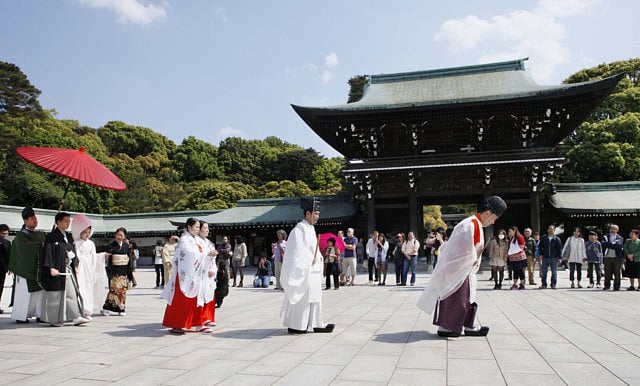
Meiji Jingu Shrine is a piece of old Tokyo not to be missed. Boasting the nation’s largest wooden “torii” gate, the shrine was built more than 90 years ago to commemorate Emperor Meiji, who reigned as Japan opened to the rest of the world after centuries of isolation. The great-grandfather of the reigning Emperor Akihito also was a symbol of Japan’s modernisation and militarisation in the late 19th and 20th centuries. Lucky visitors may catch a solemn Shinto-style wedding procession. The gardens, lily ponds and shrine grounds are a pleasant respite from the noisy city centre.
A short walk from the serenity takes you to Harajuku and Omotesando, a haven of latest fashion and culture, the district of “cool” new Japan. Walk down the Takeshita street packed with young people looking for latest “kawaii” (cute) trends. Then stroll Omotesando boulevard, where you’ll find high-end boutiques in contemporary landmark Omotesando Hills, designed by renowned architect Tadao Ando, and poke your head in the artsy Design Festa Gallery. Take a break or people-watch at Yoyogi Park.
JAPAN’S CAPITOL HILL
Parliament, or the National Diet, as it is officially known, stands on a site once occupied by feudal lords and is now home to Japan’s legislative headquarters. Completed in 1936, the building with a landmark pyramid-shaped dome houses the two chambers — the more powerful House of Representatives (Lower House) and the House of Councillors (Upper House) — under the Japanese parliamentary system. The Upper House provides a free hour-long tour when the house is not in session. The tour, which starts on the hour between 9am and 4pm, includes the public gallery, the emperor’s room and central hall, with the floor decorated with intricate mosaic design using 1 million pieces of tiles and mural paintings depicting the four seasons.
TSUKIJI FISH MARKET
Sprawling Tsukiji fish market — the world’s biggest — is where those beautiful slices of tuna on your sushi come from. Want to witness the famous tuna auctions? Then get up early and be there by 5am to queue up for the first 120 viewing slots. If that’s too early, you can still spend hours roaming a maze of narrow alley ways, but watch out for the motorised carts whizzing around with ice troughs filled with fish. (Don’t wear open-toed shoes!) Nearly 2,000 tonnes of fish of all kinds are traded daily here, as well as every kind of sea food imaginable. You are still advised to visit early in the morning as everything shuts early afternoon. There are a number of fresh sushi shops within and around the market, as well as a fun shopping area selling products ranging from dried fruits to razor-sharp knives. Tsukiji Hongwanji Temple, a Buddhist temple known for its Indian-style architecture, is right across the street, also free of admission.
WALK TO ODAIBA BEACH
Need to burn calories after eating all the delicious local food, but you’re too busy sightseeing? Here is a perfect plan — a scenic walk over the Rainbow Bridge to the reclaimed island of Odaiba out in the Tokyo Bay for a picnic, sunbathing on a man-made beach, or even a jog. The walk is just over 1.7 kilometres including the 918-metre-long single-span suspension bridge and takes less than an hour one way. A walk on the north side of the bridge provides the panoramic view of Tokyo’s skyline, with the world’s second-tallest structure Tokyo SkyTree rising into the sky like a needle. The south side overlooks Daiba Park and a scale copy of the Statue of Liberty, as well as Shinagawa and Oi piers. You get to see both on a round trip, but you have an option of taking the Yurikamome (Seagull) elevated railway system one way. Daiba Park, which sticks out right underneath the Rainbow Bridge, used to be a site of cannon batteries built in the late 1850s to protect Tokyo from potential foreign attacks following the arrival of an American fleet led by Commodore Matthew Perry in 1853. It was not used and later turned into a park. There are several parks and museums that are also free, including the Museum of Maritime Science, Tokyo Sewerage Exhibit Hall (about the structure of Tokyo’s drainage system) and Tokyo Water Science Museum.
EXPERIENCE A (FAKE) QUAKE
Japan is one of the most earthquake-prone countries in the world. This public facility, the Ikebukuro Disaster Prevention Center, run by the Tokyo Fire Department, offers a uniquely Japanese experience that can be educational, a bit scary but also fun. Visitors can experience a temblor — as violent as the March 2011 disaster that struck northern Japan — in a quake simulator built in a living room set. The centre also provides the crucial basic instructions of how you can protect yourself in case of a major earthquake and other disasters.
Sign up for the Daily Briefing
Get the latest news and updates straight to your inbox
Network Links
GN StoreDownload our app
© Al Nisr Publishing LLC 2026. All rights reserved.