Robin Gibb dies, but Bee Gees hits still reign at the disco
Robin Gibb of Bee Gees, who lost his fight for life, will be Stayin' Alive with his string of memorable hits
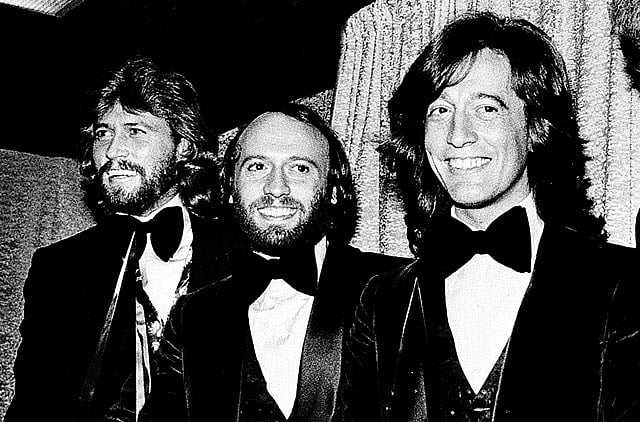
Robin Gibb, a singer and songwriter who joined two of his brothers in forming the Bee Gees pop group that helped define the sound of the disco era with the best-selling 1977 soundtrack to Saturday Night Fever, has died. He was 62.
Gibb died on Sunday after battling cancer and while recuperating from intestinal surgery, family spokesman Doug Wright announced.
He was unable to attend the April 10 premiere in London of The Titanic Requiem, a classical composition he wrote with his son, Robin-John, to coincide with the 100th anniversary observance of the luxury ocean liner's sinking. He later fell into a coma but awoke April 21 after his family spent days singing to him at his bedside.
Falsetto-laced hits
The Bee Gees energised the disco craze of the 1970s with such falsetto-laced hits as Stayin' Alive, Night Fever and How Deep Is Your Love? from Saturday Night Fever and, from the successful follow-up album, Too Much Heaven, Tragedy and Love You Inside Out.
Their four-decade pop career was a roller-coaster ride of soaring success, plunging popularity, reinvention and difficult times. The Bee Gees had nine No 1 US singles in the 1970s, won six Grammy Awards and were inducted into the Rock and Roll Hall of Fame in 1997.
Their youngest brother, Andy, who had a solo career apart from the Bee Gees, died of a heart condition at age 30 in 1988 after struggling with addiction. Robin's fraternal twin, Maurice, also died prematurely, at 53 in 2003, of a heart attack while awaiting surgery for a blocked intestine. Robin survived a horrific train wreck in 1967 and later battled amphetamine dependence.
The Bee Gees — Robin, Maurice and their older brother, Barry — were an established pop act a decade before Saturday Night Fever, with a string of hits, some of which featured Robin's plaintive, quavering vocal style, notably on I Started a Joke.
Harmonies
Barry, Robin and Maurice Gibb began honing their three-part vocal harmonies at a young age and performed in minor venues in England and in Australia, where they lived from 1958 to 1967. They called themselves the Brothers Gibb.
When the family returned to England, the brothers were signed to a contract by Robert Stigwood, a business associate of the Beatles' manager, Brian Epstein. Now known as the Bee Gees, they had their first international hit, an evocative mood piece called New York Mining Disaster 1941. The Bee Gees went on to fashion an eclectic collection of hits, all composed and written by the brothers.
"This was the peak of record sales in all of history," Gibb told the Weekend Australian in 2009, referring to the band's zenith in the late '70s and early '80s. "Since 1967, there have only been three albums that have truly affected the culture, and that's [the Beatles'] Sgt. Pepper, Fever and [Michael Jackson's] Thriller. There's not many people who know what that feels like. We're like the guys who have been to the moon."
After Gibb left the group in 1969 for a two-year stretch, they reassembled in Miami in the mid-'70s and experimented with synthesisers, a thumping beat and falsetto vocals.
Jive Talkin'
Working with Atlantic Records producer Arif Mardin, they made a comeback in 1975 with the R&B-influenced Jive Talkin' and Nights on Broadway.
"We didn't think when we were writing any of our music that you would dance to it," Gibb said in a 2010 interview with the New Zealand Herald. "We always thought we were writing R&B grooves, what they called blue-eyed soul. We never heard the word ‘disco,' we just wrote groove songs we could harmonise strongly to, and with great melodies."
To capitalise on their new sound, Stigwood asked the Gibbs to write four songs for a movie he was producing. John Travolta was to star in the movie that would introduce New York's discotheque dance culture to mainstream audiences.
"When we gave the songs to the movie, we didn't see it," Gibb told Billboard magazine in 2001. "Nobody had any clue it was going to be big. The first time we saw the movie was when it came out."
Flowing manes
They came to personify the era, however, resplendent in their white satin suits, gold chains and flowing manes on the album cover. They had one top-10 single in 1989 and disbanded after Maurice died. "As brothers we were like one person," Gibb told the Daily Mail in 2011.
"Me and Barry have always been the principal writers of the Bee Gees' sound, and Maurice was the glue that kept the personalities intact. We were kind of triplets, really.
"I feel blessed I was born into a family that had Barry and Maurice in it. On a creative level it's like winning the lottery — you can't choose that."
Sign up for the Daily Briefing
Get the latest news and updates straight to your inbox
Network Links
GN StoreDownload our app
© Al Nisr Publishing LLC 2026. All rights reserved.