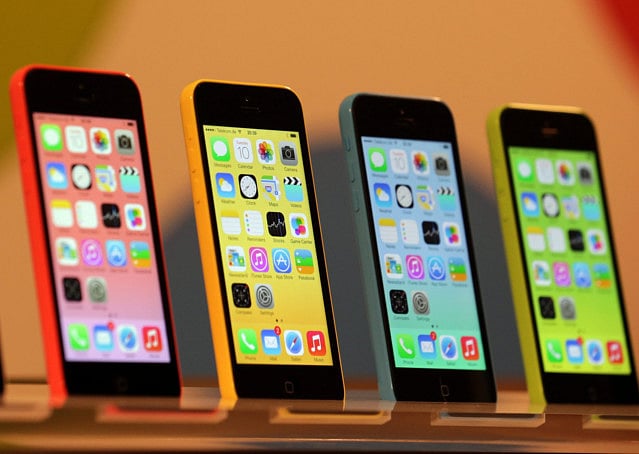
Ever since the launch of the first iPhone in 2007, Apple has introduced one new model a year. Now, for the first time, there are two: the new flagship iPhone 5s, and the lower-cost, colourful iPhone 5c.
With its ease of use, enormous wealth of high-quality apps and content and well-integrated online services, the iPhone still provides the best overall user experience in the smartphone category. But while Apple has never introduced this many iPhones, it’s also never changed so little from the previous generation.
The 5s is the current iPhone 5 — same size, shape, metal body and 4-inch retina display — with upgraded internals and one terrific new feature, while the 5c is to all intents and purposes the current iPhone 5 housed in a new plastic body.
Both phones run on iOS 7, a new version of Apple’s mobile operating system. The software’s look and feel have been overhauled, with brightly coloured icons replacing the textured look of previous releases.
Users of iOS 7 will find some things different. For example, you now close an app running in the background by flicking its thumbnail with your finger. Some new things include iTunes Radio, which takes on the likes of Pandora and Spotify, and a new Control Center with quick access to key settings — something Android phones have had for some time.
But the phones themselves are perhaps about laying the groundwork for bigger innovations.
The most important new feature in both is the 5s Touch ID fingerprint sensor, which elegantly addresses a significant pain point for mobile users: security.
Mobile devices are increasingly the repositories of some of our most sensitive data. Yet most people don’t have passcodes set up, because it’s just too annoying to enter them dozens of time a day.
The Touch ID is built into the home button. Once you’ve scanned your fingers, a light press of the button wakes the phone and simultaneously unlocks it. The Touch ID also works for purchases from iTunes and App Stores, yet another small step toward establishing the company as a force in the nascent field of mobile payments.
Apple is reassuring users that the fingerprint data, which is stored in mathematical form rather than as a graphic in a special area of the new A7 microprocessor, never leaves the phone. It says it isn’t uploaded to its servers or anywhere else.
Apple also says the A7 is the first 64-bit chip in a smartphone, something that’s of less interest to average consumers. But you may see evidence of the greater power in things like the complex graphics of some visually intensive games and the speed of the 8MP camera’s autofocus.
Speaking of the camera, it’s been upgraded with a larger sensor, wider aperture and a new flash for taking better photos in less-than-ideal lighting conditions. The camera app has also been extensively reworked to add features such as a burst mode for taking multiple rapid-fire shots and auto image stabilisation.
Other changes are welcome too. There’s a new gold colour, slow-motion video and an improved front-facing camera for better video calls using Apple’s FaceTime.
The 5c’s changes are more visible. The big one is the new body. Though it’s plastic, there’s nothing cheap-feeling about it, and the iOS 7 feels more at home surrounded by one of the bright new colours. It, too, has the new FaceTime camera and battery life is good enough to get through a normal day.
The biggest change is in the price. On the Verizon, AT&T and Sprint networks in the US, the 5s starts at $199 (Dh731) on a two-year contract for a model with 16GB of storage, while the 5c is the least expensive new iPhone ever: $99 for the 16GB version.
There’s nothing wrong with either phone. But there’s not much that’s pulse-quickening about them either.
— Washington Post
Sign up for the Daily Briefing
Get the latest news and updates straight to your inbox
Network Links
GN StoreDownload our app
© Al Nisr Publishing LLC 2026. All rights reserved.