Dubai: It was the head of a German luxury automaker who once defined happiness as having a production capacity that would be one unit less than the market demand for its models. If that measure was transplanted on to the local real estate — unarguably the worst hit sector in the local economy by the global financial crisis — chances are there won't be cause for much good cheer.
The reason is not too difficult to discern and can be summed up in one word — oversupply. And, depending on which reports you go by, anywhere between 20,000 and 40,000 units will be added this year and the next.
In recent weeks, there has been a noticeable increase in project activity, as many developers push to get their stalled projects back on track and stay on the right side of the authorities. It was also a means to shore up their bargaining positions vis-à-vis the investors.
New projects online
Many of these projects should be getting past their finish lines at some point in the next 12 to 18 months. But as to how many of the completed units will actually have buyers is a moot point, which reinforces the chances of an over-supply situation in the residential space getting worse.
Which suggests some corrective measures are required, or until such time there's some improvement sighted on end-user interest. Matthew Green, head of research and consultancy at CB Richard Ellis in the UAE, is clear where the onus lies. "Rather than the developers, control of the new stock coming to market all in one go is more in the hands of the government," he said.
"There are many ways this control can be exerted — through the scheduling of infrastructure completion, utility connectivity, etc. Authorities trying to influence market demand and supply is not unknown."
If the onus were left strictly with the developers, chances are nothing much will happen by way of corrective measures. Then again, Green said, there is little developers can do once their projects have reached a certain stage of development.
"It will only add to their outlays if they try to stall completion, and that's something developers will not countenance after all they have gone through," he added.
Rates under strain
There is proof of what completion of several projects close to one another can do to perceived value. The Jumeirah Lakes Towers has seen its rates come under the heaviest strain in recent months for this very reason.
"Compared to JLT, look at the situation in Downtown Burj Khalifa, where new delivery is very much controlled by the master-developer," Green added. "In general, master-developments that have seen a lot of plots being sold off to sub-developers will face a supply risk of too many at the same time."
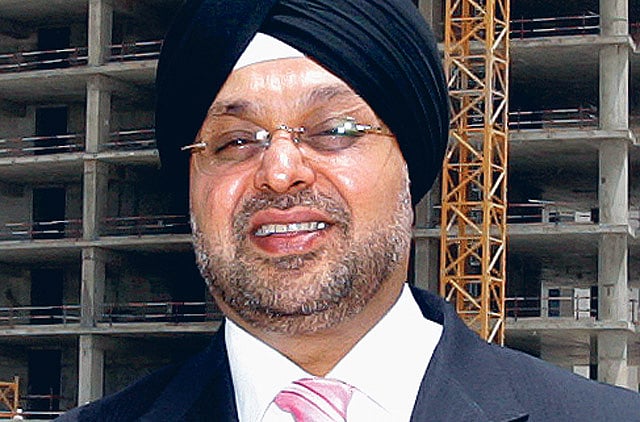
But Sanjeet Joher, Group CEO at KM Properties, suggested the market could take a longer term perspective on the supply lines. "At a projected new inventory of 100,000 to 150,000 units in the next five years or so for Dubai, these are numbers much lower than in other markets. "And they are more likely to be absorbed given the growth estimates for the local population. Dubai's rebound will also be faster." A few silver linings are visible. For global businesses looking to expand, office space can be had at competitive rates vis-à-vis other cities.
"In mid-2008, the big hoo-ha had to do with how the residential and commercial property rates fuelling double-digit inflation and making Dubai less competitive," said Green. "That situation no longer exists now. In fact, the deflationary situation in real estate pricing will make Dubai more attractive when global corporates decide it's time to get back to expansion ways... That's one silver lining I will take in a difficult market environment. Another will be the developers' focus on creating functional property and moving away from gimmickry. That has to be a big plus."
Sign up for the Daily Briefing
Get the latest news and updates straight to your inbox
Network Links
GN StoreDownload our app
© Al Nisr Publishing LLC 2026. All rights reserved.