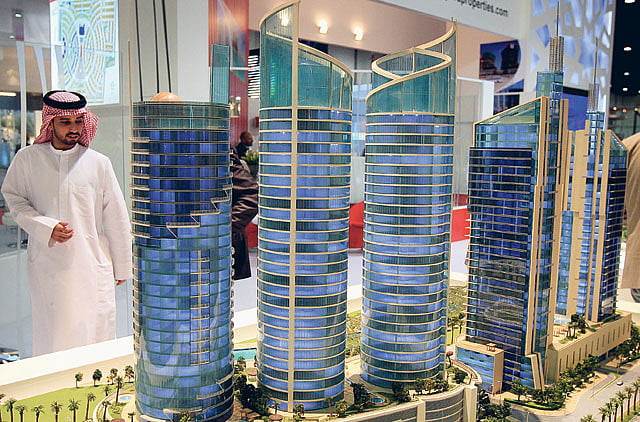
Abu Dhabi: Speakers at the Cityscape Conferences welcome the Abu Dhabi 2030 plan but asked for details about the deadline.
Most visions' timelines globally, and probably including Abu Dhabi's, are purposely strained, said Mohammad Al Hage, director of investment banking at Unifund Capital.
"Visions are supposed to inspire, so even if we get half of what is planned done by 2030 that's a great achievement."
Building less and slower may be just the right recipe; all plans need to adapt to circumstances, said Ian Mackie, chief property development officer for Ridge Solutions Middle East.
"We wanted to see more consolidation in projects than there currently are."
Long-term future
The "build-and-they-will-come" model has been shelved for some time, but Abu Dhabi's demand for housing is still higher than the supply. No one is worried about the next couple of years, but it is the long-term future that experts are concerned about.
"This is the first time I visited Cityscape Abu Dhabi that I started to wonder who is going to fill all these developments, five-star hotels envisaged? The city may be planning on a scale beyond the need," said Mohammad Haider Al Ali, vice-president investment advisory at Kuwaiti Al Aman Investment.
He welcomed the financial crisis slowing down projects, as development simply can't be fast-forwarded. "It isn't that much about 2030 but what happens within the next 60 years when oil runs out one needs to be concerned about. It is great that companies like Mubadala are diversified," said Mackie.
"However, real estate developers should focus on finishing existing projects and not already looking at launching new ones. Has anything been learnt over the last two years?"
Abu Dhabi, though, may not need to worry: liquidity to build these vast developments as long as they are government related entities is there, said Al Hage.
He cited the UAE's competitive advantage over other countries in the region as a definite plus for the plan to work. But not everyone is convinced by impressive displays. "A city shouldn't be built on supply and demand and towers but based on the people and location, creating a community," said Kamil Homsi, president of Global Realty Capital.
Competition
He appreciated the plan as such, but questioned the affordability of the large developments envisaged in light of the changed global economy. "The UAE is a great place for expatriates to come to. But the country will have to compete with Europe and America who want to keep their industries and money at this time. They may even offer tax relief to attract its people back."
Al Hage countered that first class infrastructure needs to be created before people can come and the UAE has been doing exactly that, presenting a modern safe-haven offering opportunities for around 2 billion people in the MENA region.
"A lot of them want to be here, life is much easier here offering better health care, education, etc. than back home."
Sign up for the Daily Briefing
Get the latest news and updates straight to your inbox
Network Links
GN StoreDownload our app
© Al Nisr Publishing LLC 2026. All rights reserved.