ECB holds rates, refuses to unveil Greece plan
After days of delay, Athens clinches a deal on austerity measures needed to secure a bailout to keep the country afloat
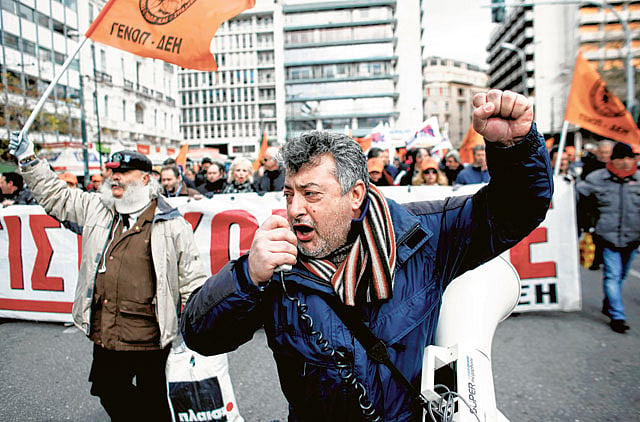
Frankfurt: The European Central Bank held interest rates at a record low yesterday, seeing tentative signs of economic stabilisation, but refused to say what part it might play in averting a ruinous Greek default.
After days of delay, Greek political leaders clinched a deal on austerity measures needed to secure a bailout to keep the country afloat.
ECB President Mario Draghi said Greek Prime Minister Lucas Papademos had confirmed to him that the Greek parties had endorsed a deal, as demanded by their European Union and International Monetary Fund lenders, after days of delay.
"A few minutes ago I got a call from the prime minister of Greece saying that an agreement has been reached and has been endorsed by the major parties," Draghi told a news conference after the ECB left its main interest rate on hold at 1.0 per cent.
"I'm sorry to say I cannot say anything about how our holdings of Greek bonds ... will be treated," he said.
Draghi was to attend a meeting of Eurozone fin-ance ministers later yesterday to discuss a €130 billion (Dh633.03 billion) Greek bailout.
Athens has urged the ECB to hand back profits on its Greek bond holdings, a move which could raise €12 billion or more to help fill a gap in its financing needs. As of Wednesday, the ECB's 23-member Governing Council had yet to agree a position.
While the ECB has ruled out joining private creditors in voluntarily accepting a reduction in Greek bonds' value, it could send Athens, via a roundabout route, the profits from bonds it bought at below face value.
Some ECB policymakers are reluctant for the bank to show a willingness to share in the restructuring burden for fear of easing the pressure on Athens to agree spending cuts. The ECB is also prisoner to the Maastricht Treaty, which forbids the central bank from financing governments.
"The question is whether ECB independence has a price tag," said ING economist Carsten Brzeski. "I think that the ECB taking a loss is out of the question — I'm looking for this to be confirmed, and maybe opening the door to eventually not taking a profit."
The euro moved higher against the dollar after Draghi confirmed that Greece had clinched a deal for emergency aid.
Only fledglings signs
Since the beginning of the year, some business surveys have instilled hope that the worst of the sovereign debt crisis has blown over and the Eurozone economy is perking up. Draghi said they were only fledgling signs, suggesting rates could yet fall below 1.0 per cent, into uncharted territory.
"Available survey indicators confirm some tentative signs of stabilisation in economic activity at [a] low level around the turn of the year. But the economic outlook remains subject to high uncertainty and downside risks," he said. A Reuters poll of economists conducted before yesterday's policy decision showed 41 of 71 respondents expected the ECB would cut by its March meeting. — Reuters
Sign up for the Daily Briefing
Get the latest news and updates straight to your inbox
Network Links
GN StoreDownload our app
© Al Nisr Publishing LLC 2026. All rights reserved.