Credit card debt: lurking a swipe away
Financial experts tell us why credit card usage should not be a way of life and how you can avoid being another consumer debt statistic
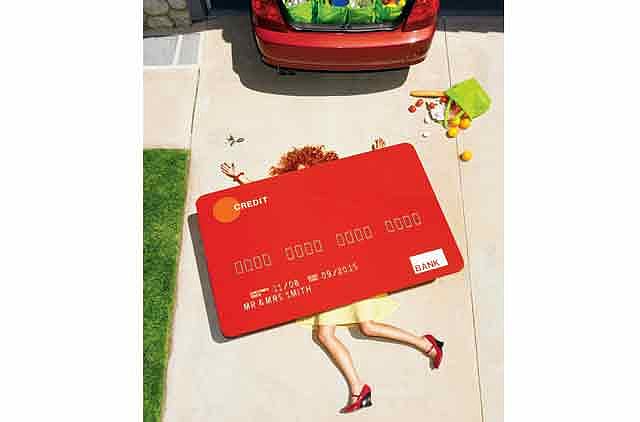
Call it the cycle of convenience or the easy stash of cash, credit cards have become an indispensable part of life for many of us. Used prudently, they are an excellent financial management tool. But give in to over indulgence, and you will soon be staring at a fast-piling-up heap of credit card debts, and perhaps regret every purchase you made. The trick for consumers, say financial experts, is to make credit cards work for you, rather than the other way round.
Always keep in mind that using credit cards is the same as taking a loan. You're letting banks pay for your purchases and you will have to repay the amounts you've borrowed from banks.
"The credit card is a great facility offered by banks — but only if it is used sensibly by customers," says Navneet Dave, the head of cards at the National Bank of Abu Dhabi (NBAD). "Cardholders need to use them with a self-imposed discipline and should not treat them as a free credit facility. They should read the terms and conditions and be aware of the charges related to them. Customers should not over-leverage themselves and should think twice before making any discretionary purchases," he says.
Anyone who starts using a credit card for the first time must be aware that it will not stretch your income by any means. New customers should also not be tempted to use funds from one card to pay off the debt that has accumulated on another card. Credit card users who have taken this course have been burned — and it's painful.
Sensible planning would include limiting your spending; and never spend what you haven't got and are not likely to have for the next 100 years.
High value buys
Take advantage of credit cards for high value purchases by choosing easy payment plans offered by banks. "This allows customers to convert their high value purchases into interest-free easy instalments over three, six or twelve months," says Nimish Dwivedi, the head of payments at Mashreq. He stresses that to manage credit card debts, it is essential to keep track of your spending, review card statements regularly and ensure that you pay before the due date.
Remember that credit cards hold higher interest rates than other cards, so check what the fee will be before you sign on the dotted line if you decide to pay your bills in small doses rather than settling them in full before the cut-off time. Sometimes paying just the minimum amount demanded will, in the long run, result in paying a lot more because of the gathering interest.
A good policy should be ‘if you cannot afford it, don't buy it', but that seems to fall on deaf ears in a city that promotes shopping as its major drawcard, and has so many attractive promotions popping up on a regular basis.
Consolidate debts
In case you have accumulated a large debt on your credit cards, consider the option of debt consolidation to help bring your finances back under control. So how would this work? Any debts that are causing you to sweat because of the high interest charged could be gathered together and put into an account with a lower interest. You could also choose to move the balance elsewhere, such as a different bank offering the same credit card facility but at more attractive rates and offering other incentives.
Dave of NBAD, however, says that customers should read the terms and conditions carefully and be aware of all the charges before deciding on the credit card he wants to transfer the balances to.
Low balance transfer interest rates are typically promotional rates that expire after a certain period of time. If you choose this option, ensure you know when the low rate will expire and the actual interest rate that will go into effect. If you want to use a credit card balance transfer as a debt consolidation loan, you'll need a credit card with a large enough credit limit to hold all your credit card debt.
Seek counselling
You can also go for a single, low-interest personal loan to repay multiple debts across credit cards. However, if you find it difficult to make payments on time, contact your bank. They can arrange for a debt counselling session for you and draw up a convenient payment plan to give you some relief.
If you wish to keep a check on your purchases, switch to debit cards, says Khalid Shamim, financial consultant at Mondial Dubai. Though it offers you instant access to funds in your saving or current accounts, it allows you to spend only if you have funds available in your account and if they are within the agreed overdraft facility granted by your bank. Besides, debit cards also save you the from the stress of calculating compound interest rates on credit cards, remembering minimum payments and also payment due dates.
Sign up for the Daily Briefing
Get the latest news and updates straight to your inbox
Network Links
GN StoreDownload our app
© Al Nisr Publishing LLC 2026. All rights reserved.