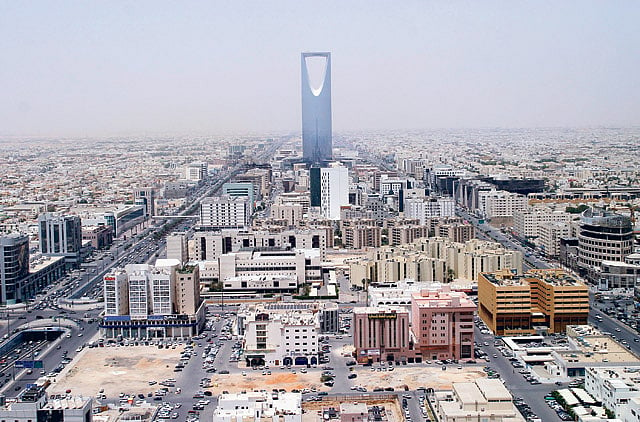
Riyadh: Private equity will have a key role to play in financing private sector growth in Saudi Arabia, one of the most promising markets in the Middle East, because large infrastructure and real estate projects are soaking up bank lending, leaving many companies searching for new sources of finance.
Capital is waiting in the wings, with Middle East-focused private equity funds amassing an estimated $10 billion (Dh36.7 billion) of "dry powder" — commitments raised in the last few years but yet to be invested.
But to clinch deals, fund managers need intimate knowledge of the terrain, and more importantly, be able to show they can add value to companies eager to expand beyond national borders. And to ultimately succeed, they must be able to navigate the intricacies of family businesses.
If executed well, there may be no better time for private equity investment in Saudi Arabia, the biggest economy in the Gulf and the most populous, with around 27 million people.
The oil-rich country is on track to notch up 3.7 per cent real gross domestic product (GDP) growth this year, and 4 per cent in 2011, according to the International Monetary Fund, having narrowly avoided a recession last year thanks to a massive fiscal stimulus.
Planned spending
Government expenditure shot up by about a third to 39 per cent of GDP in 2009, but the country can afford it, and is maintaining that level of fiscal stimulus. This year's planned $144 billion of government spending is based on a budget break-even oil price of $72 per barrel, according to Bank of America Merrill Lynch. With the oil price averaging above that this year, the country should still record a budget surplus.
The spending is being funnelled to infrastructure and real estate projects, meeting an immediate need — a shortfall of housing has pushed average property prices up by 55 per cent in the last four years. This should also boost the economy in the long run, by helping raise productivity, opening up new markets and creating business opportunities.
However, mega-projects, including the construction of half a dozen new towns, are also occupying the banks, leaving private sector companies with a financing gap.
The loan-to-deposit ratio at Saudi banks was at about 73 per cent at the end of September, giving some leeway to lend before they hit the conservative ceiling of 80 per cent set by the central bank. But with economic activity picking up, private sector deposits have fallen in the first quarter of this year, while bank loans to government entities picked up.
As a result, banks are still reluctant to increase lending to small and medium-size companies, and monthly private sector loan growth is hovering at about 0.5 per cent, compared to peaks of 4 per cent in 2007 and 2008.
At the same time, companies are hungry to expand to take advantage of the burst of liquidity in the economy, and of longer-term trends, such as fast growing demand from a young population. Approximately two thirds of Saudis are under the age of 30.
Retail opportunities
Some of the best private equity opportunities are in the areas of consumer goods and retail, and the doubling in mobile phone service subscriptions between 2005 and 2007 shows just how fast the youth can influence consumption trends.
There is also scope to invest in education, because parents are demanding higher quality schools and broader syllabi, and they are willing to pay for it. Currently, bar a few exceptions, the education space is extremely fragmented and begs consolidation.
And the rapid infrastructure development, across a country that is the size of Western Europe, will open up new opportunities to a new breed of logistics firm.
Saudi Arabia is an amazing market but it is not easy to penetrate.
Firstly, on-the-ground intelligence is vital.
Private equity investors who concentrate on the bigger companies often find that low hanging fruit are not the juiciest. Mid-market local companies with national and even regional ambitions are the better bet, but you have to dig to find them. Saudi Arabia can almost be divided into three very distinct markets — the Western, Eastern and Central provinces — and an investor needs to know each one well.
Secondly, vendors are choosy.
Saudi Arabia is predominantly a growth capital, rather than a buy-out, opportunity, and company founders are keen to hold onto stakes because they expect rapid growth in coming years. So deals are about more than money. Given the recent global turmoil, sellers value partners with financial strength, the network to bring in new business opportunities and the expertise to follow them through.
Deals can then be drawn out because of weighty regulation. But the real challenges come when it is time to deliver on the growth strategy.
Most investment opportunities are in family-run companies, sometimes parts of large conglomerates that want to narrow their focus to other parts of their operations. These close-knit units thrive as they grow from small into medium-size companies.
But to take the next step, and expand on a national-scale or even abroad, the companies will face new challenges and competition, and often need an injection of expert and experienced personnel. This process needs handling with care to ensure that the companies stay vibrant and healthy as they grow.
Saudi Arabia is not the easiest market to operate in. But with demand for capital rising, valuations are becoming more reasonable, giving private equity investors an extra incentive to put in the extra effort.
Samir Assad, head of private equity at Abu Dhabi financial services firm Invest AD, has extensive deal making experience in the Middle East, including Saudi Arabia, the United States and Europe.
Sign up for the Daily Briefing
Get the latest news and updates straight to your inbox
Network Links
GN StoreDownload our app
© Al Nisr Publishing LLC 2026. All rights reserved.