Betting on the poor has never been this profitable or this tasteless.
Just ask the good folks at George Soros's Quantum (M), Goldman Sachs Group, JPMorgan Chase & Co and Nomura Holdings. Funds they control stand to make a bundle on SKS Microfinance's initial public offering.
Never mind that bankers' disregard for the poor necessitated the creation of microfinance. Wall Street investment banks and hedge funds alike now see value in the poor of India, where about 120 million households have no access to banking.
This is a sad day for a grass-roots phenomenon that has altered the lives of millions. Be it the widow in Bangalore seeking $100 (Dh367.24) to buy a cow or the family in Jakarta looking for $30 for a mobile phone, microfinance is changing the face of development.
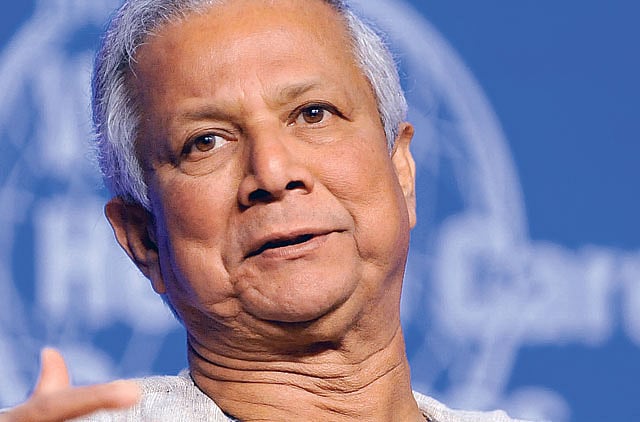
The Nobel Peace Prize committee underlined the point in 2006, when it honoured Mohammad Younus (pictured), founder of Bangladesh's Grameen Bank. Conceived in 1976, Grameen inspired countless copycats to provide credit where it is most needed.
Shareholder value
It's strangely fitting that Younus plans to star in an episode of The Simpsons later this year. His life's work risks being turned into a farce in the name of shareholder value.
Younus has been vocal in concerns that micro lending is about to morph into just another money-making business.
Yes, I know what the investment set thinks of all this. The IPO by India's largest microfinance lender could bolster credit in Asia's third-biggest economy. SKS is seeking to raise as much as $353 million, money that could be deployed widely among India's 1.2 billion people, perhaps at lower interest rates.
Nice theory, but good luck making it real. Over time, you can bet shareholders will wonder why profits and dividends aren't higher. Microcredit was supposed to be about alleviating poverty and reducing dependency on an inefficient state.
Capitalism certainly plays a role. Bankruptcy helps no one, and money should always go to productive purposes. It's wrong, though, to subject microcredit to irreconcilable objectives.
When you meet with microcredit officials in Asia, Africa or Latin America, most often, they are women, they stress a key element behind their success: peer-pressure.
If you borrow money from your community, it's not so easy to renege. When you are late on a loan to Citigroup Inc, you can dodge phone calls.
It's a different story when you have to slink past neighbours to whom you are indebted as you make your way home from work. Microcredit works and default rates are low because of its local and intimate nature.
It's understandable why investors see this as a nifty way to plug their own holes. Too bad it may come at the expense of the bottom half of the economic pyramid.
Sign up for the Daily Briefing
Get the latest news and updates straight to your inbox
Network Links
GN StoreDownload our app
© Al Nisr Publishing LLC 2026. All rights reserved.