Yemen: A case for preventive security
Yemen needs sustained global engagement to overcome its socio-economic quagmire
As representatives of governments from across the world gathered in London for the international conference on Somalia, earlier this month, it was worth reminding ourselves that in dealing with civil conflicts and failed states, prevention is always better than cure. Had conferences like this been convened in the 1980s, it might have been possible to foster the political compromises and economic progress needed to avoid more than two decades of poverty, famine, lawlessness and war. The correct conclusion to draw is that as well as dealing with the Somalia of today, the international community should be thinking about how to prevent the Somalias of tomorrow.
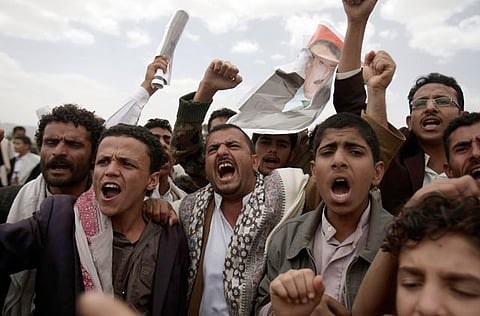
We do not need to look far to find a suitable candidate for this kind of preventive security. On the opposite side of the Gulf of Aden from Somalia lies Yemen, a country that faces major problems of political division, insecurity and underdevelopment and where the situation remains extremely fragile more than a year after president Ali Abdullah Saleh was forced out of office following widespread protests. A six-month National Dialogue involving 565 delegates from across the country was launched in March to resolve differences and agree to a new constitution. However, key groups within the opposition are boycotting the process and large protests demanding independence have been held in the south. A successful transition to a more stable political order is far from certain.
Behind this crisis is a country facing enormous long-term structural problems and an urgent need to embark on a new developmental path. Poverty is rife with unemployment running at around 40 per cent. A similar proportion of Yemenis lack access to clean water, a problem that is set to get worse as existing aquifers start to run dry. By the end of the decade, Sana’a may become the first national capital in the world to run out of its own water supply. Malnutrition is another source of hardship with about a third of the population lacking adequate food. Something like 90 per cent of the country’s food supply has to be imported, leaving it vulnerable to fluctuations in global commodity prices.
These problems are going to be compounded by two additional factors in the years ahead. First, oil production, which accounts for 75 per cent of government revenues and 90 per cent of export earnings, is on the decline. It is not clear whether new oil and gas production will be sufficient to replace declining fields. So, without new sources of growth, the country may not be able to meet the cost of essential food imports. Second, the population of Yemen is expanding rapidly at 3 per cent per annum and is projected to double to more than 50 million by the middle of the century. More than two-fifths of Yemenis are now under the age of 15. With depleting resources and expanding needs, the need for a fundamental change of direction can hardly be clearer.
Unless the international community is able to help the country meet these challenges effectively within a Yemen-wide framework, the risk of conflict and fragmentation will rise as different groups and regions seek to pursue their own unilateral solutions. The government of Yemen already faces multiple challenges to its authority in the form of secessionist demands in the south, tribal rebellion in the north and the violent activities of Al Qaida. A further weakening of government authority will result in a complete breakdown of order at great cost to the security of the region and the well-being of its people. Yemen occupies a strategically important position at the entrance to Red Sea, one of the great maritime checkpoints already threatened by Somali piracy. The consequences of state failure can spill over, creating additional problems of crime, migration and terrorism for countries in East Africa, the Gulf and beyond.
Sustained international engagement is therefore crucial. The Friends of Yemen initiative, launched with the support of the United Kingdom and the countries of the Gulf Cooperation Council, has done a lot so far to galvanise financial support and diplomatic attention. But the $8 billion (Dh29.42 billion) pledged by donors is less than half the figure the government of Yemen says it needs to prevent economic deterioration — only a fifth of that money has been provided so far. Meanwhile, the UN’s $716 million humanitarian appeal for Yemen is only 2 per cent funded. This amounts to significant shortfalls in the levels of resources required to meet the country’s immediate needs, never mind construct a new and sustainable path of national development for the long-term.
The priority western leaders give to counter-terrorism and political reform in framing their policy towards Yemen is understandable. However, security and good governance will be impossible to establish without a strategy for creating prosperity and opportunity for all Yemenis. The country has dropped to 160th in the UN human development index with serious deficiencies in literacy, school attendance and health. Yet, if it is going to avoid a major crisis caused by declining resources and a growing population, it needs to find ways to harness the energy of its youth and turn the demographic challenge into an opportunity for growth. That cannot be achieved without huge social investments over a long period of time — resources and patience that will only come with outside help.
Yemen’s problems are too big to be either solved with a series of crisis interventions or to be ignored by the rest of the world. They require sustained commitment for the long-term. It is inevitable that diplomatic priorities will be shaped by the most serious and immediate crises of the moment, but the Somalia conference has reminded us of what happens when short-term strategy inhibits the development of policies needed to prevent state failure. We must not allow that to become the fate of Yemen.
Mohammed Mahfoodh Al Ardhi, chairman of Sundus Investment Projects LLC, was the longest-serving Omani commander (now retired) of the Royal Air Force of Oman, vice-chairman of the National Bank of Oman and a member of Brookings Institution’s International Advisory Council.


