No optimism in Syria
The future not looking bright as the political and sectarian polarisation in the region has made things even worse
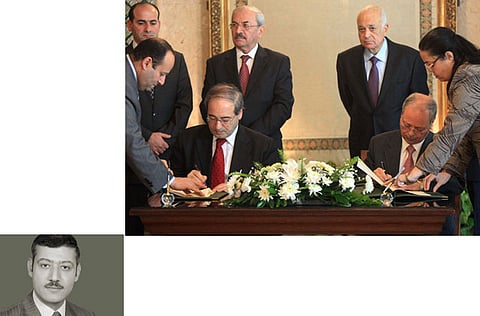
After weeks of diplomatic wrangling, the Syrian regime has finally agreed to sign a protocol to allow an Arab mission of military and civilian observers into the country. The protocol is part of an Arab League proposal to end a nine-month crackdown on protests against President Bashar Al Assad’s rule.
Having come under huge Arab and international pressure to halt the brutal repression of the protest movement, the regime opted for compromise but as part of a strategy to buy more time to silence the opposition. It hence, agreed to the Arab peace plan but without signing it.
The idea from the very beginning was to gain as much time as possible by trying to negotiate the League’s proposal. Amendments to clauses in the agreement that ‘jeopardise’ Syrian sovereignty were sought. A number of other conditions were later attached, among them the cancellation of economic sanctions decreed by the League.
Threats by the Arab League that if Syria does not sign the protocol the question would be referred to the UN Security Council forced Damascus to comply. The introduction of a draft resolution on the Syrian crisis in the UN Security Council by Russia has also put pressure on the embattled regime. Given the experience of the past months, however, a few believe that the regime will honour the agreement.
Since the beginning of the uprising more than nine months ago, the regime has imposed complete blackout, preventing any sort of independent reporting on the crisis.
Journalists and human rights workers have been barred from moving freely around Syria. It is very dubious therefore that the Arab observers will be able to verify the different accounts on the conflict, let alone to alter its increasingly violent trajectory, as the Arab League would like to have.
In his latest press conference, Syrian Foreign Minister, Walid Al Mua’alem, hinted to restrictions on the movement of the observers in some areas under the pretext of their safety. There are also different interpretations between the Syrian government and the Arab League on the nature and mission of the observers.
The Arab League Secretary General, Nabeel Al Arabi, stated that the protocol is mere mechanism to ensure the implementation of the Arab initiative on Syria. By contrast, the Syrian regime believes that the major task of the observers is to vindicate its contention that the unrest was the work of armed rebels, not peaceful protesters as maintained by the opposition and human rights activists.
Another major bone of contention between the two sides is the question of what has truly been agreed on. The Syrian government says that it agreed to the protocol but not the peace initiative. The Arab League insists that the protocol is just the preamble of the initiative which Syria has already accepted on November 2.
The Arab peace plan calls on the Syrian government to remove its forces and heavy weaponry from restive cities, release all political prisoners, allow the Arab and foreign media to report freely from inside the country and finally open a dialogue with opposition groups in the Arab League Headquarters in Cairo.
One does not need to think hard to conclude that if the Syrian government agrees to implement these steps, it would certainly lead to its demise. It is indicative that since the signing of the protocol last Monday, the daily death toll has more than doubled.
The conflict has been complicated as army defectors and armed fighters have joined opponents of the government. In addition, revenge killings and sectarian violence raised fears of a full-blown civil war; something the government has been fostering for months to prove its point that it was fighting armed terrorists, not peaceful protesters.
The political and sectarian polarisation in the region has made things even worse.
Iran, the government of Nouri Al Maliki in Iraq, and the Lebanese Hezbollah — all happened to be Shiite — are backing the regime of Al Assad. The Arab Gulf states alongside Jordan and Turkey are not hiding their support for the Syrian opposition. The fact is that Syria today is in the middle of a zero-sum conflict with little prospect for political solution that safe the country the probability of a prolonged civil conflict with far-reaching regional consequences. The regime will exploit this situation to the maximum and will try to balk at implementing the Arab peace initiative until better conditions are in place. The opposition, playing against a master in political manipulation, has not so far proved to be yet as good in translating the sacrifices of Syrian protesters into political gains.
Caught in the middle of this situation, in the short run the future does not look bright for Syrians who at the moment do not have good reasons to be optimistic.
Dr. Marwan Al Kabalan is Dean of the Faculty of International Relations and Diplomacy, Kalamoon University, Damascus, Syria


