It's time for a prudent GCC stance on Iran
The region's lack of a coherent and well-thought-out strategy will not nudge Tehran towards a more accommodating posture vis-a-vis its neighbours
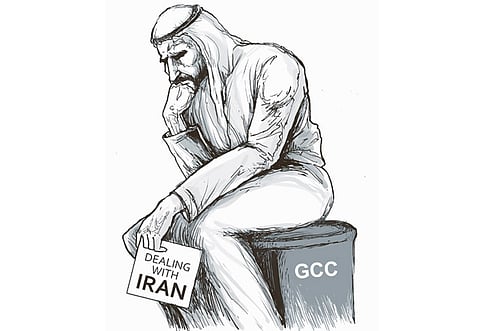
The Gulf seems to be in a state of flux. Things on more than one front appear to be getting more complicated.
There is this looming danger of an Iraqi civil war, with some prominent Sunnis having been barred from running in the Iraqi parliamentary elections next month; a fragile ceasefire between the Al Houthi insurgents in Yemen and Yemeni and Saudi forces; and Iran defiantly thumbing its nose at the international community by bragging about becoming "a nuclear state" with the capacity to enrich uranium at higher than 20 per cent or even up to 100 per cent as stated by Ali Salehi, the head of Iran's nuclear agency. The US doubts the Iranian capabilities of achieving that and is rallying the international community to slap the nation with more sanctions and isolation.
The Iranian regime seems to be facing its most serious challenge since the Islamic Revolution 31 years ago, with the threat of "severe consequences" and "crippling sanctions" on the regime. Along with the implosion of the regime politically, economically and socially, there is also this stifling of the "Green" movement that sprouted following last summer's disputed presidential election which gave President Mahmoud Ahmadinejad a second term.
The dilemma of the Iranian ruling elite was manifested in its orchestrated show of public support in a rally to celebrate its 31st anniversary and the shutting out of the opposition harassing and beating up their leaders. It was ironic to arrest the granddaughter of the iconic leader of the revolution, Ayatollah Khomeini, on the day to celebrate the revolution and beating, intimidating and bullying "Green" movement leaders such as Mir Hussain Mousavi, Mahdi Kharroubi and former president Mohammad Khatami and his brother. This, along with calls from the crowd of "Down with the dictators, down with the clerics" signified the impasse and the crossroads that Iran has reached.
What the Iranian leadership seems to be oblivious to or shows no concern for is that such high-handed approach against its own people only makes the West, represented by the EU, the US and other major powers denounce Iran. For instance, German Chancellor Angela Merkel criticised Iran's approach towards the demonstrators, insisting that Germany "stands firmly on the side of those who are peacefully campaigning for free democracy and human rights in Iran." British Prime Minister Gordon Brown told the BBC: "The mood around the world is now increasingly one where, patience not being inexhaustible, people are turning to look at the specific sanctions we can plan on Iran."
What is relevant in our region is that these developments and challenges will impact us negatively. As for Iran, it will determine the country's future and shape the direction of the Iranian Revolution and its relations with its own people as well as its neighbours who feel less secure. Furthermore, Iran seems to be losing its soft power and much acclaimed democratic practices in the eyes of millions of Arabs who are now disillusioned and vocally questioning the merits and the viability of the Iranian democratic model and practices.
In a recent article in bitterlemonsinternational.org, I noted: "It is ironic that while Iran continues to represent an existential security threat to all GCC states because of its nuclear programme, its hegemonic tendencies and grandiose plans the GCC states continue to lack a coherent and well-thought-out strategy in dealing with Iran. This lack of a strategy has not worked in the past and won't work in the future to nudge Iran towards a more accommodating posture, vis-a-vis its GCC neighbours.
"Further, it has not allayed Iran's fears and Tehran keeps threatening to target GCC states and American bases in the region, shut down the strategic Strait of Hormuz and inflict damage against sensitive installations such as oil terminals and refineries, water desalination plants and electricity grids."
On February 1, I wrote in an article titled "GCC needs New Iran Strategy" and called on the GCC states collectively which have repeatedly voiced their concerns and rejected the use of military action against Iran and recently argued against tougher sanctions — formulate a unified and coherent strategy on Iran and do away with their fragmented and disjointed stance towards the country. It is time to change course in order to deal with Iran.
Great civilisation
The Iranian people, representatives of a great civilisation, succeeded in launching a great revolution which was one of the major ones of our times. It was a milestone achievement to liberate its people and end tyranny. It is a pity that such a revolution is now turning against its own people and some of its founding adherents and losing its objective. As the Iranian Revolution enters its fourth decade, Iran needs to rethink the direction and the future of its revolution and its mission. Iran has to harness its resources and amend its relations with the reformists and close ranks domestically and allay the fears and not thumb its nose against the international community to avert what could be an Iraq syndrome.
Otherwise, the consequences will be taxing and exacting for Iran, its people and the region as a whole.
Professor Abdullah Alshayji is chairman of the Political Science Department at Kuwait University.


