Iraq worries after pullout
The US army drawdown will leave behind a security vacuum in the country while exacerbating dangers that threaten the status quo
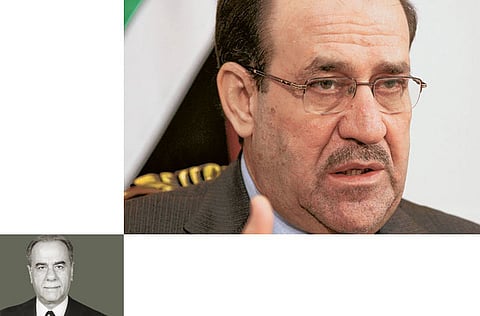
The Iraqi Prime Minister Nouri Al Maliki, will have to face grave circumstances in the near future which will threaten both his government and Iraq’s unity.
The complete withdrawal of US forces from Iraq by the end of 2011 will set off potential calamities, which grew more dangerous during their hibernation period.
These problems may be bigger than Al Maliki government’s abilities, especially as he is leading an inhomogeneous team that was put together in the framework of hasty balances.
The active blocs in the Iraqi political arena are not hiding their worries and fears of the coming phase that will start after the US military troop’s withdrawal. However, these blocs still lack a work plan to face the coming phase.
And despite all the calls made by a number of these political blocs regarding the importance of unifying political stands to face the coming challenges with the countdown towards the US army’s complete drawdown, the political stance of all these blocs has remained negative. The government on its part has continued its policy of marginalising others and pushing them away.
It is impossible to separate the US army’s withdrawal from the political future of Iraq. The US army drawdown will leave behind a security vacuum. There are grave dangers that threaten the current Iraqi status quo.
On the home front, the dangers are ingrained in the political system which failed in achieving stability. On the foreign front, Iraq suffers from its neighbour’s interventions in its internal affairs and the ability of some of Iraq’s neighbouring countries to interfere internally. These foreign forces then ignite trouble and weaken the country before gaining from its land and wealth.
Iraq’s prime minister will also face difficulties on two fronts. The first will be in the form of a huge wave that will weaken his position as prime minister and loosen his grip over domestic issues. It will be extremely difficult to face this challenge as it will be based on constitutional foundations. A number of governorate councils around Iraq are already preparing themselves to become financially and administratively independent provinces.
The second challenge will be security related after the US forces withdrawal, which over the past nine years were a strategic balancing agent.
The other issue which may well be a time-bomb is the situation in Kirkuk. Handing over the Al Hurriyah airport to the Iraqi army by US forces on November 18 started off a political dispute between Arabs and Kurds who objected to the army’s receiving the airport, as they preferred the police forces to do so. This again is an early warning to the worrisome situation that will engulf the oil-rich governorate after the US withdrawal.
In the same context, Arshad Al Salehi, Chairman of the Turkmen Front announced a few days ago that Kirkuk’s Turkmens are against the US withdrawal because terrorist attacks against Turkmens have escalated since the announcement of the US pullout of its troops.
Austria’s Foreign Minister Michael Spindelegger during his meeting with prime minister Al Maliki on November 6, conveyed an official request by the European Union to grant Iraq’s Christian community international protection because they will be subjected to kidnappings and violence against their churches and religious establishments in Baghdad, Mosul, and Kirkuk, after the US withdrawal from the country.
In all truth, the fears resulting from the US troops’ withdrawal from Iraq are not new. Ever since Iraqi translators working with US troops became a target for armed militias working against US presence in Iraq in 2006, the former US president George W. Bush’s administration came under severe criticism for not protecting them.
The Democrats were the first to criticise the situation in the Senate led by the late Edward Kennedy who was chairman of the Senate Immigration-Sub Committee at the time.
In September 2007, he presented a bill to grant political asylum to Iraqis who were collaborating with US forces in Iraq to protect their lives and hasten immigration procedures without setting a numerical umbrella for such immigrants.
As a result of these pressures, the former US ambassador to Iraq, Ryan Crocker announced in July 2008 the start of a special immigration programme which will take tangible steps towards offering a safe haven to “those courageous Iraqi citizens whom endangered their lives in serving the US”.
On the same day, the US embassy in Baghdad announced that thousands of Iraqis who fear for their lives for working for the US government or US army in Iraq will receive visas that will allow them to reside permanently in the US and that the programme will allow 5,000 Iraqis to enter the US annually for the next 5 years.
The Rand Corporation also pointed out in a study that was published in March 2010 the dangers of the US military withdrawal from Iraq on the lives of Iraqis working with the Americans in translation, engineering and other jobs. The research corporation pointed out that the number of endangered Iraqis in this respect is around 100,000 people.
At the same time, the Rand Corporation warned of the dangers surrounding religious and ethnic minorities in Iraq who depend on US protection.
The 25,000 Iraqi refugees that will be accepted according to the US programme announced by the US embassy in Baghdad is a small number in comparison to the number published by the Rand Corporation, which is closer to reality.
Hence, in the light of what is expected in terms of the crisis in Iraq, it is not farfetched to assume that the Iraqi situation will become internationalised, especially as Iraq is still under the UN Charter’s Chapter 7 which gives international organisations the right of custody.
Dr Mohammad Akef Jamal is an Iraqi writer based in Dubai.


