Egypt’s constitution: The lingering doubts
The constitution reads like a political programme for a poll campaign
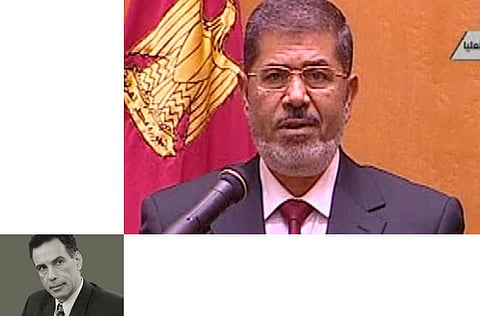
Last month, Egyptian voters endorsed the draft constitution by almost a two-third majority, but with a surprisingly low voter turnout. President Mohammad Mursi delivered a speech in which he thanked those who voted ‘yes’ and those who voted ‘no’ for their participation, which made possible a crucial exercise in democratic governance.
The Egyptian president was generally praised for the conciliatory tone of his speech and for his call for national unity. He took responsibility for “mistakes” during the period leading up to the referendum and called on Egyptians to appreciate the contentious points in the draft constitution as a “healthy phenomenon” of democracy. He said Egypt was “moving steadfastly towards democracy and pluralism”. Under the new constitution, he stated, “everyone is equal without any discrimination”.
The New York Times described Mursi’s attempt at reconciliation as an important step in Egypt’s political transition and even compared his speech to inaugural addresses by US presidents.
Compare this positive assessment with the behaviour of the opposition forces.
At a news conference billed as a response to the president’s speech, the opposition leaders said they had not even listened to the speech, that they had been in a meeting preparing a call for new protests against the constitution on the anniversary of the January 25 revolution.
In a statement, the coalition complained of “scandalous violations that amounted to fraud” in the referendum on the draft Constitution.
“Even if this constitution is considered approved legally,” the statement said, “it lacks moral legitimacy, political legitimacy and popular legitimacy because it lacks national consensus”.
After the results were confirmed, the Egyptian president signed the draft constitution into law. Article 230 empowers the existing Shura Council to “assume full legislative authority” and act as the legislature until the new House of Representatives is formed within the next two months.
The constitution provides for a smaller Supreme Constitutional Court, made up of 10 instead of 18 members. The court accepted its restructuring under the new constitution, which effectively meant the purging of some of the court’s appointees who were Mubarak loyalists.
Last week, Justice Tahani Al Gebali, the only female judge to serve in the Constitutional Court, filed a suit with the Constitutional Court, alleging that the constitutional document was drafted and adopted illegally and that her retirement from the bench was “vengeful”.
There is, however, little doubt that the constitutional document, thick and verbose, contained provisions segments of the Egyptian society that were rightly viewed as least controversial. There is little doubt also that not enough time was allowed for dissemination, explanation, analysis and debate on crucial issues that the constitution is likely to shape and the impact these will have on the life of the Egyptian people.
Some of the issues that require clarification and / or modification go to the very heart of the constitutional idea. For instance, one of the primary purposes of having a constitution is to describe and limit the power that rulers and institutions have on our lives and therefore restrain the temptation of abuse.
The Magna Carta (1215) Charter, generally considered the first constitutional document in the world, sought to limit the powers of an absolutist monarch who claimed divine authority (King John).
The American Constitution provided for checks and balances to limit the power of the legislature, the executive and the judiciary. In the US, the constitution is the supreme law of the land. The US Supreme Court is the quintessential check on government power and the champion of citizens’ rights. “No man’s life, liberty or property is safe” observed Mark Twain (1866), “while the legislature is in session”.
Instead of describing and limiting government and state power, the Egyptian Constitution describes and expands government and state role in the lives of Egyptians from guardian of ethics and morality (Article 10) to guarantor of social justice (Article 14), to promoter of charity and solidarity (Article 8).
In some cases, the constitution reads like a political programme for an election campaign. Article 14 for instance creates many obligations and commitments for the state that one’s credulity is challenged. It promises an economic policy that will eliminate poverty and unemployment, increase the national income, raise the standard of living, create work opportunities, protect consumer rights and establish social justice. How realistic is all that? And within what time frame should we expect to see results?
Instead of clearly placing the constitution above any and all laws and making it the supreme law of the land to be applied and interpreted by the most incisive legal minds in the Constitutional Court, it dilutes its authoritative nature by requiring consultations with the leading religious institution, Al Azhar.
One institution whose authority seems enhanced in the new constitution is the military. A National Defence Counsel has been created (Article 197) to deal with issues of national security. It will be presided over by the president and will include the chiefs of the armed forces, senior members of the government and of the parliament.
Controversially, the constitution permits the military to try civilians accused of crimes that harm the armed forces. The constitution does not define what these crimes are nor does it say what “harming” the armed forces actually includes.
For instance, does refusing conscription constitute a crime that harms the armed forces? A constitution is supposed to define and limit the power of rulers and institutions to guard against abuse. Article 198 does neither.
The power of the president, however, has diminished in certain areas. For instance, Article 133 imposes term limits, which means that a president can only be re-elected once, instead of endlessly as in the Hosni Mubarak era. Article 145 provides that approval must be acquired from both legislative houses with a two-thirds majority for any treaty of peace. It is unlikely that the Camp David peace treaty with Israel will have passed that test.
Adel Safty is distinguished professor adjunct at the Siberian Academy of Public Administration, Russia. His new book, Might Over Right, is endorsed by Noam Chomsky and published in England by Garnet, 2009.


