Cat and mouse game between West and Iran gains momentum
Doubts cast over whether Tehran will take the decision to go ahead with making a nuclear device despite sanctions
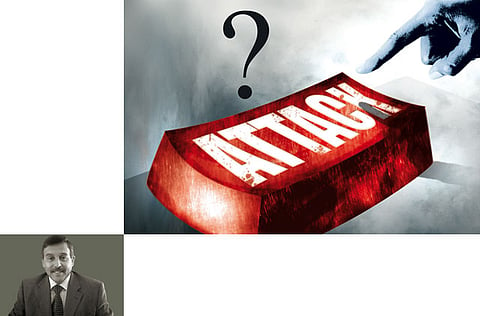
The latest Iranian claim of a ‘major' nuclear breakthrough was played down by the American government as "an exaggeration to bolster Iranian nationalism amid tighter sanctions rather than a step toward developing an atomic weapon". Such a claim of "3,000 new-generation of Iranian-made centrifuges for uranium enrichment" activated at Natanz site was dismissed by the United States as "hype for domestic audience". The State Department spokeswoman Victoria Nuland informed reporters that the US has indeed ‘opposing assessments' on this matter.
The US is playing down Iranian ability to enrich uranium which could lead to a grade needed to make atomic weapons while at the same time accusing Iran of secretly seeking to attain atomic weapons. Yet, President Barack Obama, in his speech at American Israel Public Affairs Committee (Aipac) Conference on March 4 reiterated his administration's stand that while exerting a continuation of US diplomatic and economic pressures to stop the Iranians from developing an atomic bomb, he keeps his other option (military) open. Observers following the Iranian nuclear saga were expecting the US and the European countries to come down on Iran with more aggressive sanctions as a result of the Iranian claim of additional centrifuges. These same observers believe that this ‘cat and mouse' game between the West and Iran is being played at a time when negotiations with the US, France, Britain, Germany, Russia and China are about to resume.
US Secretary of State Hillary Clinton has said: "the international community wants serious engagement about Iran's nuclear programme". Meanwhile, great concern is being expressed by western guarantors that an armed dispute with Iran "will disrupt oil supplies from the Gulf". The price of oil increased three per cent in the month of February. Iran is Opec's second biggest producer after Saudi Arabia. Oil for March delivery rose 48 cents to $102.28 (Dh376) on the New York Mercantile Exchange, after media reported that Iran halted crude oil shipments to six European countries before the European Union embargo takes effect on July 1. Michael Lynch, President of Strategic Energy and Economic Research in Winchester, Massachusetts, recently said that "the Iran situation has gone from lukewarm to simmer". He predicted a major change in the situation "whether that's an attack by Israel or negotiations have yet to be determined". US intelligence has just completed an assessment concerning Iran's nuclear programme.
Enriching uranium
US Defence Secretary Leon Panetta said in his testimony to a House panel in the US Congress that "Iran has not made a decision to proceed with the development of nuclear weapons even as it continues to enrich uranium. We will not allow Iran to develop a nuclear weapon". Indeed, many observers are convinced that in spite of Iran's insistence that its nuclear programme is for civilian energy and medical research, the US and the European Union say they suspect Iran is "seeking atomic weapons capability". Nevertheless, the Director of the US National Intelligence, James Clapper told the Senate Armed Services Committee that he doubted Iran eventually will make the political decision to move forward with assembling a nuclear device. "They have put themselves in a position", he said, "but there are certain things they have not yet done and have not done for some time". While the US economic growth is rising and improving (in a manner that will benefit Obama's bid to win a second term) the European Union is facing an economic crisis that may turn into a major catastrophe if a military conflict takes place with Iran. Both the US and the European economies, hang by a thin thread at this time and the last thing the Europeans and the Americans want to see is a major disruption of oil flow from the Gulf region. This is one of the reasons why they are not eager for a military solution against Iran. Yet, over the past four months, the US and the European governments have imposed tough new sanctions restricting petroleum and non-energy trade including financial transactions in an effort to force Iran to abandon its nuclear activities.
These sanctions caused the Iranian currency to lose half its value, so far, on the open market. They are supposed to put pressure on Iran and are considered the best way to avert a military conflict in the Gulf region that holds more than 50 per cent of the world's oil reserves. Nevertheless, Israel is carrying on a public campaign with a call to bomb the Iranian nuclear facilities.
Most experts in the West believe that Iranian scientists now possess enough technological know-how that neither an air strike nor continuous bombing by US armed forces could destroy Iran's ability to produce a nuclear weapon someday, should Iran choose to do so. In fact, such atomic know-how in the minds of Iranian scientists cannot be demolished by bombing campaigns. Former CIA director Michael Hayden told a group of foreign policy experts last month in Washington, D.C that "Israel is not capable of inflicting significant damage on Iran's nuclear sites. The Israelis are not going to attack Iran, he said "They cannot do it, it's beyond their capacity. They only have the ability to make it worse".
Professor As'ad Abdul Rahman is the Chairman of the Palestinian Encyclopaedia.


