Begging was young girl Sravani’s last resort
Desperate to get fees for a training course, Andhra girl travelled to Kerala to seek alms
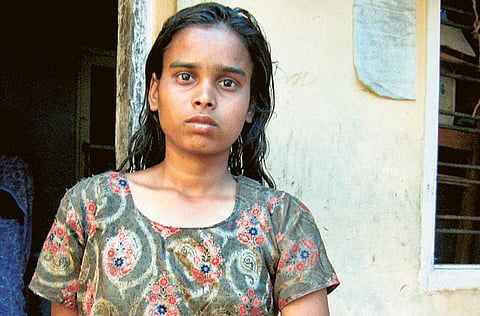
Dubai: Some years ago, life for Sravani, a young girl in a village in the district of Anantapur, in the state of Andhra Pradesh, was tough but not impossible. She had always been poor. Her father had no job for years due to his fading health. Her mother was ailing too.
Her two elder sisters, married off in the years when there was a fistful more of money to get by, were now too ashamed to maintain relations with them owing to their pitiable poverty. Her paternal grandmother, both her legs stiff with fractures, had also to be looked after. Sravani had only herself to fall back on.
She had dreams. She wanted to grow up to be a nurse or a teacher so she could help her parents lead a better life. But to become a nurse, she had to first complete high school. There was not enough money to pay her fees. She decided to sell vegetables before and after school hours. The days were long, the nights too short and life was a crush. But she did not mind the rigours. She completed high school with decent marks.
Free seat
Then it was time for college. Fortunately, she was allocated a free seat in a government-sponsored college close to her village. She opted for History, Economics, Civics and Telugu (her mother tongue). It was then that life turned impossible.
"It is really an unfortunate situation for this young girl," says J. Sanjappa, chairperson of the Child Welfare Committee (CWC), Anantapur chapter, who took charge of Sravani when she was handed over to him by the CWC in Kerala (it rescued the girl who was found begging on the streets of Alappuzha last week).
"Her family is in a pathetic condition," says Sanjappa. "Her father is in poor health and has been unemployed since 2006. Her mother too has many health problems. This girl really needs help."
"But there has been no help," says Sravani, whose blunt daring to throw herself at the mercy of fate has India all shaken up. She is speaking to Gulf News from her village, Pumudurthy, in Anantapur district. Her voice is soft, steady. She strings her answers with simple words, keeping her sentences concise.
"Since I can remember, I have always wanted to be a teacher or a nurse," she says. "But life never gave me a chance. One and a half years ago, I began having epileptic fits, and this affected the fingers of my left hand. They curled up. I can lift small objects but mostly my fingers stay curled. I was told I could never become a nurse." One of her dreams seemed to have gone out of shape. She couldn't allow her other dream to go the same route.
Epileptic
Sravani started to feel desperate. Life was going from the impossible to the unbelievable. She had to do something, however unthinkable. "So on January 17, I boarded a train along with a village acquaintance and left for Kerala," she says. "I thought that if I took to begging for a few days, maybe I could raise enough money to pay the fees for a teacher's training course."
Says Sanjappa of the series of circumstances that brought this girl to where she is today, "From 1998 to 2006, Sravani's father, Narasimhalu, was employed in the village post office as a ‘runner'. His job was to assist in the delivery of money orders, parcels and letters in the surrounding villages. But Narasimhalu was also epileptic. His deteriorating health eventually cost him his job. The state government then offered the same job to Sravani's mother, Ramanjinamma, on compassionate grounds." Ramanjinamma worked in that job for a year, but the sheer physical rigours of the job were too much for the frail and embattled woman. She gave up the job.
Meanwhile, in 2007, Sravani completed her 10th standard from the Zilla Parishad High School near her village.
Selling vegetables
"Through her high school years, this girl raised money for her fees by selling vegetables," says Sanjappa. Then she was offered a free seat in the Patti Junior College, as part of government-sponsored education for the underprivileged.
"A professor in the college sponsored her books, and for a while it seemed to Sravani that the clouds had cleared. But just as suddenly, the weather changed. "She could not concentrate on her studies as her family conditions worsened. So she had to discontinue her education." It was the year 2008. Thereafter, everything went downhill.
The girl hung in there, watching her father and mother grow weaker by the month, as the years crawled by with the bare minimum to eat on any given day. "We get government subsidies in the form of 35 kilos of rice and Rs200 (Dh14.79) for vegetables per month," says Sravani. But this was not enough to feed her dreams.
So on January 16, having given up on every kind of hope, she approached her father and told him she would have to get out of the house to earn money. He pleaded with her to change her mind.
"How could I?" she says. "If I didn't do something, who would?"
The next day, she got on the train. "I did not have money for the ticket; my travelling companion bought it for me." She had always known what this man did for a living — he would go to Kerala, stay there for a few weeks, beg for money and when there was enough to keep the home fires burning for a while, return to his village.
Sravani decided she would put herself through the ordeal as well.
In Alappuzhu, she stayed with a group of other beggars from Andhra, in a rented room. "There are many who do this for a living," she says. "I would leave every morning at eight o'clock and return to the room at 2pm."
There was no fuss, no fights. Everyone got to keep the money they begged for. She did this for nine days, sitting in the same spot every day, speaking in English with foreign tourists and well-heeled Indians, gathering every rupee that came her way with desperate gratitude. Did she ever regret her decision? "I couldn't think of anything except my sick parents and their dependence on me," she says.
Relieved
On the ninth day, she was noticed by a member of the CWC. "They approached me and asked me who I was and why I was doing this. When I told them of my problems, they assured me of help but told me that I needed to go back to my parents first."
She felt relieved by the rescue. "I knew I did not want to become a beggar," she says, "At the same time, what else could I do? But I longed to see my parents again, so I was happy to be taken back to my village."
In Anantapur, she was left in the charge of Sanjappa, who visited her parents in her village to verify the facts about the family's condition. "They are desperately poor," he says. "I have prepared a case for her education. The CWC has approached the District Collector and Magistrate of Anantapur, Durga Das, and petitioned him to sponsor her fees.
"We have also requested him to provide a suitable income-generation unit to the family. The District Collector has accepted the requests."
Though Sravani is above the age of 18 and hence does not come under the jurisdiction of the CWC, the organisation "is prepared to extend its services for the development of Sravani and her family members," says Sanjappa. For the record, he says she is 22 years old. "As recorded in her school-leaving certificate, her date of birth is May 20, 1989."
Declared fit
Meanwhile, Sravani has undergone a medical check-up and the doctors have declared her fit to take up nursing, despite the condition of her left hand. "They said it was treatable and that I should not worry. With physiotherapy, I will regain the use of my fingers. Now that I have been declared fit, I want to be a nurse," she says.
Has life finally painted the sky blue for her? At the moment she is not sure.
But she is hopeful. Help is on the way. She is looking forward to its arrival on her doorstep.


