Famine rating downgraded in three affected areas
Food situation still worst in the world, agencies warn
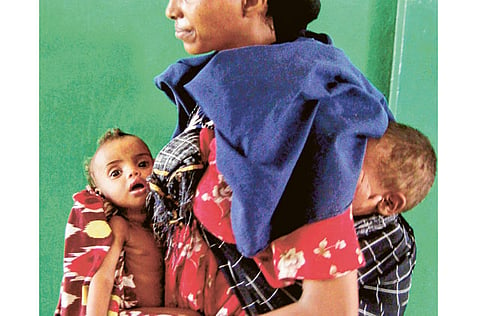
Nairobi: The number of famine zones in Somalia has been cut in half, as US and UN food agencies said aid had reduced death rates. That good news was tempered by warnings that a quarter million Somalis face imminent starvation, and that military battles are preventing food deliveries.
The US and UN food agencies on Friday downgraded the famine rating in three areas of Somalia to emergency status but said three other areas — including the refugee communities of Somalia's capital, Mogadishu — remain in the famine zone. Overall, the agencies said the food situation in Somalia remains the worst in the world and the worst in Horn of Africa country since the region's 1991-92 famine.
"Death rates, especially for young children, remain extremely high, in part due to continued outbreaks of measles, cholera, and malaria. Tens of thousands of people have died since April, and deaths are likely to continue over the coming months," said the announcement from the UN's Food Security and Nutrition Analysis Unit and the US's Famine Early Warning System.
Conflict a big hurdle
Save the Children credited the international aid effort with helping to lessen the famine, but said the crisis is far from over and warned of high mortality rates among children in Mogadishu.
The aid group Oxfam warned that conflict in Somalia continues to slow relief efforts and said international leaders need to refocus efforts on the hunger crisis.
Hundreds of Kenyan troops moved into Somalia last month to fight Al Qaida-linked militants, whom African Union troops are fighting in Mogadishu, and Oxfam said it had to suspend aid to 27,000 people in Somalia's Lower and Middle Juba regions as a result. Oxfam did not single out Kenya but said the international community was jeopardising a positive step forward with a potential two steps back.
"When drought and famine made headline news, the international community responded generously with support. Now the conflict threatens to jeopardise the very relief efforts they are funding. The international community must not give with one hand and then take with the other by ignoring the needs of Somali people who are struggling in the face of a famine," said Senait Gebregziabher, Oxfam's Somalia director.
East Africa — including Somalia, Kenya, Ethiopia and Djibouti — has experienced a crippling drought over the last year, but that drought turned into famine only in Somalia, where aid groups have reduced access because of limitations placed on them by Al Shabab.
Need to sustain help
Tens of thousands of people have died, though Mark Bowden, the UN's top humanitarian official for Somalia, said on Friday he doesn't believe there will ever be a complete and accurate death toll. Bowden said the international community has mostly fulfilled its moral duty to help Somalis in need.
"I think so far they have. The appeal was for $1 billion (Dh3.67 billion) and we received $800 million," Bowden said. "The big question is whether that can be sustained, which it has to be, for next year."
The US and UN groups said famine would persist at least through December in the Mogadishu and Afgoye refugee camps and in the Middle Shabelle region.


