Iraqis who fought US have mixed feelings about combat troop pull out
There are widespread fears for the future among Sunnis, many of whom joined the insurgency after the 2003 US-led invasion but now fear the departure of US forces will cement Shiite — and Iranian — domination.
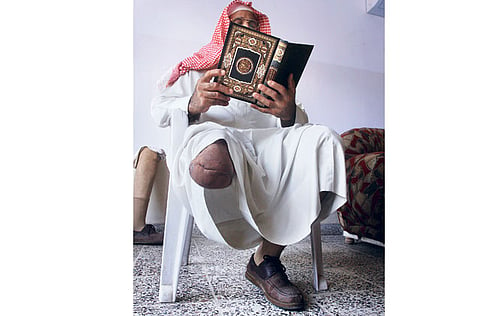
Fallujah: Sunni fighter Abu Mujahid lost a leg battling US Marines in the Iraqi city of Fallujah, scene of some of the fiercest battles of the Iraq war.
Small pieces of shrapnel still pit his skull and scars decorate his body after a missile strike in 2004 by a US warplane on the city in the western province of Anbar — Iraq's Sunni heartland and once a stomping ground for Al Qaida.
"Yes, we fought them to the death and we dreamed of the day when they would leave Iraq," he said, laying aside a crutch as he sat down on a plastic chair in his house.
"But their withdrawal at this time is not in Iraq's interest," Abu Mujahid said.
His views echo widespread fears for the future among once dominant Sunnis, many of whom joined the insurgency after the 2003 US-led invasion but now fear the departure of US forces will cement Shiite — and Iranian — domination.
US forces will not leave Iraq for another 16 months, the deadline for a complete withdrawal set in a bilateral security pact signed by former President George W. Bush in 2008.
But the US military formally ends combat operations and limits it numbers to 50,000 on August 31, down from a peak of around 170,000 three years ago when the sectarian warfare unleashed after the invasion reached a frightening peak.
Back-seat role
The remaining US troops in Iraq will focus on advising and assisting their Iraqi counterparts, playing a back-seat yet still significant role in the continuing fight against an Al Qaida-led Sunni Islamist insurgency and Shiite militia.
Many Iraqis have mixed feelings about the gradual US withdrawal.
Any initial jubilation over the fall of Saddam Hussain and his suppressive Baath party regime quickly turned to horror when sectarian war ignited and spread. Tens of thousands were killed and Iraq seven and a half years on is a rubble-strewn and dusty wreck, where public electricity only lasts a few hours per day, government bureaucracy is an opaque and corruption-riddled maze and jobs are painfully scarce.
"I can't describe how happy I will be when they leave our country," said Khalida Mohammad, 30, a teacher whose husband was one of several civilians killed in Fallujah in 2006 when US soldiers opened fire on cars that had driven close to a convoy. "Every US soldier in our country is a criminal and a devil. No one wants them," Mohammad said.
Sunnis who ruled Iraq under Saddam saw their control wrested away by a once oppressed Shiite majority after the fall of the Sunni dictator.
Political clout
As the United States pulls out, some fear there will be nothing to protect them against vengeance or discrimination. Others fear they will lose any chance of regaining their once unchallenged political clout.
And many worry that the void vacated by the US forces will be swiftly filled by Shiite power Iran and that the US invasion will be followed by a less visible but equally demoralising chapter of Iranian influence.
Abu Mujahid's battlefield wounds occurred in April 2004 in the first assault by US troops to rid Fallujah of a fierce insurgency that was also being supported by Al Qaida fighters streaming into the country from abroad.
The attack, led by US Marines, was launched after four private security contractors working for the controversial US firm Blackwater were killed by a mob.
"Look at my head. See, come on, put your hand here to touch them. These are two pieces of shrapnel," Abu Mujahid said, reaching for his skull. "Look at what remains of my leg, my hands. These are all shrapnel wounds," he said proudly.
"Shall I take off my clothes to show you how many shrapnel wounds I have on my body?"
Overwhelming force
In those early days of the war US forces used overwhelming force to defeat opposition, using tanks, warplanes and helicopter gunships to pound areas where insurgents holed up into the dust and leaving being little but bullet-marked ruins.
The first assault on Fallujah and a second assault later that same year killed hundreds of fighters and civilians and forced thousands of people to flee. Many of the bullet holes remain visible and ruined buildings still abound in Fallujah, fuelling a lingering anger among some of the residents against the United States.
Scepticism runs deep about American intentions.
Not everyone in Iraq believes President Barack Obama's promise to US voters to stick to the withdrawal timeline agreed to in the security pact. Surely America paid too high a price in blood and treasure — more than 4,400 soldiers killed and a trillion dollars gone — to just walk away?
"Why should I believe them when they talk about withdrawing?
They said they would bring democracy, stability and services to Iraq. What was achieved? Nothing," said taxi driver Yaser Zaidan, waiting for passengers at the fortified entrance of Fallujah. "America will not leave this cake behind simply because they paid such a high price to come to Iraq."
The assaults on Fallujah did not prevent Anbar province from falling under the sway of Al Qaida.
The militant group was only driven out when Anbar's tribal chieftains started turning on it in 2006, realising it was threatening their authority.


