Rafsanjani accuses Iran’s leadership of incompetence
‘I think it is not possible to run the country worse than this’, former president says
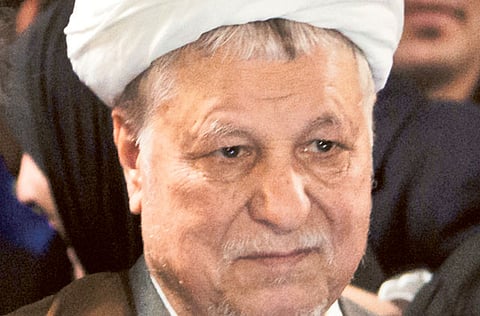
Dubai: Former Iran president Akbar Hashemi Rafsanjani has accused Iran’s leadership of incompetence and ignorance just days after he was barred from standing in an election next month, the opposition Kaleme website reported.
Rafsanjani’s comments appeared to add to the political conflict between those loyal to the leadership and opposition groups who have been marginalised since post-election unrest in 2009.
“I don’t think the country could have been run worse, even if it had been planned in advance,” Rafsanjani said to members of his campaign team on Wednesday, according to the Kaleme report.
“I don’t want to stoop to their propaganda but ignorance is troubling. Don’t they understand what they’re doing?”
Before he was disqualified from next month’s presidential election, the 78-year-old Rafsanjani caused high interest in a ballot many believe was a race between hardliners. He attracted the endorsement of reformist groups whose leaders had disputed the re-election of President Mahmoud Ahmadinejad.
Rafsanjani did not indicate specifically who he was addressing but after the unrest following Ahmadinejad re-election in 2009, he criticised the authorities heavy-handed response and has since been regarded as a threat.
The two-term president warned of “dangerous” threats from the United States and Israel, which have threatened to use military action against what they suspect is Iran’s development of nuclear weapons.
He said he had not realised his candidacy would create a wave in the country but that it was a sign of people’s despair. Now was the time to stay calm, he said.
“In no instance should people despair. There will be a day when those who must come, will come,” he said, an apparent reference to advocates for political and social reforms who have been sidelined.
With Rafsanjani and Ahmadinejad’s close ally, Esfandiar Rahim Mashaie, now out of the picture, the election field is again dominated by hardliners loyal to Iran’s clerical leader, Ayatollah Ali Khamenei.
Rafsanjani’s ally Hassan Rohani, a former nuclear negotiator, and reformist Mohammad Aref, remain in the contest.
Rafsanjani said the experiences of rebuilding the country after the Iran-Iraq war was one that was needed now. He was elected president in 1989, a year after the war ended, and his administration came to be called the “government of reconstruction”, an era when economic rebuilding and reform put Iran back on its feet.
“The foreigners called me “easy man” because it took no time before the doors opened. Now that experience could be easily used again.”


