Would-be first lady to keep low profile in post-Mubarak Egypt
Presidential candidates in Egypt vow to keep their spouses out of the limelight in state affairs
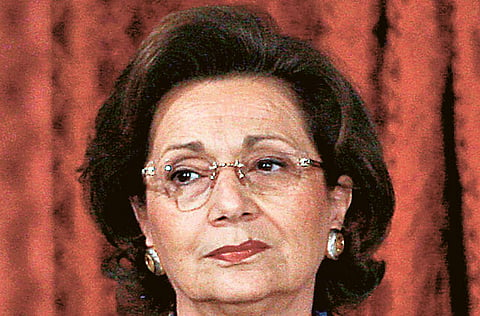
Cairo: Blaming Egypt's former first lady, Suzan Thabat, for the fall of her husband, long-standing president Hosni Mubarak, all the 13 candidates vying for the country's top job have vowed not to allow their spouses to keep a high profile in state affairs.
"If I win, I will not keep the first lady tradition at all," said Amr Moussa, a front-runner in Egypt's presidential elections beginning on May 23.
"One of the reasons for the people's dissatisfaction with the Mubarak regime was the powerful role played by his wife in public affairs," Moussa, Egypt's former foreign minister, told the Egyptian private television CBC, Monday night.
Moussa is married to Laila Badwai, who is not often seen in public despite her interest in promoting environmental protection.
The opposition has accused Mrs Mubarak, 71, of meddling in state affairs and wasting public money during her husband's rule of nearly 30 years. But no charges have been formally made against her since a popular revolt toppled Mubarak in February last year.
Mubarak has been charged with involvement in ordering the killing of protesters during the 18-day uprising against his rule. His two sons, Alaa and Jamal, are facing charges of graft and influence peddling. Verdicts in their cases are to be given on June 2.
"If I win, my wife will not be involved in politics," said Hamdeen Sabahi, an independent presidential hopeful. "What has happened to Mubarak and his family will make the next president strictly committed to the law and the constitution where there is nothing mentioned about the role of the so-called first lady," he added.
"The absolute powers wrested by Mubarak's wife, including her influence on and interference in his decisions, have given a bad idea on the role of any new president's spouse," he said.
Sabahi has been married for more than 30 years to Seham Nejm, a founder of a non-governmental group promoting women's rights and literacy. She is also a UNESCO advisor on education. "But as a president, I will not prevent my wife from pursuing activities in social work and improving the life quality for the disadvantaged classes," said Sabahi, a father of two.
The Egyptians first knew about the title of the first lady in the era of late president Anwar al-Sadat who ruled Egypt from 1970 to 1980. His wife Jihan was engaged in social work. Still, Mr and Mrs Sadat were apparently careful to exclude their children from politics.
Under Mubarak, his wife, a holder of a master's degree in sociology, was often seen heading meetings of governmental and non-governmental organizations including the National Centre for Motherhood and Child and the Egyptian Red Crescent.
She also launched the "Reading for All" programme in conjunction with the state publishing house, the Egyptian General Book Organization, printing books in different disciplines and making them available to the public for reasonable prices.
With Egypt bracing for what is widely seen as its first competitive presidential polls, no wife of a contender has appeared in campaigning.
To Amani al-Ashmawi, wife of the Islamist presidential contender Selim al-Awwa, the first lady role is not acceptable to Egyptians. "The people will vote for the president, not for his wife," she told the semi-official newspaper Al Ahram Al Masai.
Al-Ashmawi, a writer of children's books, married al-Awwa in the mid- 1990s after the death of his first wife. She promised that if her husband wins, she will not take on any political or social role. "I will continue to write and will not use his (presidential) post to allow my works to be published," she said. "We will continue to live in our house and will not move to the presidential palace."


