Egypt burns on a day of rage and mayhem
Egypt was virtually isolated from the outside world last night as its national airline stopped operations
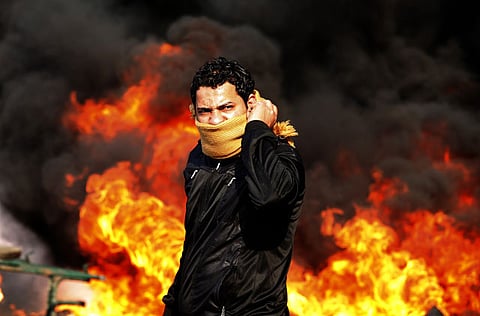
Cairo: Egypt was virtually isolated from the outside world last night as its national airline stopped operations and the government continued its blackouts on the internet and mobile phone services as massive protests against the regime escalated yesterday defying a night time curfew imposed by President Hosni Mubarak in the country’s largest three cities.
Meanwhile, army units descended on the streets of major cities to help the police face the protesters. Five people were reportedly killed in yesterday’s clashes, bringing the death toll of security forces and protesters to more than 15 since clashes began on Tuesday.
This is the first time the military has become involved in the four-day old protests, continuously raging in Cairo, Suez and Alexandria and other cities.
The ruling party headquarters in Cairo and other cities were burned down apparently by enraged protesters demanding regime change. Protesters also stormed the buildings of Egypt’s foreign and information ministries, which houses state TV and radio channels. Yesterday saw the biggest anti-governments protests so far. It was dubbed by the seemingly-leaderless demonstrators as “a day of rage.”
Calls for “introduction immediate reforms” by many world leaders and even some officials of the National Democratic Party (NDP) were rebuffed by the protesters, bent on continuing their confrontation with the regime forces. President Mubarak, who ordered the military’s deployment in the streets, was supposed to address the nation yesterday night.
Thousands of people stayed on the streets into the night in Cairo and Suez despite the government imposing an official curfew at dusk.
“I can’t believe our own police, our own government would keep beating up on us like this,” said Cairo protester Ahmad Salah, 26. “I’ve been here for hours and gassed and keep going forward, and they keep gassing us, and I will keep going forward. This is a cowardly government and it has to fall. We’re going to make sure of it.”
Amid the unrest, Egyptian security officials said police have put Nobel Peace laureate and opposition figurehead Mohammad Al Baradei under house arrest. Police stationed outside his suburban Cairo home told him he cannot leave the house after he joined protesters in the capital yesterday. While Al Baradei may represent longtime opposition to the regime, the protesters appear to be currently led by no individual or group, especially in the face of a nationwide communication blackout.
Internet and cell phones were blocked throughout the country early in the morning but that didn’t prevent people of all ages and walks of life pouring into the streets.
Police forces were overpowered by the thousands of demonstrators in the major cities. Reports said protesters have virtually controlled Alexandria’s main junctions and the police were retreating by the early evening. Some of those forces have joined the protests, the reports said.
The demonstrators managed by the end of the day to drive the police from Tharir Square in central Cairo, close to many government ministries and the site of the outbreak of demonstrations on Tuesday.


