Yemen still facing grave challenges: analyst
Transitional government unable to find solutions to all these problems
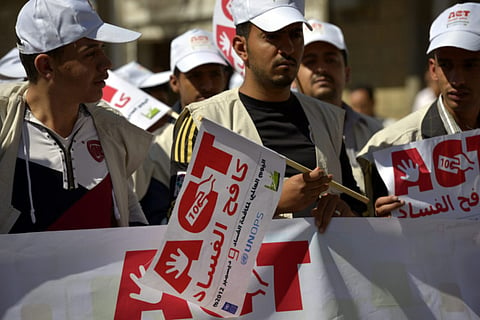
Sana’a Yemen is still facing many grave risks that could undermine security , more than a year after the former president Ali Abdullah Saleh agreed to leave office, Fadhel Al Rabayee,an independent political analyst ,told Gulf News.
“Yemen is currently facing many threats like the continuation of violence forms across the country. There are clashes between Al Houthis, Salafists and Islah in the north, clashes between security forces and pro-separation protesters in the south. Also there are clashes between security forces and Al Qaida, and clashes between pro-government armed men and Al Qaida in the south. The transitional government could not find solutions to all these problems.”
Another challenge that face the country during this transitional period is that the powerful political forces that fought with each other during the early days of the turmoil are still exist and ready to fight again.
“We can say that the warring forces that battled over power [in 2011] are still active and leading the political landscape in the country .These forces are the former president, his party and their allies and his opponents. These forces benefited from the truce to regroup and get as many loyalists as possible.”
Under the terms of the GCC brokered deal that ended the crisis in Yemen, Yemen president called political parties in the country to engage in a serious discuss during the National Dialogue to shape the country’s new constitution. Almost most of the political parties agreed to take part in the conference except secessionists in the south who stipulated that the dialogue should be between South and North.
Fadhel thinks that there are two obstacles that could challenge the success of the upcoming National Dialogue. The first is that the Preparatory Committee for National Dialogue has mainly focused on the political elements that significantly took part in the previous political battles which “does not give the dialogue a clear credibility as those interlocutors are unable to solve the country’s problems.”
The second obstacle is that the southern Movement (secessionists) has announced it will not take part in the national dialogue, and this boycott, said Fadhel, could force the organisers to keep delaying the conference.
“The chances of holding the national dialogue on time are shrinking and there is consensus that the committee should delay the conference and work harder to create factors for its success.”
Fadhel said that the seriousness of the international and regional community, their understanding of the ramifications of the country’s thorny issues and the satisfaction of the all forces will determine the course of the situation in Yemen.

