Trying to create a balance between work and home
Dr Monica Gallant, the chair of business programmes at Dubai Women's College, believes that women still have many challenges to face today.
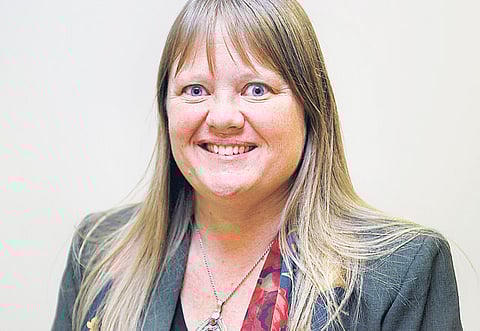
Dr Monica Gallant, the chair of business programmes at Dubai Women's College, believes that women still have many challenges to face today.
"In many societies, men are still seen as the decision makers for themselves and for the women in their lives. Although women are gradually finding ways to gain empowerment, there is still an imbalance," she said.
Dr Gallant has carried out research and prepared a dissertation on Emirati women working in Dubai.
"Women in the Middle East typically experience a disadvantageous position in society," she said.
She has concluded that Arabs see the need to adapt to the modern world to survive economically and politically but they also do not want to lose traditional values.
Women are, thus, caught in this transition and are forced to fulfil their domestic responsibilities in addition to their work life.
"Islam supports the importance of the role of women in society, including their right to study and work. Islam also emphasises the importance of family and the role of women as mothers."
According to Dr Gallant, many Muslim women feel that what oppresses them is the culture of patriarchy.
"Networking in the workplace is very important and this can be difficult for some women who may not be able to interact freely with men," she said.
It sometimes gets difficult for women to balance their lives at work and home. They are usually expected to take full responsibility for their children, too.
Dr Gallant said: "Women may face feelings of guilt if they are unable to spend time with their children."
In her study, Dr Gallant also focuses on one particular example of conflicting cultural perceptions — the face veil.
She said: "The presumption that the [face] veil is a major oppressive is highly objectionable to most Arab women who feel that the over-emphasis on this issue overshadows the importance of other more vital inequalities they would like addressed."
The argument is extended in another report she cites in her research.
She writes: "The practice of veiling emancipates Muslim women .... Veiling, a traditional [cultural] practice reinforcing gender difference, can actually promote equal opportunity for women where co-educational schooling and paid employment are concerned."


