Most Emirati pupils in private education attend poor-performing schools
Majority of Emirati pupils at private schools are at worst performing institutions, officials have said
Dubai: The majority of Emirati pupils enrolled in private schools are attending the worst performing institutions, education officials said, as they warned that the quality of education offered has a direct impact on the country's gross domestic product (GDP).
Considering the fact that the number of Emirati pupils in private schools has gone up from 37.8 per cent in 2003 to 58 per cent in 2011, officials said the time had come to disseminate information about the performance of schools and ensure parents make informed choices.
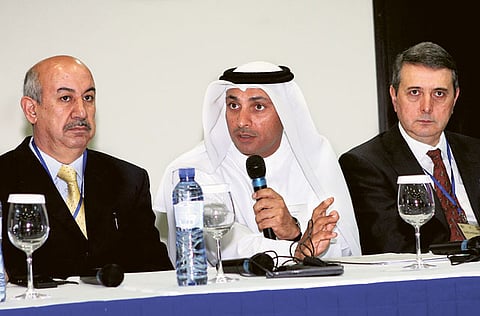
The concern was raised in a policy brief presented by Dubai's Knowledge and Human Development Authority (KHDA) yesterday, as education experts from seven countries in the region — Jordan, Syria, Lebanon, Tunisia, Oman, Palestine and the UAE — gathered at the Dubai School of Government for a three-day technical workshop on how to use the results of their school assessments to improve education across the region.
The workshop, the sixth and final in the series, is part of an initiative called the Regional Network for Education Research Initiative.
World Bank grant
It is funded by a World Bank grant to the National Centre for Human Resource Development (NCHRD) in Jordan. The Dubai School of Government (DSG) and the KHDA are partners of the initiative.
Mourad Ezzine, education sector manager for the Middle East and North Africa (Mena) region at the World Bank, said research had shown that the quality of education has a direct impact on a country's GDP.
"[A] one-point improvement in students' performance in reading and mathematics... was directly linked to 2 per cent increase in annual GDP."
The result is based on an analysis of the Trends in International Mathematics and Science Study (TIMSS) scores, he said.
"The Arab world has made formidable progress in providing access [to education], fighting illiteracy and reducing gender disparities," Ezzine said.
"Despite this, for too many students in the Arab world, schooling has not been synonymous with learning."
There is also a skills mismatch, as a result of education not responding quickly to the evolving needs of the labour market.
"The response of the school systems in the region has been either insignificant or has come too late."
He urged Arab countries to focus on developing a globally competitive workforce in the long-term.


