‘Little expected to change with Qatar transition’
Shaikh Tamim could replace the prime minister until he takes over as emir
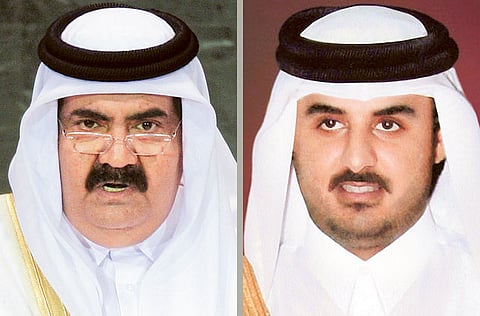
Doha: A planned leadership change that could see Qatar’s emir eventually ceding power to his son is unlikely to change the Gulf state’s taste for bold investments overseas and assertive support for Arab Spring revolts.
Analysts say heir apparent Shaikh Tamim Bin Hamad Bin Khalifa Al Thani will probably pursue the policies of his father, under whose rule the US-allied gas exporter has become a force in global sports, media and business and an enthusiastic political ally of the Muslim Brotherhood.
The current prime minister, Shaikh Hamad Bin Jasem Al Thani, 53, also expected to step down under the reported transition plan, will likely remain head of the Qatar Investment Authority, providing continuity in a vital arm of state power.
Shaikh Hamad Bin Jasem has negotiated some of the fund’s most prominent deals, including talks with Glencore’s chief last year when Qatar demanded better terms for backing the firm’s purchase of Xstrata. The companies eventually merged to create Glencore Xstrata.
Shaikh Tamim is 33, young compared to other Gulf Arab rulers.
But Neil Partrick, a Gulf security expert who contributes to the London School of Economics Gulf Studies Programme, said the emir, Shaikh Hamad Bin Khalifa Al Thani, would likely “exercise considerable power over his relatively inexperienced son”.
Shaikh Tamim is understood to be genuinely enthusiastic about the Muslim Brotherhood, the Islamist movement whose influence has grown sharply in the Arab world since revolts against autocratic rule began in early 2011, Partrick noted.
PRIORITIES
But “[Shaikh] Tamim is unlikely to want or to be able to deviate too far from the rather more important US axis, even if he continues to see Qatari weight as being achieved by befriending Islamists outside of his own country”, he said.
Arab and Western diplomats said this week Shaikh Hamad Bin Jasem was preparing to quit in a wider power reshuffle that might also see Shaikh Tamim succeed the emir.
They expected the reshuffle to take one of two courses — either Shaikh Tamim would replace Shaikh Hamad Bin Jasem as the prime minister until he takes over as Emir when his father eventually steps down, or the current Deputy Prime Minister, Ahmad Al Mahmoud, would become the next prime minister when Shaikh Hamad Bin Jasem steps aside.
No Qatari officials have commented on the reports.
Eman Ebed Al Kadi of Eurasia Group consultants wrote that she did not expect Qatari domestic priorities or its foreign policies to change significantly with a change of ruler.
“... [Shaikh] Tamim has controlled key policies in Qatar for some time, and shares his father’s views on political development in Qatar and economic diversification.”
National budgets had been agreed up until 2016-2017, Al Kadi wrote, and with preparations for the World Cup in 2022 in full swing, much change in domestic momentum was unlikely.
Michael Stephens, researcher at the Royal United Services Institute based in Doha, said he also expected little change because Shaikh Tamim had been involved in drawing up domestic spending initiatives and setting their deadlines.
“Given all the budget allocations that have been made, it would be inconceivable that he could, or would, undo all that work. With the way the country’s domestic plans have been set, you either put the break on, or go forward; you can’t reverse the direction of the ship,” he said.
INVESTMENTS
The country has embarked on a $150 billion (Dh550.81 billion) urban makeover that will transform the capital city over the next decade, giving it a sprawling new airport, metro system, seaport and hundreds of kilometres of new roads.

