Peek into royal India
Stunning sights and endearing eccentricities make a memorable trip
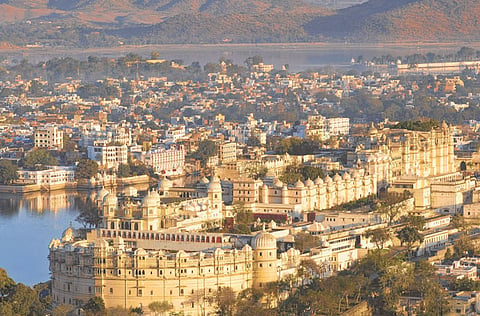
Everyone I know who has spent time in India tells me it's impossible to explain, that you have to experience it first-hand. With that in mind, my partner and I embarked on our own bite-size tour of this unique, vast country.
We opted for a royal tour of India, taking in the great Mogul strongholds and palaces, including the Red Fort in Old Delhi and the architectural wonders of the city of Agra, among them the greatest Mogul masterpiece, the Taj Mahal. Trust me, even though you have probably seen its picture a thousand times, nothing prepares you for that first view — it is perfect from every angle and breathtaking.
In Jaipur, famous for its pink sandstone buildings, we saw the wondrous City Palace with its exquisite courtyards, works of art and original costumes; the Astronomical Observatory, which was built in 1726 and still makes accurate predictions; and the Amber Fort, a sprawling fortress with its magical candlelit Hall of Mirrors.
Unity in diversity
I could wax lyrical about the palaces and architecture and they are an integral part of the trip. But for me India is about the people, their beliefs, the way of life. North, south, east and west, they all leave a distinctive stamp and it is impossible to come away untouched.
The best ways to see India are by train or by road. I am one of the world's worst car passengers, renowned for clenching my partner's hand while screaming for taxi drivers to slow down. So you would think I would have a problem with India, where motorway lanes are shared with vehicles on the wrong side of the road, cows wander across central reservations and holy men sit cross-legged in the middle lane, meditating.
I should have been nervous but in fact I felt very safe. They may drive bumper-to-bumper and skim past one another at great speed with inches to spare but you must be good to drive like that. The horn is used constantly to "politely" inform others of your presence.
On the road
It is said that road markings in India purely exist for decoration. And it's true. The biggest danger is to pedestrians. But there is a knack to crossing a road: Stand next to a local and shadow their every move. Failing that, shut your eyes and pray, as the traffic stops for no one except cows. Why aren't cows afraid? Because they know they are holy and if anyone dared hit them, it would have serious consequences.
Nothing is more entertaining than cow-watching in India. Cows wander the streets happily stealing from vegetable stalls, secure in the knowledge that, as sacred animals, they are well protected and will not be beaten away with a stick or shouted at. India has very smart cows. When they are ready to be milked or just tired from a day in the city, they make their way back home to the safety of their owners until the following day.
Early morning sights
Mornings start early in India and I would urge you to do the same. Not only will you beat the crowds but early morning is also the best part of the day for soaking up the atmosphere and people-watching.
Families are busy setting up brightly coloured food stalls, tailors sit in doorways, sewing machines at the ready and farmers who have brought milk to be sold crowd the tea stalls. It's fun to be a part of these daily rituals. Usually by 10am the churns are being rinsed at the roadside and the oxen and carts are heading back to the villages.
But not the day we were in Jaipur. Luckily, it was the festival of Holi, when young and old alike throw colours over one and all, and children rejoice that the word "no" does not exist for a day. We joined thousands of locals to watch 50 or so brightly painted elephants play polo. We were all highly amused by one elephant who decided he rather liked the sound of the ball being popped. He was removed for bad behaviour.
Covered head to foot in paint, we felt honoured to have been a part of a magical and chaotic day as we headed back to the sanctuary of our hotel in Jaipur, the Taj Jai Mahal, an 18th-century palace set in 18 acres of beautifully landscaped gardens.
India's top-end hotels are second to none, especially the beautiful restored palaces and forts. One not to be missed is Devi Garh near Udaipur, a luxury fortress palace in the hills, where we received a welcome — the like of which I doubt I will experience again. Thousands of rose petals rained down from the battlements on to our astounded heads as we arrived. Our first night's dinner was served high in a turret in a candlelit room strewn with flowers, complete with a flautist playing.
We were equally pampered in Udaipur, the City of the Lakes, which is famous for one of the largest palace complexes in the world. There, we stayed at The Leela Palace Kempinski, another fine example of Indian hospitality, on the banks of the beautiful Lake Pichola.
We felt a touch of sadness when it was time to leave, stepping aboard a small boat at 6am, the mist swirling on the still water. Glimpses of the Sun slowly rising and children waving on the banks didn't make leaving any easier.
But our spirits soon recovered as we flew down to Goa for several days at a sister Leela Kempinski hotel and a chance to experience the very different feel of the Portuguese-influenced south. It was the perfect place to recharge our batteries, strolling along palm-fringed beaches or sitting by the pool contemplating the extraordinary sights we had seen.
India is by turns mesmerising, shocking, enlightening, exotic, playful and stunningly beautiful. It is a country of extremes but embrace all it has to offer and you will be rewarded with a memorable trip and be left hungry to experience more.


