Living it up in St Lucia
Caribbean islands are blessed with natural beauty, but when it comes to spectacular settings
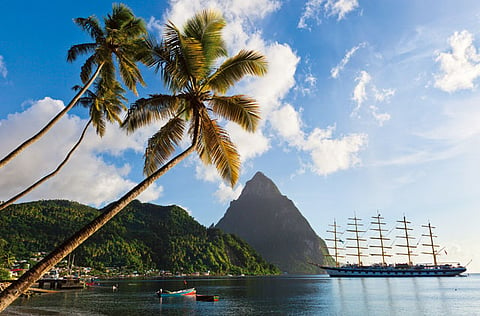
There’s no shortage of impressive beaches and stunning scenery in the Caribbean, famous for its warm waters and laid-back way of life. But for spectacular views and awe-inducing landscapes, St Lucia has the upper hand.
Covered by a thick blanket of rainforest, with jagged mountains rising from the ocean, it’s a unique proposition for even the most seasoned Caribbean traveller. Mountains abound and you can marvel at the bubbling sulphur springs – marketed as the world’s only ‘drive-in volcano’ – at Soufrière. Then there are the beaches – loads of them, easily accessible and with good swimming conditions. What’s more, the majority of hotels and restaurants on the island have been carefully positioned to capitalise on the wealth of great views on offer – and it was my intention to sample as many as possible.
During a 90-minute journey from the international airport to our first hotel in the north west of St Lucia, we travelled through the capital Castries, a bustling town where a number of huge cruise ships dock. We passed several, looming over the town and disgorging hundreds of tourists into the hands of eager local traders. With tight, narrow streets, Castries is very much a working town, with most tourists dashing off to other points on the island.
We were heading for St James’s Club at Morgan Bay, just north of the capital. With rooms perched over a lovely bay, the hotel has recently been taken over by the Elite Island Resorts hotel group and has been given a spruce up. The resort is spread out, but golf-style buggies are on hand to get you to your rooms if the step-climbing becomes too arduous. We had a suite with flower-strewn hedges outside and west-facing views of the beach and sea.
The next day, we drove a few miles up the coast to Rodney Bay. This area was named after British Admiral Rodney, who beat the French in a naval battle off the coast of St Lucia in the 1780s. A number of posh resort hotels have sprung up in this area, along with shopping malls to entice the cruise passenger market.
We had lunch at laid-back shore-front restaurant Spinnakers, right on Reduit Beach. Watching boats bobbing on the water, we dined on shrimp and fish that had been freshly plucked from the ocean only hours before.
Afterwards, we travelled up to Pigeon Island, a rock promontory that is actually no longer an island as it is joined to the mainland by a causeway. It is a lovely spot with clear, turquoise-coloured water and swaying palm trees.
On the way there we passed Rodney Bay Marina – a clear reminder that the world is
divided into the ‘haves’ and the ‘have-yachts’.
Those looking for a little local colour can visit the nearby fishing village of Gros Islet. On Friday evenings, holidaymakers turn up to join in the “jump-up”, where roads are closed and stalls sell seafood, music plays and everyone parties.
A break in paradise
Half-way through the trip we had a holiday within a holiday. We’d been invited by British-born Michael Thom and his Italian wife Maria to sample C’est la Vie – an exclusive retreat the couple have created in secluded grounds at Trouya Pointe on the north-west coast. Given our own butler, we lapped up the luxury of a stay that included the Thoms hosting us for dinner.
There are just a handful of rooms at C’est la Vie, which are invariably taken up by groups with something to celebrate but who want to do it in beautiful and relaxing circumstances. As well as the attentive butlers to wait on them, there is a pool in
the grounds and plenty of peace and quiet.
After this mini-break, we headed to possibly one of the most scenic restaurants in the world. Dasheene is part of the Ladera resort, high up near the town of Soufrière. It’s one of tourism’s most prized locations. The food was pretty good but the view was something else – it overlooks two towering volcanic peaks called the Pitons. To our left was Gros Piton, around 770 metres high, and to our right Petit Piton, around 30 metres smaller. Most people only glimpse these picturesque mountains on the front of Caribbean holiday brochures, but here we were, gazing directly at them.
Next day, we travelled to another island beauty spot – Marigot Bay. Just a little south from Castries, the bay is a protected cove immensely popular with visitors. It was here that the 1967 film Doctor Dolittle, starring Rex Harrison, was shot.
We ate by the waterside in a restaurant aptly named Doolittle’s (with a double ‘o’ though) and gazed across at the boats sailing into the bay and the expensive properties dotting the hillside opposite.
There was still one more lovely location to see. It was at Cap Maison and was another of those St Lucia specialities – a secluded resort in a beauty spot. With its white-walled buildings, there is just a hint of Spain about the place. Those staying there have the benefit of seclusion, yet also have the shops and restaurants of Rodney Bay a short journey away.
With so many trails and viewpoints to explore, St Lucia never disappoints. It’s no surprise so many artists and photographers come here seeking inspiration. Holiday brochures and paintings can hint at the island’s beauty, but to really understand its magic you have to visit and see for yourself.


