Dig deep into Cairo
Cairo reveals many different faces to the intrepid explorer, other than just the pyramids
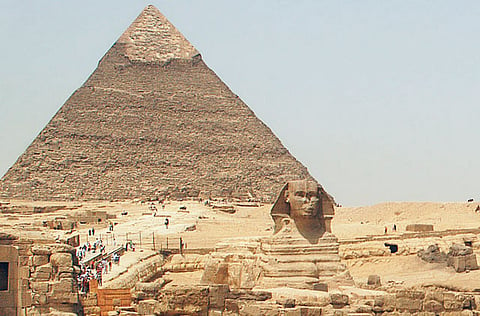
Cairo ... the very name conjures images of the mysterious East: pyramids, pharoahs, the steel-blue Nile and hawk-eyed men on camels. All those clichés are on hand almost immediately as we touch down at Cairo airport.
But these days, there is a more prosaic trademark to this, the largest city in Africa: its heaving mass of chaotic traffic.
Cairo is one of those places you can either embrace and enjoy or, after taking the required snaps (pyramids, museum, maybe the market), depart with all haste.
Most tourists do just that, thereby missing out on the 600-mile land journey to Luxor through the Western Desert and the opportunity to enjoy a fascinating landscape of unique beauty.
But first, Cairo. I've spent some time in the city over the years and I like it a lot. I love its vitality, the charm and humour of its inhabitants, most of them struggling to survive in this crucible of history, culture and cars.
If you have time to stay a while, let me recommend three hotels that will look after you very well and in differing styles.
Nearest the airport is Fairmont Towers. It has 247 large and well-appointed rooms and suites. Service is slick, the restaurants top-class and there is ample evidence of the Fairmont philosophy of leaving as light a carbon footprint as possible.
Best of three
Further from the airport but nearer the pyramids, is Belle Epoque. It describes itself as "Cairo's first boutique hotel" and is a combination of two buildings of the interwar years — Cairo's Art Deco period — when the Farouk dynasty held sway.
Our bedroom looked out over the pool and the bed easily entered my wife Lynne's "ten most comfortable hotel beds" list.
Last, right in the centre of town and only a couple of streets from Egyptian Museum, is The Talisman, which describes itself as a B&B.
The 24 rooms and suites are individually decorated, all have en suite bathrooms and all are double-glazed against the traffic outside.
For many years I've nurtured blissful memories of camping under the star-bright skies of Jordan's desert and have always wanted to make a journey through the Western Desert of Egypt. And so, on a Monday morning, a Toyota Landcruiser arrives at our hotel, equipped with a burly driver, Zizou, and a charming young guide, Mido.
After a couple of hours, Zizou swings the four-wheel-drive vehicle off the road and into the desert. Mido wants to show us the remains of a petrified forest.
At one time, the whole Western Desert was covered by a tropical forest and its fossil remains are still visible above ground in certain areas.
The composition of petrified wood shows a wonderfully diverse range of colours and, when polished, many examples provide a fascinating glimpse into prehistory. However, the taking of samples is forbidden by law, Mido warns us.
We make one more stop. Mido leads the way to the top of a dune.
The view is staggering with, astonishingly, the glint of water at the base of the hills 25 miles away. "That is the lake that supports the oasis of Bahariya," Mido explains. The lake is all that remains of the huge stretch of water that filled the valley in prehistoric times.
We regain the road and drive on towards Bahariya. We reach Hotel Qasr Al Bawity, where we're booked for a two-night stay, in time for a late lunch.
Climb to a panorama
In the evening, I climb English Mountain in time to view the sunset. I am rewarded by a stunning view of the valley and the spectacle of the Sun sinking beyond the hills on the other side.
After breakfast, we drive the few miles to the relatively recently discovered Roman-era tombs.
The Romans occupied the oases for almost 600 years and they're still here, in the large number of burial grounds.
As occupiers, they tried to integrate with the locals, embracing their religion and adopting mummification as a means of ensuring eternal life.
Next day we drive through the spectacular but slightly eerie Black Desert and White Desert. The Black Desert has a covering of volcanic lava while the White has astonishing wind-eroded limestone formations. We spend the night at the Desert Lodge Fixed Camp.
The tents are luxurious safari-style affairs while in the dining marquee, white-outfitted chefs cook in a state-of-the-art steel kitchen. A stay in the desert here presents no hardships — and Lynne and I enjoy the sound sleep a wellsprung four-poster induces.
As we drive through the White Desert the following morning, the air is as crisp as at a ski resort and the alpine feeling is reinforced as we drive along a road cut through chalk.
We are booked in for two nights at the impressive Desert Lodge in Dakhla. The lodge occupies a dominating clifftop site overlooking the oasis and is built to resemble the traditional local style.
Medieval town
Next day, Mido takes us on a tour of the medieval town. One has that eerie sense of the presence of its inhabitants, as if the past is held here for ever, like a fly in amber.
Kharga is our next stop and the last oasis before we reach Luxor. Mido takes us to the town's impressive museum.
Then we drive through town to our hotel, the Sol Y Mar which, again, has a laudable policy to save water and energy and to reduce waste. Next morning we head to Luxor. We turn off the main road and come to the Al Moudira Hotel.
The Al Moudira is a magical hotel, a hedonist's haven, in fact.
It's best to take in Luxor's Valleys of the Kings and Valleys of the Queens and the temples of Karnak in a day, have a lovely evening at the Al Moudira, then board one of the fabulous boats for a lazy, luxurious trip upriver to Aswan.


