The business of art
Lamees Hamdan is determined to ensure that artists get their due and to showcase their work internationally...
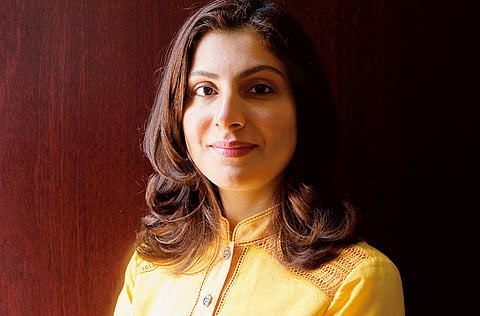
The soft-spoken, extremely articulate Commissioner of the UAE's second National Pavilion at the 54th International Art Exhibition - the Venice Biennale to be held in the summer of 2011 - is extremely busy. Dr Lamees Hamdan, a member of the Board of Directors of the Dubai Culture and Arts Authority, is in the process of preparing for the Biennale - one of the most important events in the world of art.
"For the UAE, this is the second Biennale in Venice. The last time - in 2009 - we were the first Gulf country to participate in it," she says. "I am very proud of that fact."
A person who takes a complete business approach to the event, Hamdan does not conform to any stereotypes: she is proud of her country's participation in the Venice Biennale, but she is more concerned about how to motivate the rest of the countries to follow.
International exposure
But it is down to more than national pride. "You see, throughout the region more and more private companies, individuals, as well as governments are investing in art, so I think it's about time they invested in their artists and put them on an international stage. "The Venice Biennale is actually the perfect platform for that because so many countries participate in it, and around 800 artists are expected to show their works," she says.
"People from the art scene all around the world go to Venice to see the best art from around the world. So, the UAE artists who are participating get to be seen as well. That puts your art on a more international stage and when you get seen by people from all over, you put Middle Eastern art or Arabian art ina more international setting."
It works as an idea, but is there in fact enough participation from the artists in UAE? "We have a lot of good artists, but you have to remember we are a young country," she says. "So our art scene is young as well. At the last Biennale we had one main artist and a few others as well. [We] don't have to have ten artists every two years. If we stick with one or two or even three, yes we will have enough. For instance, the US, a much larger country, only chooses one artist every time. So you can choose how you want [to exhibit]. I personally like to keep the artists' group small so you can explore [their works] more in depth."
The manner of choosing the artists is left to the curator. "I don't choose; it's the curator who chooses. It's his vision," says Hamdan.
"He chooses the artist and the art. The theme will be the curator's choice and we usually are ready with the artists' list by October."
Hamdan sees more professionalism in the UAE's participation in the next edition of the Venice Biennale. "It's much more streamlined now. We know the ropes now. I've always been going to the Venice Biennale to have a look, but always as a viewer. Actually holding an exhibition and putting it together, especially such an important one as Venice, has been a learning experience. This time we know exactly what we want and who to work with as well."
Showcasing diversity
Hamdan feels that the UAE is going to be a strong contender on the global art scene. "I see the UAE [participating] every two years," she believes. "Even if the other countries from the region participate, and I am hoping they will, the UAE will still be a strong, if not the strongest, participating nation in the region, simply because of what is happening in the UAE. We have Abu Dhabi which has been investing heavily in museums on the Saadiyat Island, with the Guggenheim, the Louvre, and so on. You have Dubai where the first and most important auctions in the Middle East took place. You have the galleries here which are very active. So, the UAE is becoming, if it has not already become, a hub for the Middle Eastern arts ... I mean [this] in a very broad sense, including Pakistani, Indian and Iranian art. A lot of business happens here, a lot of buying. So, I think we will always have a very strong participation. The international community has always been looking at the UAE to see what we are producing."
The different cultures that exist in the UAE also reflect in its art. How does she plan to deal with this?"I think every nation is enriched by the people living in it," she says simply. "The UAE more so because we have so many different nationalities. It enriches us, and makes us into more sophisticated people. Both as UAE nationals and as people living within the UAE, I think that multiculturalism is the way forward. It is important to understand and respect others … I wouldn't have it any other way!"
A learning experience
It is not only the artists who will benefit from UAE's participation in the Biennale, says Hamdan. A whole lot of people connected with the arts in different capacities will gain invaluable experience. "We have some core people working for us, which gradually expands the nearer we get to the biennale," she explains. "We have a lot of volunteers who help us out, a lot of people contacting us, reaching out and wanting to be part of it. We try and accommodate as many as possible. I feel it is important that people learn about setting up exhibitions. We are making exhibits not only for Venice, but also the Shanghai Biennale, the Sharjah Biennale, shows in Dubai and Abu Dhabi… So, it's a learning curve."
The Ministry of Culture, Youth and Community Development and the Office of the UAE Pavilion have a volunteer programme, which was sponsored by Takatof and Emirates airline during the previous biennale. "The last time, we had 50 UAE residents, both nationals and expatriates, who were given the opportunity to stay three weeks in Venice," says Hamdan. "They were able to see how an exhibition happens on the international level - how curators work at that level with international artists. They also helped in putting together our pavilion. They made important contacts, and the experience that they gained in Venice allowed them, and in some cases drove them, to pursue studies in curatorial fine arts. Others were given opportunities for scholarships; many found placement in cultural institutions in the UAE.
"So it was important for meto not only bring artists into the Venice Biennale, but [to learn] how we could, as a people, also help others who want to have this experience in the art scene.
"Now with our participation in more and more art exhibitions we see many opportunities to do so."
Understanding economics
Not surprisingly, Hamdan is a serious collector of Middle Eastern art. "What I do for the arts - I am not an artist - is very business-like; it is very similar to normal business practice," she says.
"Basically you bring the sponsors together, you convince them that sponsorship is a good idea. Youspread the word… it really isa business. And you make sure that with the budget you are given, you [put up] the best exhibition possible. So, take away what is usually seen - the art, the artist and the curator's vision. And what isn't seen in all the things that happened to make that possible is where I come in."
Hamdan doesn't mind handling the unglamorous part of the business; in fact, she seems to relish it. "Most of that usually happens at the desk or on the phone. People see art as something very romantic, but it is the business of art that makes it happen. That's where my strength lies. I am business-orientated, so I am able to make things happen. I am able to put the artist, the curator and the art on show. A lot of people don't know and don't even want to know. They don't think that's art. But it's like a museum; its not only beautiful paintings and other arts, but it is the building of the museum, making sure it is running... even the airconditioning has to be perfect. It's a science." She calls herself "the facilitator, the editor".
"I am not the one who actually takes the decision on which artist or art is to be projected. I am the one who makes sure that the curator's choice makes sense for us as a nation."
Building a competitive spirit
For Hamdan, an art exhibition isa lot more than just an art show.
"The Venice Biennale is different; you are competing as a nation and you are competing with the best of the best. It is the most important art exhibition. Because we are competing along with the US, Germany and the UK - countries that have always had a very strong artistic [niche] - you have to make sure that what you are producing can stand side by side with these greats. So you have to producea great show.
"It is national pride as well. You also have to understand that international art critics will see your work. We are not producing something for the region; it is for the outside world. It should catch their attention and their respect. We do have a very strong art team, small but strong. That's what I want to bring across - that we are serious, we have serious art credentials here, we have serious artists. And these are the people I want to give the opportunity to exhibit at such an international venue, and also to work with the best curators in the world."
Italian recognition
Dr Lamees Hamdan was presented with the Order of the Star of Italian Solidarity for her work spearheading the first UAE National Pavilion at the 53rd International Art Exhibition - the 2009 Venice Biennale, on June 19 by the Italian ambassador to the UAE, Paolo Dionisi.
The order was officially bestowed on Hamdan as Knight of the Order by the President of Italy, Giorgio Napolitano, through the signing of a Presidential decree in Rome. The order is granted to non-Italian citizens makinga significant contribution to the country.


