Stay cool without breaking the bank
With temperatures starting to soar in the UAE, electricity bills are set to jump. Architects, engineers and developers come together to create powerful building solutions that will make using your air conditioner easier on your wallet as well as on the environment
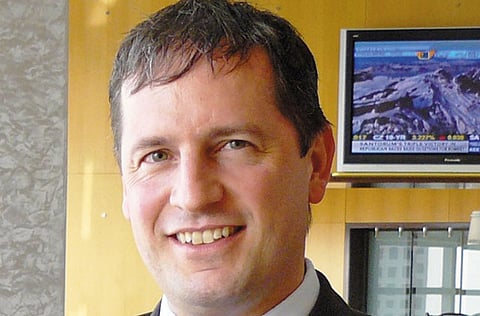
While the UAE enjoys a good winter from April to October, the harsh summer temperatures steadily inch north, with corresponding utility bills. “The extremely hot weather makes air conditioning a necessity for the UAE, and yet, it is also true that air conditioning is responsible for 60 per cent of your electricity bill,” says Markus Oberlin, General Manager at Farnek Avireal, one of the oldest leading players in facilities management. “We have noticed that despite the completion of many new projects, consumption has stabilised or even dropped whatever the market perception — due to the dramatic price rise in the electricity charges.”
Recycling water
He is all praise for the Burj Khalifa, which has successfully used the condensation of water from the air-handling units to water the landscaping around the building. “There are some newer hotels which also use this technology. A creative architect can truly combine all the innovations to design an unusual building,” he says.
Both the architect and the engineer share equal responsibility to design appropriately for the climate, adds Stuart Clarke, Associate Director at Arup and a Middle East Facade Engineering Leader. “By taking a holistic view of the building’s orientation, materials and shading, the designers need to make the best effort to reduce the air conditioning required. While the end-user will complete the picture, the architect and the interior designer can incorporate details such as using switches that automatically shut down the air conditioning when someone opens a door or window. This will get people trained to think about the connection between cooling and closing doors,” explains Clarke.
While tenants living in traditionally serviced buildings can see how their electricity bills change with the weather and air-conditioning usage, it is difficult for people living in large developments to see the impact of their actions on their bills. “Though the central system of chilling is more efficient and saves energy for the same amount of cooling being provided, you might find too much cooling being provided since people do not have any financial impetus to reduce their usage,” says Clarke.
Design preventives can include ensuring that external surfaces do not heat up, use of appropriate shading, high quality double glazing and insulation on the opaque areas and the ability to move air around the room. “A 24 degree temperature might be uncomfortable but a 25-26 degree can be tolerated by using a fan to create air movement,” he says.
Other ways of educating people could include giving a maintenance manual to every tenant in a building, which outlines the optimum usage of services. “With the transitory nature of tenants here, sometimes you cannot do anything except charge people in order to change behaviour, which is what DEWA is doing,” he notes.
He can see a change in the market in the last few years. “The majority of energy is used by buildings that were built before people started to think about the energy usage of a building. But the Abu Dhabi Municipality and the Urban Planning Council are looking at ways to reduce energy and assessing building stock to see what changes can be implemented. Money will have to be spent on that,” says Clarke.
Power management
Adds Oberlin, “While we have good relationships with developers and property owners on existing buildings, we have discovered that when it comes to new buildings, often a developer sells off the building and is not the final operator.” Not a happy situation for a facilities management company or the tenant or the energy bill. “But there is a great change from the sceptical looks I got whenever I mentioned energy management seven years ago. The UAE is witnessing a huge change and it is on the right track.”
Meanwhile the responsibility of energy management lies as much with consumers as the developers and the architect. “Bills can be reduced if people set the thermostat at the right temperature instead of the common and unhealthy approach to keep rooms at very low temperatures. In older villas and buildings, we have found the insulation of doors and windows to be of poor quality. This leads to air leakage and again, higher bills,” says Oberlin. He also notes that the European standard is two air changes per hour versus the UAE, where that figure goes up by ten to 20 times. “All one needs are technicians who can change the speed of the ventilation systems and change the air flow rate,’ he advises. “In existing buildings, you need to optimise the performance of your air conditioning by good preventive maintenance. There are also some devices available for retrofitting existing air conditioning units called energy saving models. This can reduce energy consumption by 20 per cent.”
The initial costs range from Dh5,000 to Dh10,000 for a villa while the insulation of a standard building on Shaikh Zayed Road in Dubai can go up to Dh200,000-Dh300,000. “The value savings for the payback time can go down by a year. But each building needs to be studied case by case to determine the model, type and age of the chillers,” he says. In new buildings, it is important that the ventilation be designed for the actual number of people using the building. “This means that the air flow rates are as low as possible to save energy. It also means that instead of just having a good design, the architect works very closely with the contractor. The architect’s role is very important in this process since he can choose from day one to make this building not just efficient but green,” adds Oberlin. “The first pilot studies have started on solar solutions that can be integrated into the wall instead of on the roof. This will dramatically reduce energy consumption and should be available at some point in the Middle East,” Though, he adds, “Maybe, studies need to be conducted on how those technologies react to this market in terms of climatic and building conditions.”
Saving energy
What is the importance of conserving electricity in the UAE? On January 1, 2011, DEWA increased electricity charges from 20 fils per kilowatt (KWh) to 23 fils for monthly consumption below 2,000 KWh and from 33 fils to 38 fils per KWh for consumption of more than 6,000 KWh per month.
Average individual electricity usage is said by DEWA to be 20,000 KWh hours per annum and 130 gallons of water daily, placing Dubai among the cities with the highest consumption per person in the world, with one of the highest carbon footprints per capita.
Farnek Avireal calculated that:
In 2007, an office tower (35,000 square metres and situated on Shaikh Zayed Road, Dubai) had an annual electricity bill of Dh2.5 million. In 2011. The electricity charges for the same building will have doubled to Dh5.14 million.
A hotel (around 20,000 square metres), which incurred annual energy costs of Dh1.5 million will now pay more than Dh3 million in 2012.
In 2008, a typical villa in Jumeirah had an annual energy bill of Dh23,850.
It will experience a rise of up to 70 per cent to around Dh40,500.
— Information from a report conducted by Farnek Avireal

