Developing an international hospitality brand
Jumeirah is a hospitality brand that embodies the traditional rich Arab hospitality and delivers it in a modern environment
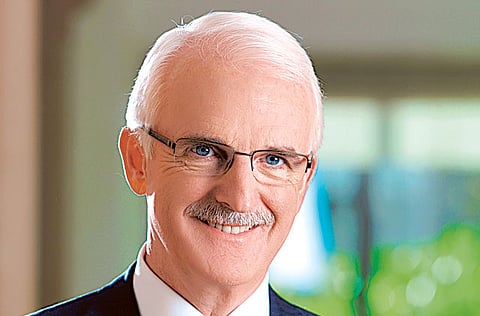
Dubai: In the age of globalisation, businesses should be global as well as local — global in outlook and local in culture.
Jumeirah, Dubai’s answer to the Ritz-Carlton or the Four Seasons, is a hospitality brand that embodies the traditional rich Arab hospitality and delivers it in a modern environment.
In Jumeirah, service does not only comes with a smile, but in a five-course platter. However, despite Jumeirah’s success, Gerald Lawless, the man who instilled the Arabian culture in a cosmopolitan setting to create the right fusion, remains a humble man.
Lawless has been part of the UAE’s success, from the day he landed in this country in the late 1970s. He now heads the most successful luxury hospitality group, Jumeirah, which operates among others the iconic Burj Al Arab hotel.
Under his able guidance, Jumeirah has grown from a single-hotel business to more than 30, covering a diverse geographical stretch from the United Kingdom to China.
In an interview with the Gulf News, he elaborated his views. Excerpts:
Could you recollect the formative days of the UAE — the 1970s? How was business then? What were the challenges and how did you overcome those, then?
My wife Naesa and I arrived in Dubai in the middle of August 1978. At that time we were young, in our mid 20s, and ready for the great new exciting challenge of working overseas for the first time.
Dubai was a very interesting place already; it was a vibrant “go ahead” city. In fact at that time, the government, under the leadership of His Highness Shaikh Rashid Bin Zayed Al Maktoum, had already initiated the construction of Jebel Ali Port, the largest man-made port in the world. They were building the dry docks, the Dubai aluminium smelter plant and of course the World Trade Centre, the tower which at that time was the tallest building in the Middle East.
So Dubai was always a great place in which to do business, always welcoming foreigners to come and work there. Of course, I’d spent a lot of time around the Creekside area especially as we’ve stayed in the first few months in Astoria Hotel in Bur Dubai and we used to cross the creek regularly by abra. I also worked in that stage in what is now the Le Meridien Hotel at the airport, but was then known as the Dubai International Hotel.
The tourism was barely heard of, it was just about starting. I think most of the European tourists were coming from Scandinavia, people who wanted to feel the nice weather of the United Arab Emirates but it was really only when Emirates started their regular services to the UK that tourism really began to develop in the mid 1980s and early 90s.
What was the most memorable event in your business career over the last four decades?
For me personally, the most memorable event in my career was definitely joining Jumeirah and setting up what is now the Jumeirah Group and, of course, the opening of the Dubai-based properties such as Jumeirah Beach Hotel, Burj Al Arab, Wild Wadi Waterpark and subsequently the Emirates Towers complex and Madinat Jumeirah in 2004. They will always remain in my memory. I am very proud of what was achieved by Jumeirah during that period.
As business grew and the environment changed, how did you change your organisation and business to adapt to the changes?
I think any successful organisation as it grows has to be able to adapt to change and needs to remain entirely flexible. We have developed significantly our corporate structure and organisational structure over the years. Since we joined Dubai Holdings, we have been encouraged by them — as it is one of their policies — to have our own board of directors. I am very pleased to say that we now have a board which is led by an independent non-executive chairman, Stephen Murphy, with a majority of non-executive directors on the board. I think it has greatly helped Jumeirah and my own management team to continue to evolve, to develop and to bring in new skills and new talent into the company as we needed to be able to cope with the growth patterns that we have experience over the last several years.
What are the major contributing factors to the success of your business? How did the UAE’s overall progress compliment your business growth?
I think the major contributing factor to the success of Jumeirah as a business is the leadership that we receive from the Government of Dubai though His Highness Shaikh Mohammad Bin Rashid Al Maktoum [Vice-President and Prime Minister of the UAE and Ruler of Dubai], and our parent company Dubai Holding. All of the Dubai leadership has committed to the success of this great city and indeed of the United Arab Emirates.
Now that the UAE has achieved such a huge success, so did your business — how do you see the country’s overall progress in economy?
I think this country will continue to thrive and to succeed and to provide great opportunities for its citizens and for the residents who live within the UAE. The leadership is certainly enlightened in its approach to business and social affairs. It is also extremely encouraging to see the dedication and the interest that the leadership has in providing superb education for everybody within the United Arab Emirates. To me the secret of success of any country is strong and relevant education system that will prepare young people to be able to find and work in good jobs; it will also develop a great entrepreneurial spirit amongst the population.
It is extremely encouraging to see more and more Emiratis interested in coming into our business as they begin to appreciate and understand that this is an incredible career opportunity for them. The young Emiratis who have now joined us realise that working within the hotel industry does not necessarily cut across their Islamic values. We have so many different types of disciplines and positions within the hotel industry such as sales and marketing, human resources, technical services, guest relations… Many of these positions lead to senior opportunities within Jumeirah. At the moment four of our seven chief officers are Emiratis.
Where do the challenges and opportunities lie?
Travel and tourism has proven to the global community that it is one of the most important industries in the world. After all it provides almost 10 per cent of the world’s GDP and up to 8 per cent of the world’s labour forces are involved directly or indirectly within the travel and tourism and hospitality, and the United Arab Emirates is extremely well placed to be able to take advantage of the growth in this industry. We will continue to see the evolution of the tourism business in Dubai and the United Arab Emirates.
I see many that more GCC citizens are beginning to discover or rediscover Dubai; most of the GCC guests that we speak to tells us that they are delighted to have come to the UAE and to Dubai and they will continue to do so because they have not realised just how much the city and indeed the country has to offer them as tourists.
I also see that as Emirates Airlines continues its expansion and will soon become the world’s largest airline, we in the industry are very confident that we will continue to welcome guests from many different parts of the world, such as from the Americas, also all of Asia including South East Asia and in particular India. We expect continuing developments in that area.
We are also very excited about the possibility of Dubai and the UAE being chosen as the location for the 2020 World Expo, which will be decided in November of next year.


