BlackBerry India talks in deadlock
Meeting attended by state-run telecom operator BSNL fails to address security concerns
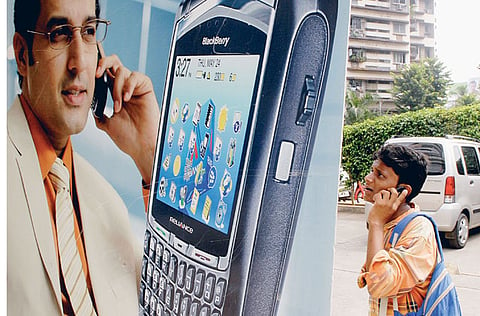
New Delhi : A meeting of Indian officials and telecoms operators on whether to restrict Research in Motion's BlackBerry services over national security fears was inconclusive, a top government official said yesterday.
Worried about security, India's interior ministry held the meeting with at least one operator yesterday to look at how security services could access encryption details for the smartphone, the latest global headache for maker RIM.
State-run BSNL attended the meeting, but it was not clear whether any of the major private carriers attended.
A telecommunications ministry official, who asked not to be named, said the talks remained "inconclusive" after the meeting.
A senior government official had said on Wednesday that the government could ask mobile phone operators to block BlackBerry messaging and email services until RIM provides access to data transmitted over the handset.
Bharti Airtel and Vodafone's India unit are the largest providers of BlackBerry services in India, the world's fastest-growing market. A shutdown would affect one million of the smartphone's 41 million users. India is one of RIM's fastest-growing markets.
Darling of CEOs
If a shutdown takes effect, BlackBerry users in India would only be able to use the devices for phone calls and internet browsing.
In a matter of a few weeks the BlackBerry device — long the darling of the world's CEOs and politicians, including US President Barack Obama — has become the target for its encrypted email and messaging services.
India, like several countries in the Middle East and North Africa, want access to encrypted Blackberry communication. India fears encrypted data can be used by militants. Pakistani-based militants used mobile and satellite phones in the Mumbai attacks in 2008 that killed 166 people.
The Indian demands follow a deal with Saudi Arabia, where a source said RIM has agreed to give authorities codes for BlackBerry Messenger users. The UAE, Lebanon and Algeria are also seeking access.
A spokesman based in India for the Waterloo, Ontario-based company did not comment on the talks.
Own network
RIM, unlike rivals Nokia and Apple, operates its own network through secure services located in Canada and other countries such as Britain.
The BlackBerry image could suffer if users feel RIM has compromised its Enterprise email system — long valued by business executives and politicians for secure communications. Corporate and consumer customers both use its BlackBerry Messenger instant messaging.
The German government has banned politicians and civil servants from using the BlackBerry and the European Union Commission this month rejected the BlackBerry in favour of Apple's iPhone and HTC smartphones. India seeks access to both email and Messenger, while Saudi Arabia has only targeted the instant messaging service.
RIM has said BlackBerry's Enterprise system lets customers create their own key, and the company has neither a master key nor a "back door" to allow it or any third party to access crucial corporate data.
India's security establishment wants RIM to give it access to encrypted messages in a readable format. Officials say RIM has proposed helping India track emails without sharing encryption details, but that is not enough.
While national security appears to be India's main concern, Middle Eastern countries are concerned that BlackBerry users may spread offensive material or violate restrictions on contact between unrelated men and women.

