New website proves that Arabs enjoy buying online
Internet-savvy entrepreneur in Dubai saw gap in the market and launched a successful shopping site using Twitter and the iPad
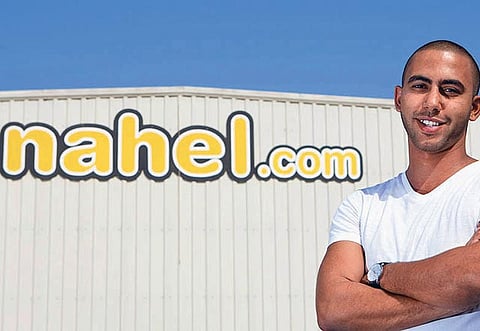
Dubai: For Saeid Hejazi, the shopping portal Nahel.com was as much about launching a business as it was to do with rubbishing the belief belief that Arab shoppers don't like to shop online.
"The stereotype is Arabs don't shop online; the truth is that about 50 per cent mainly shop online," said Hejazi. "Amazon.com does huge sales to the Middle East. It's not about whether the Arab shopper would or wouldn't; it's about whether they can or can't."
The portal, which went live in 2008, takes its name from the Arabic word for ‘bee', and for good reason. Its business model simulates the movement of a bee by flitting from business to business, offering products through a singular website.
A net-savvy marketer, Hejazi was able to draw attention to the portal through a Twitter campaign that ran in April. As one of the first local online outlets to stock the just-launched iPads, Nahel.com seamlessly tied its campaign to the ‘must-have' product.
Lucky draw
The campaign was planned to conclude with a free iPad being given away to a lucky winner. Followers were encouraged to re-tweet the message to increase their chances of winning. And after 48 hours of intense tweeting, the campaign concluded with a winner being selected through a ‘live' raffle draw and announced on Twitter by posting the video footage on youtube.com. Incidentally, the YouTube video footage of the winner being selected was re-tweeted 127 times.
The portal's prospects were further enhanced when many just went ahead and bought the iPad rather than wait for the draw to conclude. During the two days that the campaign ran, traffic on Nahel.com shot up by 370 per cent and the number of orders hit a quite substantial 290 per cent.
Within 24 hours, iPad sales on Nahel.com were up by 32 per cent. "A lot of our followers didn't wait until we gave away the prize, they just went straight to the site and bought an iPad," said Hejazi.
Nahel.com also succeeded in raising awareness about what it stood for. Within the 48-hour duration of the campaign, the portal attracted 950 followers.
"By the end of the campaign, we had been re-tweeted over 4,200 times," Hejazi added.
"If you want to assume that each Twitter person has an average of 150 followers, the Nahel.com message was exposed 630,000 times."
That's quite a lot of attention to be squeezed into a 48-hour cycle.
Even two months after the campaign, Nahel.com is still basking in the limelight. "The month after the campaign, traffic skyrocketed," Hejazi said.
"We noticed that our followers have not stopped following us and our Twitter account has sustained the peak number of followers. As a result we're far more active with our followers."
The campaign also led to more contact with the customer base. "Our followers now use Twitter to contact us. It has allowed our customers to understand that if they have any questions they can easily get in touch with us."
But Hejazi is not one to rest on his laurels. He believes more can be done for the portal by way of new marketing campaigns.
"So far our marketing has been minimal, we haven't used 20 per cent of our marketing budget because our sales have been exceeding our target," he said.
"Sites such as Twitter definitely create awareness, but you shouldn't put all your focus on it. You do have to spend in order to promote. We use Twitter and Facebook mainly as a medium to let our customers know who we are."
A Facebook campaign is to follow in due course and Hejazi - and Nahel.com - are justified in hoping for a similar or even better response to the one spawned on Twitter.
Saeid Hejazi, who has a background in computer engineering, launched Nahel.com from his apartment in Dubai. It now offers more than 10,000 products, in 1,500 categories.

