Distressed asset shopping is cost-effective way to expand
Downturn may be a good time to go for asset shopping, for some SMEs
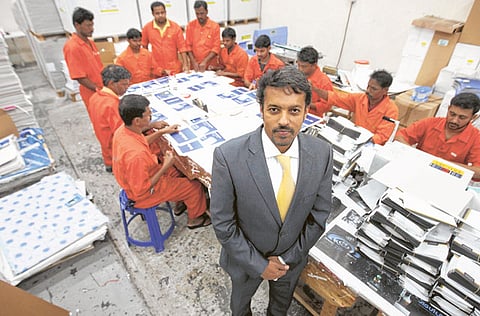
Dubai A downturn may be a good time to go for asset shopping… at least for some small and medium enterprises (SMEs). Zahir Hassan, the owner of Power Print, went ahead and did just that.
Recently he acquired Dh30 million worth of printing machinery from another firm that was looking to exit the business. "It made sense as it increased my capacity by 40 per cent and also cost Dh10 million compared to what would have been needed to pay for brand new machinery," Hassan said.
"The transaction provided us with an excellent opportunity to strengthen our position ahead of a future upturn."
Welcome then to the rarefied world of distressed asset sales or asset stripping. Businesses — and their owners — looking to make an exit altogether are trying to make full use of their assets — either their machinery or the land they own. And there are many looking to acquire these distressed assets.
They are usually marked by intense negotiations, with creditors of the defunct business taking on the role of the interested spectator. More often than not, it turns out to be a test of who has the most patience.
But the core theme of all such negotiations boils down to this: "When the economy is likely to look up, sick units will try to get a good price by selling and financially stronger companies will try to acquire to increase their capacities and reap benefits in the future," said D. Hariharan at Emerge Management.
"Buyers of such assets are confident they can survive until the economy starts looking up and then seek a high return on investment. Also, as weaker units quit the game, the buyers will be in a position to increase their market share."
That's a fair point. Bankers say trying to convince a business going defunct to sell out remains the biggest obstacle. In most cases, the owners still believe they only need to ride out a few more months before a project comes through that will put them back on their feet. Between such hopes and the reality on the ground is a chasm that is often unbridgeable.
Construction space
A more relevant issue has to do with the current land values. "Some of the distressed businesses could have land holdings or offices that can be sold and funds recouped," said a banker. "But in the current real estate marketplace, finding a median value acceptable to all parties is impossible."
According to industry sources, the construction space is one where asset disposal could take place in higher volumes this year. Even wholesale acquisitions of a business could become a more regular feature. Raising additional resources through such transactions would come in handy to those firms looking to participate in projects outside the UAE. Or so goes the conventional thinking. But acquisitions or partial equity participation can be considered even in other areas, according to K.S. Kumar of Valuemax Consultants.
"The impetus will be felt in three areas: where there is a technology play; where there is a clear benefit of market access or customer access; and in niche areas where such a deal can significantly increase competitive strength," Kumar added.
The coming months will see how well such forecasts hold up. But there is no denying that for the right price, the right kind of distressed asset is there for the taking. Those on the lookout to buy or sell just need to know the where and the when.
Dubai Knowing that there is a distressed asset for sale is one thing. But whether it actually represents a perfect fit within the acquirer's existing operations is another matter altogether.
That's where most of the discrepancies creep in after the acquisition.
What the buyer should look for ideally is whether the investments would result in the generation of a minimum profit at a future date.
Also, well before the deal happens, have a fair understanding of the market value of the assets being disposed.
Acquiring at a higher price is a sure recipe for disaster.
The biggest mergers and acquisitions have fallen through because of this, and there is no reason why it will not even if the ticket sizes are much smaller.


