Jordan: Back on the Silicon trail
Juma is encouraging young entrepreneurs to reap benefits by investing in the ICT sector
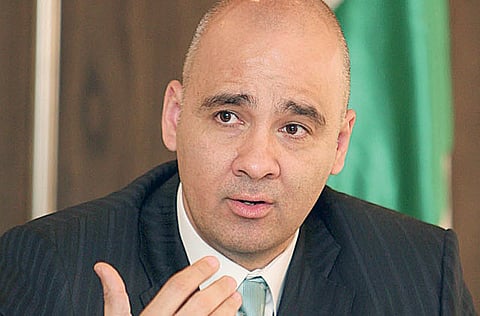
Marwan Juma, Jordan's Information and Technology Minister, tells the story of how the country's ICT got its big start 10 years ago in very pragmatic and simple terms. When King Abdullah II asked for business plans on how to develop the country, it was technology companies that stepped forward first.
For nearly six years, starting in 2000, the country made huge strides, liberalising its telecommunications sector, allowing competitors to enter the market, and paving the way for companies to delve into web development. That led to the launch of Maktoob.com, one of the first online portals in the Arab world. By 2006, however, construction fever gripped the Middle East, including Jordan, and the country's march into the digital age slowed to a walk.
Now Juma, who took office in December, is leading a renewed effort to move the sector forward again. To do this he is addressing taxes, education, the lack of venture capital and the industry's seeming inability to promote itself. It an effort to talk about both what the country has accomplished and what it needs to do going forward, Jordan today will host the MENA ICT Forum in Amman for two days. Continuing to develop ICT is critical in a country faced with 13.5 per cent unemployment.
"There is no sector that is built or fit for a country like Jordan, which only has people, better than ICT," Juma said in an interview with Gulf News. "It's something you can easily export. If we keep investing in education, it's something we can compete on, and not necessarily even on a regional scale, but beyond."
The country set goals in 2007 to attain 30,000 jobs in 2011, he said. Since then it has generated 16,000 jobs in the IT sector and 55,000 IT jobs in other sectors. The ICT industry accounts for 14 per cent of Jordan's GDP, with another 4 per cent coming indirectly.
However, Jordan doesn't just want to be a place to develop cheap software or technology. It doesn't want to be a sweatshop, Juma said. The country also won't work as an outsourcing destination, because it wants to have size and scale. He also wants to see a greater focus on entrepreneurship and the development of intellectual property.
"Jordan should focus on where there is high value add," he said. "And we're seeing a lot of IP [intellectual property] coming out of Jordan. And that's an important point. It's local companies creating homegrown IP."
To develop an IT industry centred on developing IP, Juma believes the country need to find its niche. He said the country has done fantastic work in animation and is also doing very well in developing software for the banking and insurance sectors.
On the web, he said that most of the Arabic success stories are Jordanian, including that of regional giant Maktoob, which was acquired by Yahoo! last year.
"It's part of a growing process," he said. "We can't say we're a jack of all trades and a master of none. We have to start having a focus."
He wants to keep the focus though on software and web technology, not on manufacturing.
"Jordan should never go down that road," he said. "We tried and it doesn't work. Manufacturing is too expensive because of energy and labour."
But to build an economy around the private sector requires money, which is a problem throughout the Middle East. The region lacks venture capitalists who can help small- and medium-sized businesses and banks, especially after the last two years of global crisis, are very reluctant to lend.
Most companies now are relying on family, and Juma said family is often reluctant to invest in the intangibles that surround ICT.
"The requirements are what to start an ICT start-up? $30,000, $40,000, $50,000," Juma complains. "In the past you had venture capitalists, who came with funds of $20 million, so you have one guy with $20 million and one guy looking for $50,000. These guys would leave saying they couldn't find anything, and the other guys couldn't doing anything."
To keep money flowing
To help get the money flowing, a number of Jordanian businesses have formed an association called Oasis 500, made up of entrepreneurs who succeeded in the country's first IT push, aimed at providing mentoring and venture capital to promising young Jordanians with viable business ideas. The fund so far has raised $6 million and initially atracted over 200 applicants.
Under the programme, young entrepreneurs will be able to come in and present their ideas and go through a strict filtering process. If their ideas make sense, then they will go to a second stage where they will get funding of 10,000 Jordanian dinars. It the project still looks good after three months, the fund owners will support the new business owners and try to help them establish a viable enterprise.
Encouraging people to get to even this stage is difficult though, he said, because of the Middle Eastern stigma surrounding failure.
"In the Arab world, if you fail, you get mocked," he said. "Everyone is so risk adverse."
So in an effort to de-stigmatise failure and get more people involved in starting companies, he said, "we are looking to introduce the country's own version of Chapter 11, the US bankruptcy law, that allows company to restructure while being protected from its creditors.
"For the private sector you need to protect them," he said. "You need to have laws like Chapter 11. It's a disaster for a private company to go bankrupt in the Middle East."
The final step will be to convince young business people to make sure the rest of the world knows about their success. It's a common problem in the country, he said.
"Jordanians, it's our nature, we're not very good marketers," he said. "We're very good engineers. We're very good programmers. When it comes to marketing, packaging and promotion, it's not our forte. We don't celebrate success."
Juma said he is trying to get across to young entrepreneurs that public relations and marketing isn't expensive, but an investment and the more you invest, the more you reap the benefits.
"These companies must realise that without proper marketing and exposure and support, they are not going to get a look at these potential deals," he said. "If people don't know about them, if they're not exposed, they're not going to be asked to tender."

