UAE’s future could be affected due to lack of entrepreneurship
Lack of entrepreneurship is creating a lose-lose situation
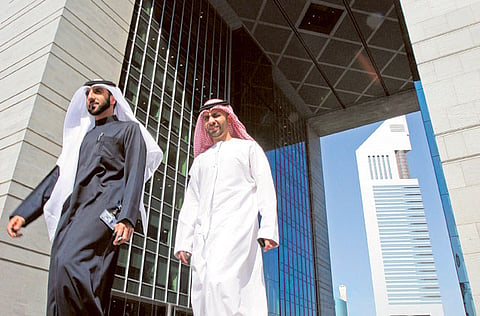
Dubai: Lack of entrepreneurial spirit among the young UAE nationals could affect the future of the UAE and deprive its future generations of the developments of the last four decades.
It is creating a lose-lose situation in which the Emiratis are at risk of losing identity in their own country, Ahmad Bin Byat, Chief Executive of Dubai Holding and Chairman of du – the telecom operator, warned.
Ahmad Bin Byat, a strong proponent of entrepreneurship, warned that if the trend is not reversed, the share of the UAE nationals within the country’s overall population mix would continue to decline and later diminish as the economic growth will help attract more foreigners in the UAE’s job market than the growth rate of the Emiratis.
“What we need is entrepreneurs — job creators, rather than job-seekers,” Bin Byat told Gulf News in an exclusive interview.
“The young UAE nationals are being trained to become employees — rather than entrepreneurs. At home and at classroom all they care about is — exams and grades. They are part of a system that does not encourage them to sell anything or do anything unconventional, other than looking for jobs – herein lies the problem,” he said.
“We do not want to just create employees, but job creators. We need employers — who will develop businesses and hire employees to run them. For that, we need to develop an eco-system to groom business leaders and entrepreneurs,” he stressed.
The Emirati population in the UAE is about 800,000 or just between 12-15 per cent depending on which population statistics is being taken into consideration.
“In absolute numbers, we will never be able to match the expatriates – that way, the UAE is a unique country – even if we accelerate the birth rate of the Emiratis,” he said. “The economic growth of this country will outpace the birth rate of the Emiratis — that we might not be able to catch up with. However, if we create entrepreneurs, we will be able to at least offer better economic value.”
Entrepreneurship is a far cry in a society where young national graduates are still struggling to find jobs when there is no shortage of work. This throws fresh lights on the country’s overall education system — that perhaps do not empower the young Emiratis enough to become business leaders.
In other words, there is knowledge and skill gap that do not help turn the young national graduates into entrepreneurs — unless they travel abroad to attain a foreign degree.
“I think we need to overhaul the existing education system and gear it to ensure that the students are challenged to work, take up assignments linked to our society and environment and push them to come up with solutions,” Bin Byat says. “We need to place greater emphasis on entrepreneurial culture within the education system so that we receive our fair share of the entrepreneurs among the 15,000 or so graduates that come out of the higher colleges and universities every year.”
Low growth, clogged labour markets and a mismatch between education and work are deep-rooted issues that plague every MENA country’s economy and continue to threaten the stability of the region. “Governments looking for quick wins should be looking to public-private partnerships that include young people,” Mohammad H. Al Mady, Vice-Chairman and Chief Executive Officer, Saudi Basic Industries Corporation (SABIC), Saudi Arabia said at last week’s World Economic Forum in Jordan. “Such partnerships can spark entrepreneurship and create jobs,” he said.
Entrepreneurship is the pursuit of opportunity beyond resources controlled, according to Professor Howard Stevenson, of Harvard Business School. Usually, entrepreneurs develop business around fulfilling social and economic needs of a community.
In order to understand those needs, an entrepreneur has to find the need gap as well as solution — for which, one has to have a strong insight into one’s society.
The Arab World — which has been a fertile bedrock of entrepreneurs — is currently in dire need of a new entrepreneurship revolution. This is more so in the UAE, where young graduates are being groomed to become job-seekers.
“Our forefathers did not have a job. They had to do everything from scratch — build everything on their own,” Bin Byat says. “They had to fight the odds — the harsh climatic conditions, harsh reality in an infertile ground where virtually nothing grows.
“Even drinking water was difficult to get. That’s why they had to source food from the sea — fishing and pearl diving — that helped many to live and survive,” he said.
“They were real fighters, entrepreneurs and they reversed the conditions for us — made it so comfortable that our children have started to take everything for granted and lost that instinct. We need to bring that zeal back and instill in their system. The modern and cosy lifestyle might become a problem,” he said.
The Problem
One of the key issues is the abundance of wealth, easy access to modern lifestyle, latest gadgets.
“Our comfortable lifestyle is a hindrance for entrepreneurship,” Bin Byat says. “Perhaps it has become too comfortable for us.”
According to the World Economic Forum, the region needs to create 75 million jobs by 2020 — a jump of more than 40 per cent over the number of jobs in 2011 — just to keep employment close to current levels.
“The key to accelerating job creation will be fostering a business environment in which entrepreneurs can easily start new companies, spread innovation and spur economic activity in general,” said a report by research organisation Booz and Co. “To do so, policy-makers and business leaders must first identify what motivates people to start businesses.
“They must then understand the elements of a healthy entrepreneurial ecosystem and identify which of those elements are lacking or immature — including an entrepreneurial culture, regulatory framework, infrastructure, equity investors, financing for small and medium-sized enterprises, and formal education in entrepreneurship. “
The consequences of not doing so could be more severe than a missed opportunity and slow growth, it says. “The region may lose its most promising youths to emigration, and social unrest is always a danger when large numbers of young people lack opportunities,” the report says.
Rather than wait for governments or the private sector to act, Tarik M. Yousif, Chief Executive Officer, Silatech, Qatar, called for “incrementalism” to create economic opportunities for young people. “We need to get traction on the ground with solutions that can bring about change, innovation and actual results. Incrementalism built around partnerships [can] focus on specific, micro approaches to [solve] these problems,” he said at the World Economic Forum in Jordan last week.
The Solution
Ahmad Bin Byat says, the country needs to plan its future from a demographic perspective.
“We need to plan and map the future,” he says. ‘Our future lies in our people — not in the gadgets, fast cars of the comfortable lifestyle that we are providing them with. We need to plan human development at the federal level and start implementing them that will create business leaders and entrepreneurs and not job-seekers.
“For that, we need to create a proper Human Development programme and realign our education and training systems to realise the human development objectives that will be aligned to our national visions and aspirations.”
For these to happen, he says, the country first needs to acknowledge the facts, which he says, is “quite worrying”.
“In order to map our future, we need a solid statistical database. We do not know the real numbers. The number of Emiratis is about 800,000,” he says. “We do not have unified statistical database on key economic indicators to measure the ground reality. Different government bodies give us different figures and there is hardly any co-relation. This is worrying.”
Then, the government needs to prioritise the tasks. “The third step would be to formulate the policies, establish the institutions and realign everything to execute the policies,” he says.
A Good Example
Dunia, a finance company has recently launched Dunia Young Business Leaders Programme, which serves as a good example of entrepreneurship development.
“As the UAE looks to increasingly diversify its economy, a key national objective is to focus on talent development programmes,” Rajeev Kakar, Managing Director and CEO of Dunia Finance, said in a recent statement.
Initiatives like the Dunia Young Business Leaders Programme, he says, will help provide the early platform to expose our youth in their formative years, so that they can prepare and equip themselves to be the business leaders of tomorrow.
“The UAE market, and the global economy, needs a generation of job creators, and not job seekers, who are entrepreneurial and equipped to start new ventures, lead enterprises of the future, and to establish a new momentum for growth that our world so critically needs,” he said.

