Tehran barters for food as UN action cripples imports
New financial sanctions cripple Iran's imports, forcing country to barter for food
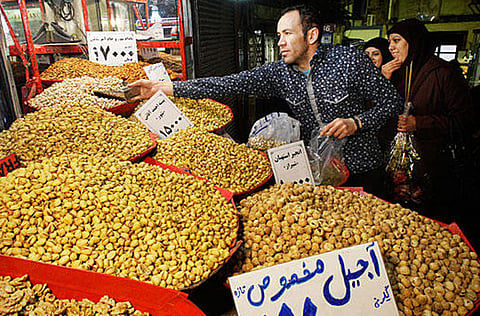
Paris/Tehran: Iran is turning to barter — offering gold bullion in overseas vaults or tankerloads of oil — in return for food as new financial sanctions have hurt its ability to import basic staples for its 74 million people, commodities traders said.
Difficulty paying for urgent import needs has contributed to sharp rises in the prices of basic foodstuffs, causing hardship for Iranians with just weeks to go before an election seen as a referendum on President Mahmoud Ahmadinejad's economic policies.
New sanctions imposed by the United States and European Union to punish Iran for its nuclear programme do not bar firms from selling Iran food but they make it difficult to carry out the international financial transactions needed to pay for it.
Reuters surveys of commodities traders around the globe show that since the start of the year, Iran has had trouble securing imports of basic staples like rice, cooking oil, animal feed and tea. Grain ships have been held at its ports, refusing to unload until payment can be received for cargo.
With Iran's rial currency tumbling, the prices of rice, bread and meat in Iranian bazaars have doubled or more in dollar terms in recent months.
Iranian grain importers have in the past side-stepped sanctions by booking business through the United Arab Emirates, traders said, but this option was cut off by the UAE government in response to sanctions.
Iran has been trading oil in currencies like Japanese yen, South Korean won and Indian rupees, but such deals make it difficult to repatriate profits.
Deals revealed on Thursday appear to be among the first in which Iran has had to result to offering cashless barter to avoid sanctions, a sign of new urgency as it seeks to buy food and get around the financial restrictions.
"Grain deals are being paid for in gold bullion and barter deals are being offered," one European grains trader said, speaking on condition of anonymity while discussing commercial deals. "Some of the major trading houses are involved."
Another trader said: "As the shipments of grain are so large, barter or gold payments are the quickest option."
Details of how the barter deals work are still unclear as the payments problem is so new, and traders did not disclose the exact size of such deals.
The economic hardship is being felt in Iran at a pivotal time in its domestic politics and its nuclear diplomacy with the West. The United States and Europe say the sanctions are needed to push Iran to the negotiating table before it produces enough nuclear material to build an atomic bomb.
Iran says its nuclear programme is peaceful. Last month it began nuclear enrichment at a new facility deep under a mountain to make it secure from military strikes.
‘We are doomed'
Iranian officials deny that sanctions are having a serious economic impact, while also saying that their people are willing to endure any hardship in support of the country's sovereign right to nuclear technology.
Iran's parliamentary election on March 2 will be its first vote since a presidential vote in 2009, when Ahmadinejad's disputed re-election against a reformist opponent triggered eight months of violent street demonstrations.
The Iranian government successfully put that uprising down by force, but since then the ‘Arab Spring' has revealed the vulnerability of authoritarian states in the region to popular anger fuelled by economic hardship.
"We are going bankrupt and probably will be closed within weeks," said one merchant on Thursday. "All my ingredients come from abroad. Either the prices suddenly doubled or they stopped being shipped. We are doomed."
Shipments become too risky for traders
The effect of Iran's difficulty processing payments on often opaque international commodities markets can be felt directly on the streets in the form of higher prices and shortages.
According to commodities traders in Asia, shipments of palm oil from both the top suppliers, Indonesia and Malaysia, have been halted to Iran because traders fear they cannot get paid. The two countries account for 90 per cent of global supply of the oil, a staple ingredient for products from margarine to sweets.
"I can confirm that Singaporean firms have stopped. We don't want to go anywhere near Iran at this moment, it is too risky," said a trader with a listed Singaporean firm that ships Indonesian palm oil cargoes to the Middle East and Iran.
A trading source from Saudi Arabia whose firm runs a 16,000-tonne-a-year plant that refines food oil in Iran said the sector was barely operating. A margarine factory owner in Tehran told Reuters on Wednesday he expected to halt production within months because of a shortage of raw materials.

