Plate is full for GCC food sector
Food consumption for 41.7m people in six Gulf countries reaches 38.8m metric tonnes
Dubai: Per capita annual food consumption of 1,486.3 kilogrammes (1.48 tonnes) in the UAE is about 50 per cent higher than that of the GCC which stands at 949.1 kilogrammes, according to a research report published by Alpen Capital.
Although this translates to a per capita daily food consumption of 4.07 kilogrammes in the UAE, compared to 2.6 kilogrammes in the GCC, the actual per capita food consumption in the UAE would be lower, because the figure also includes consumption by more than 14 million tourists who stayed in the UAE’s hotels where food is more known to be wasted than consumed. The Gulf’s population is likely to cross the 50 million-mark by 2020 from 41.7 million in 2010.
“Due to population growth, the increase in foreign tourists and per capita income, food consumption will reach 49.1 million metric tonnes (MT) by 2017, growing at a compound annual growth rate (CAGR) of 3.1 per cent over 2012-2017,” the report says.
Strong GDP growth and increasing per capita income are expected to drive food consumption in the GCC countries. The region’s GDP is expected to reach $1.8 trillion (Dh6.6 trillion) by 2017. The GCC nations are among the world’s richest in terms of oil and gas reserves and per capita wealth. Per capita income is likely to increase to $36,839 by 2017.
Various factors
“The GCC food sector is likely to experience healthy growth in the medium to long term. Various factors such as rising affluence levels, growing population, urbanisation and proliferation of organised retail have fuelled demand for food products in the region,” Sameena Ahmad, Managing Director, Alpen Capital, said. “Although high dependence on imports poses a challenge for the economy, it creates several opportunities for private sector companies to position themselves and take advantage of the growing demand,” she added.
The region holds strong investment potential, especially in the food processing segment trade and re-exports. “The outlook for the food sector continues to be positive. With favourable demographic factors and stronger balance sheet positions, GCC food companies potentially offer attractive investment propositions for long-term investors,” Mahboob Murshed, Managing Director, Alpen Capital, said.
Demand for processed foods in the GCC accounts for more than 50 per cent of the food market in the region.
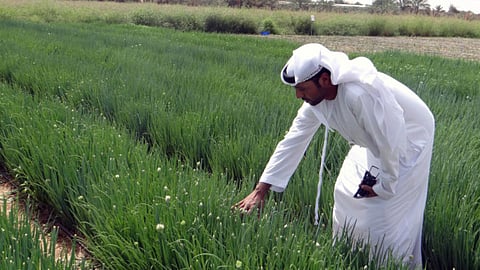
Owing to the scarcity of arable land due to the region’s extreme climatic conditions, agricultural food production in the GCC has been minimal. According to the Food and Agricultural Organisation (FAO), of the total available land, the portion of land suitable for cultivation is just 1.7 per cent in Saudi Arabia and 3.0 per cent in the UAE compared to 18.4 per cent in the USA, 23.7 per cent in the UK, 16.3 per cent in China and 51.6 per cent in India.
With limited scope to increase food production, GCC countries are increasingly investing in building food processing capabilities. “Along with the location advantage, and duty free access to various markets, GCC governments are increasingly looking for avenues to boost the food processing sector in the region,” the report says.
The UAE is the largest food processing and re-exporting destination in the GCC, followed by Saudi Arabia. In 2011, UAE invested $258.4 million in procuring food processing and packaging machinery.
Food production in the region increased steadily over the last decade. During 2004-2010, food production expanded at a CAGR of 0.7 per cent to 11.3 million metric tonnes in 2010. Saudi Arabia dominated the region in food production with 8.4 million tonnes of food, accounting for 74.1 per cent of GCC food production.
Except for Saudi Arabia, all other Gulf countries produced relatively lower quantities of food compared to their food consumption.
Vegetables dominated the Gulf’s food production. In 2010, 2.9 million tonnes of vegetables were produced in the region, accounting for 25.3 per cent of food production. Besides vegetables, the Gulf countries also produced 2.1 million tonnes of milk.
Saudi Arabia is the largest food producer in the region, accounting for 74.1 per cent of or 8.4 million tonnes. The UAE ranks second. While the UAE accounts for 20 per cent of the region’s food consumption, its production only accounts for 12.1 per cent of the GCC’s output. This reflects the UAE’s heavy reliance on imports.
Reducing waste
Samita Khawar, Head of Growth Implementation Solutions, Middle East and North Africa, Frost & Sullivan, says that reducing food wastage could help the GCC countries.
“Not only reduction of food wastage but innovative food processing methods are also essential to reduce waste during packaging and transport. A new agro-industrial strategy has emerged in the GCC to foster the competitiveness of the sector, while at the same time ensuring food security. These are the ambitious agro-industrial competitiveness programmes following a territorial approach, such as food technopoles, clusters and other mechanisms of concentration of agricultural activity,” Khawar told Gulf News.
“These programmes are linked to investments in public productive infrastructure, particularly airports and ports.
“The GCC is complementing this approach with promotion of agricultural investment overseas to secure agricultural raw materials.”
“These programmes are linked to investments in public productive infrastructure, particularly airports and ports.
“The GCC is complementing this approach with promotion of agricultural investment overseas to secure agricultural raw materials.”

